Valproic Acid (Depakote) is a drug that uniquely has the ability to raise serum ammonia concentrations. It is able to do this without raising liver er enzymes and it can occur in overdose or at therapeutic levels. Do not think of this in the context of hepatic encephalopathy. This a metabolic derangement caused by VPA.
Drug-Drug Interactions in the Critically Ill
Elderly patients are at higher risk for skin infections for numerous reasons:
1. Blunted immune system response of skin to infections.
2. Slower wound repair after 3rd decade.
3. More frequent exposure to infections, especially drug resistant infections, especially if the patient is frequently hospitalized or in nursing homes.
4. Frequent portals of entry for skin infections: indwelling tubes and lines, leg ulcers, fissures and maceration on feet and between toes.
A key takeaway point is to always check the skin thoroughly of your elderly patients when searching for infections, especially the feet and toes!
http://www.gentili.net/signs/images/400/spinescottyparsdefectdrawing.JPG
The Scotty dog’s head (superior articular facet), nose (transverse process), eye (pedicle), neck (pars interarticularis), and body (lamina) should be easily identified on the oblique radiograph.
In a patient with toxin-induced bradycardia and hypotension, here is a quick differential to help identify the responsible substance:
Less commonly seen causes include: magnesium, propafenone, and plant toxins (aconitine, andromedotoxin, veratrine).
Asthma, Peak Pressures, and the Ventilator
Risk Stratification in Pulmonary Embolism
The following are the principal markers useful for risk stratification:
Patients with one or more of these markers have a higher mortality rate.
The majority of "classic" symptoms and signs in elderly patients with pneumonia (fever, cough, sputum production, leukocytosis,chest pain) are unreliably present. However, tachypnea is one of the most reliable early findings in elderly patients with pneumonia, and in fact the same can be said about other serious bacterial illnesses in the elderly. The takeaway point here is simple: always count the respiratory rate in elderly patients (and don't trust those triage respiratory rates)!
Diverticular Bleeding
Pre-existing acidosis and mechanical ventilation
Silent Pulmonary Embolism?
As many as 50% of patients with isolated DVT will be found to have silent pulmonary embolism (i.e. no chest pain or shortness of breath) on VQ scanning. Studies performed in the last year or so with CT scanning show that this percentage is much higher.
The clinical take-home point is NOT to get a pulmonary CTA on suspected DVT patients but to remember that many patients can and do have PE in the absence of cardiopulmonary symptoms. Pretty frightening....
The WBC count is not an accurate predictor of bacteremia in the elderly. 20-45% of elderly patients with proven bacteremia have a normal WBC on presentation.
[from Caterino JM, et al. Bacteremic elder emergency department patients: procalcitonin and white count. Acad Emerg Med 2004;11:393-396.]
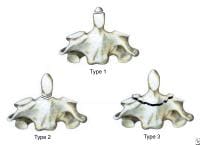
Odontoid Fractures:
There are three types of C2 odontoid fractures:

In the state of Maryland, the most common venomous snake is the copperhead. Though not as dangerous as the rattlesnake, it can still cause loss of function of limb and mortality in the pediatric patient.
Treatment has involved the use of CroFab (Protherics, Atlanta). This ovine derived monovalent immunoglobolin is actually made against the following snakes:
Though efficacy has been shown with these snakes, we are hoping for cross-reactivity when we treat copperheads. There are case series and case reports (1) that have shown anectdotal improvement. We are still awaiting a real randomized controlled trial - may never happen.