Small Bowel Obstruction
Aortic Dissection
Ultrasound has a great specificity for aortic dissection. Remember to take a look at your aorta on all cardiac views.
Let’s give a shout out to Nikki Cali for diagnosing aortic dissection in a patient with a recent PE. Can you find the dissection flap in this image?
Peritonsillar Abscess
Pulmonary Embolism
Appendicitis
Ultrasound has a reported high specificity (97.9) for acute appendicitis in moderate to high pre-test probability of patients.
Let’s give a shout out to Reed Macy, who diagnosed appendicitis in a male with vomiting and abdominal pain!
Bottom Line: In a recent meta-analysis the risk factors for patellofemoral syndrome are weak hip abduction strength, quadricep weakness in military recruits, and increased hip strength in adolescence.
PatelloFemoral Syndrome: Patellofemoral pain is not clearly understood and is believed to be multi-factorial. Numerous factors have been proposed including muscle weakness, damage to cartilage, patella maltracking, as well as others. Patient often complain of anterior knee that is aggravated by walking up and down stairs or squatting. Patellofemoral pain is extremely common. In the general population the annual prevalence for patellofemoral pain is approximately 22.7%, and in adolescents it is 28.9%.
Though commonly taught, the following have no evidence to support that they are a risk factor for patellofemoral syndrome: Age, Height, Weight, BMI, Body Fat or Q Angle of patella
Title: Mammalian meat allergy (alpha-gal syndrome) following tick bites
Author: Dan Gingold, MD, MPH
Development of IgE antibodies to the oligosaccharide galactose-alpha-1-3-galactose (alpha-gal) appears to be responsible for an acquired allergy to non-primate mammalian meat (i.e., beef and pork) and derived products. Antigen in the salivary apparatus of certain ticks (gross!!) can sensitize an IgE-mediated response to alpha-gal which is present in mammalian meat.
Symptoms are similar to other IgE-mediated hypersensitivity reactions, and can cause a delayed-onset reaction with hives, GI upset, or anaphylaxis after ingestion of red meat. Treatment with standard anti-histamines and epinephrine is effective. Individuals with no prior history of meat sensitivity can develop the syndrome at any age, often after exposure to the outdoors in tick-endemic areas. Skin and blood allergy testing can confirm the diagnosis. Symptoms can persist for years, but can recede over time if not exposed to further tick bites.
In the US, the primary tick responsible is Lone Star Tick (Amblyomma americanum), found primarily in the Eastern, Southeastern, and Midwestern US. Other tick species in Europe, Australia, and Asia have been found to induce the syndrome as well. Interestingly, there is a cross-reactivity with the monoclonal antibody Cetuximab (used to treat colorectal and head and neck cancers), an allergic reaction to which can also induce similar alpha-gal meat sensitivity.
Having first been described in 2009, the syndrome often goes unrecognized; increased physician awareness can inform the evaluation, diagnosis, and education of patients presenting to the ED with undifferentiated allergic reaction.
Asking these allows everybody to understand what the goal really is — what are you really fighting for? It’s for a life that contains certain things.
Therefore, pain medications must be dosed carefully, which runs the risk of underdosing. Pain medications can also contribute to delerium, and decreased functional status.
Recommendations:
Remember to evaluate for any rotational deformity when evaluating patients with a phalanx fracture.
The easiest way to do this is to have the patient flex all their fingers. They should all point to the scaphoid. If a finger deviates or overlaps another finger there is a rotational deformity. One should also make sure that all the nailbeds align.
This video shows how to evaluate for rotation https://www.youtube.com/watch?v=Dhp25UVn7RQ
Even if the finger is reduced otherwise, persistent rotational deformities should be referred to a hand surgeon for consideration of corrective surgery.
When caring for a patient with a laceration we often do lcoal infiltration prior to suturing but remember the benefits of regional nerve blocks
Benefits of Regional Nerve Blocks
Quick reminder of properities of common anesthetic
| Anesthetic | Onset of Action | Duration of Action | Max Dose No Epi | Max Dose With Epi |
|---|---|---|---|---|
| Lidocaine | Seconds | 1 hr | 4mg/kg | 7mg/kg |
| Bupivicaine | Seconds + | > 6 hrs | 2mg/kg | 3mg/kg |
Final reminder: There is no evidence that epinephrine causes necrosis and it can be used safely in digital blocks. Duration of action is max 90 minutes. Even individuals that have injected themselves with EpiPens into their hands have not had any long term sequelue or necrosis seen. Vast majority required no treatment at all.
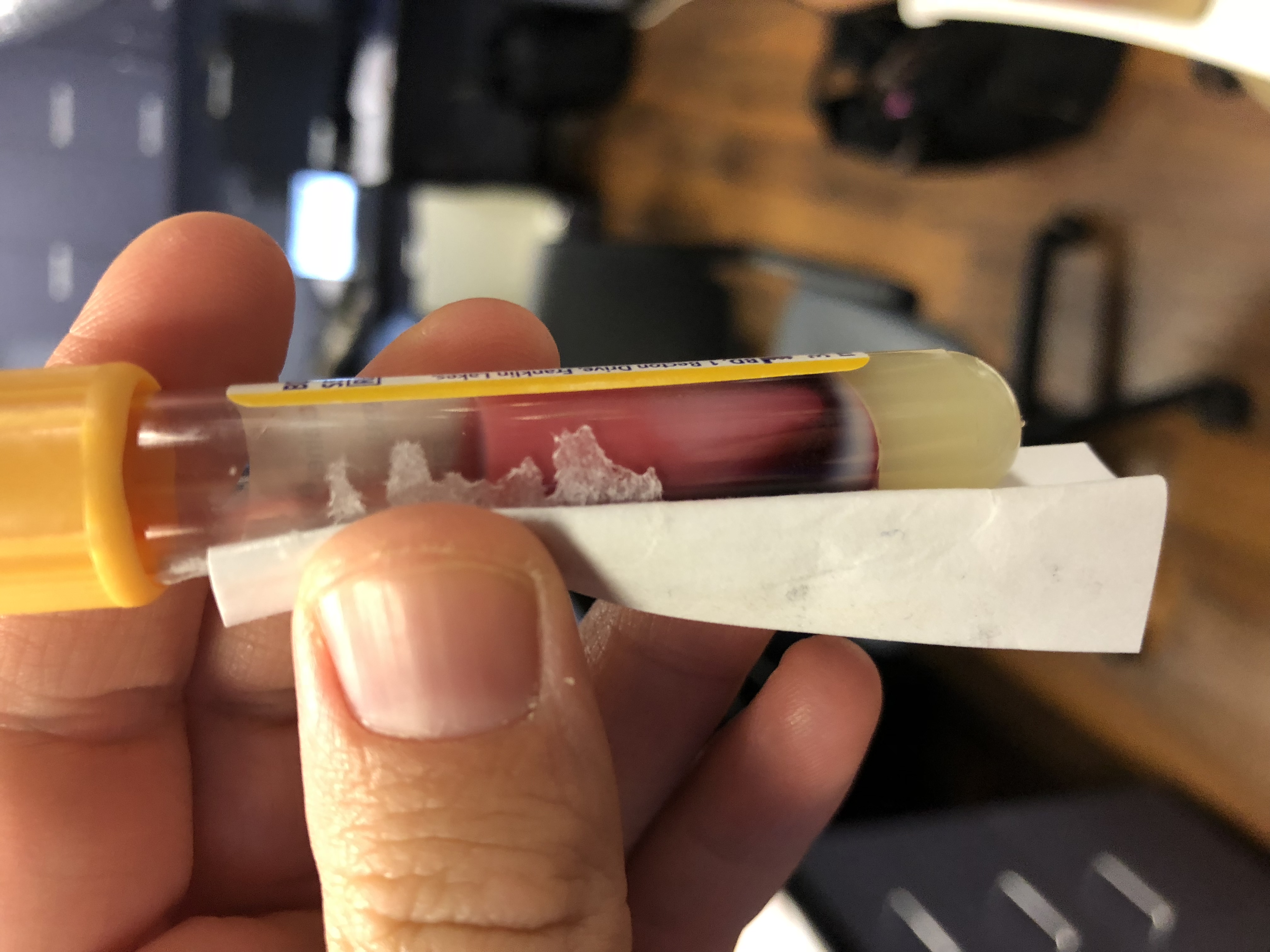
33 y/o M with PMH of ETOH induced pancreatitis presents with epigastic/RUQ pain & N/V after drinking last night, per patient his usual “pancreas pain”. The nurse shows you his blood tubes because they look “milky”. Lipase 1200, Ca 6.8.

What lab test would you add?
Bottom Line:
Bottom Line:
Less than 1/2 of patients presenting to EDs and being diagnosed with concussion receive mild traumatic brain injury educational materials, and less than 1/2 of patients have seen a clinician for follow up by 3 months after injury.
In order to improve long term outcomes in patients with concusions please remember to provide the patient with approriate discharge instrucitons and strict instructions to follow up on their injury.
Full details of the article in JAMA can be found at https://jamanetwork.com/journals/jamanetworkopen/fullarticle/2681571
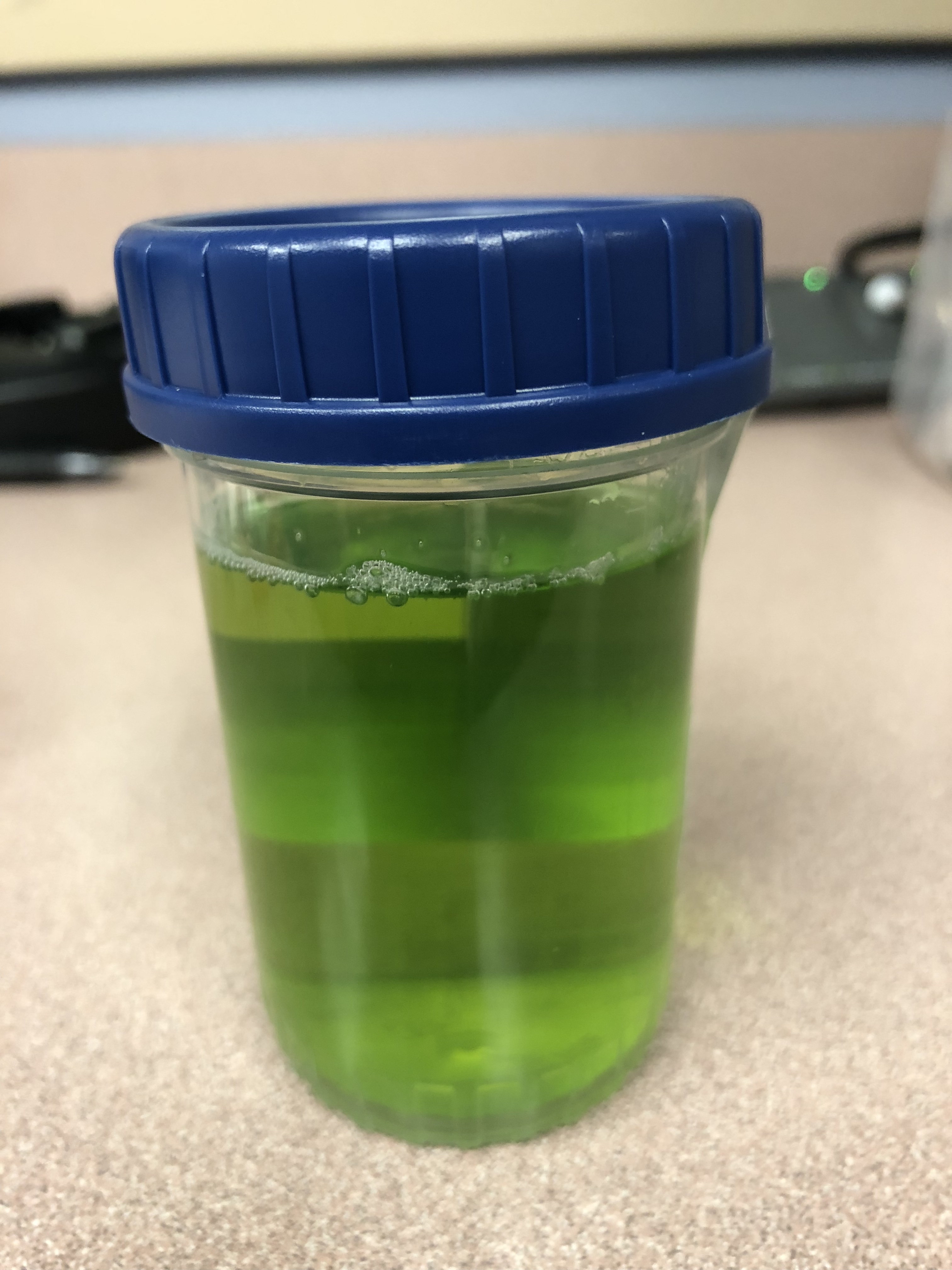
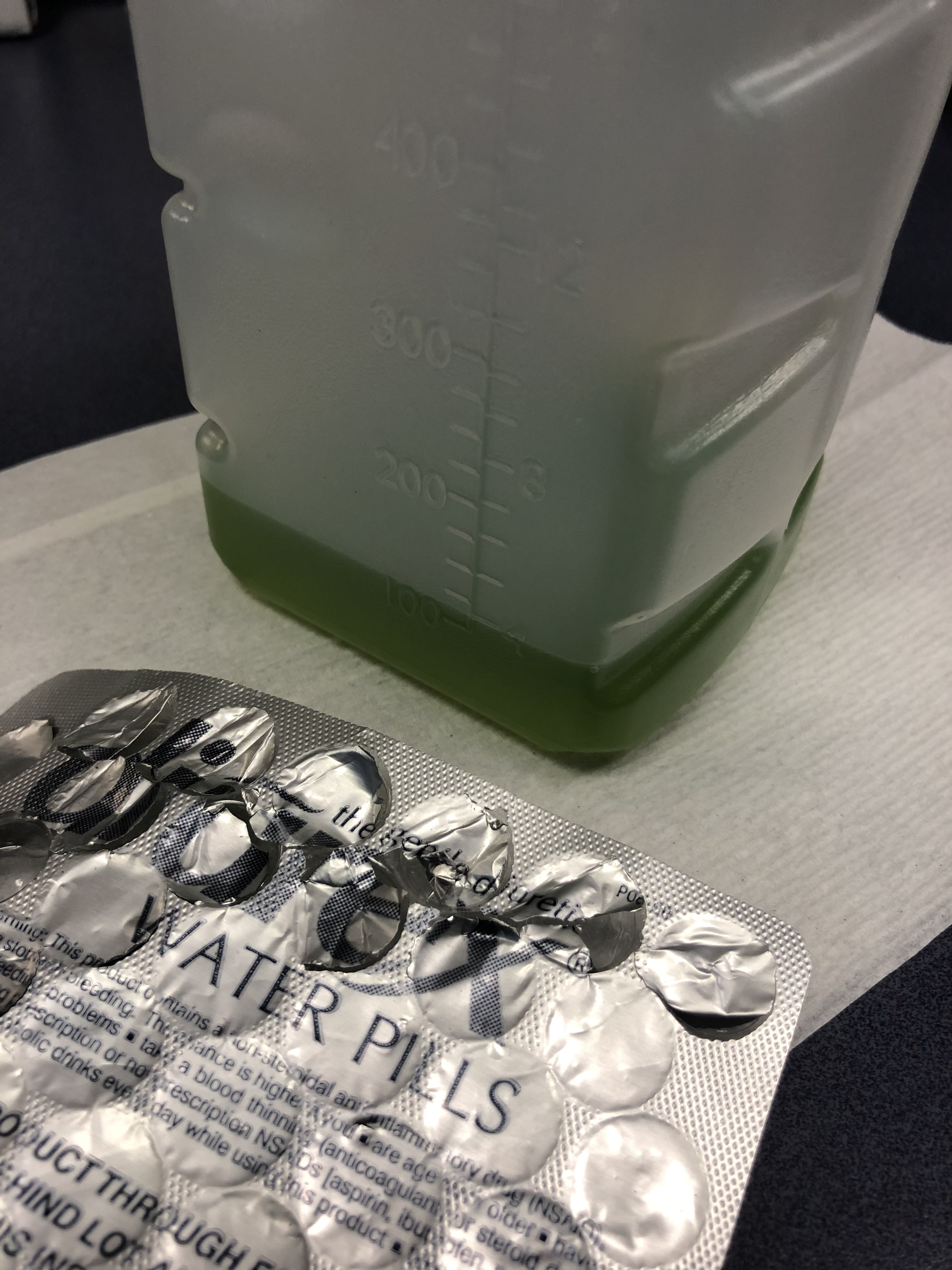
75 y/o M is brought in by EMS after he fell off the light rail and hit his head. In the ED he is A&Ox3, and is asking for a urinal. Two minutes later the tech comes running to show you the following:

What is the cause of this patients Jolly Rancher Green Apple looking urine sample?
A recent article from JAMA (link below) showed that Ibuprofen and opioids are similarly effective in the short term relief of acute extremity pain when used in combination with acetaminophen. The study looked at adults with fractures and sprains and randomized them to one of four groups.
Pain relief was similar in all groups.
With the growing increase in opioid abuse/addiction it is good to know that in our patients that are not allergic to acetaminophen and ibuprofen (or all medications except for that one that begins with a “D”) we can provide good pain relief without using opioids.
https://jamanetwork.com/journals/jama/article-abstract/2661581
Infectious Diarrhea:
Have your wondered what you should do with patients that you suspect have infectious diarrhea. Well the IDSA has updated their 2001 guidelines for the management of infectious diarrhea. The TAKE HOME Points are:
You can find all the recommendations at https://academic.oup.com/cid/article/doi/10.1093/cid/cix669/4557073/2017-Infectious-Diseases-Society-of-America