Previous  |  1 |  ... |  169 |  170 |  171 |  172 |  173 |  174 |  175 |  176 |  177 |  178 |  179 |  ... |  230 |  Next

Title: Quick Techniques for Assessing Ulnar, Median, and Radial Nerve Motor Function

Category: Neurology

Keywords: ulnar nerve, median nerve, radial nerve (PubMed Search)

Posted: 9/22/2010 by Aisha Liferidge, MD (Updated: 2/22/2011)


Title: Hemophilia A and Life-threatening bleeding

Category: Critical Care

Posted: 9/21/2010 by Mike Winters, MBA, MD (Updated: 3/4/2026)

Life-threatening Bleeding in Hemophilia A Patients

Show References


Title: Pulmonary Embolism and IVC Filters

Category: Vascular

Keywords: Pulmonary Embolism, IVC Filter (PubMed Search)

Posted: 9/20/2010 by Rob Rogers, MD (Updated: 3/4/2026)

Pulmonary Embolism and IVC Filters

Inferior vena cava filters are placed in patients with massive DVT and /or in patients who cannot receive systemic anticoagulation.

The question is, can patients develop pulmonary embolism if a filter is already in place? The answer: yes

How does this happen?:


Title: sed rates in the elderly

Category: Geriatrics

Keywords: erythrocyte sedimentation rate, sed rate, temporal arteritis (PubMed Search)

Posted: 9/19/2010 by Amal Mattu, MD (Updated: 3/4/2026)

There is a correction factor for erythrocyte sedimentation rate in the elderly. The top normal ESR in the elderly is (age + 10)/2. For example, an 80 yo patients would have a top normal ESR of (80+10)/2 = 45. Most laboratories do not, however, report this correction factor, but simply list < 20 (or thereabouts) as normal.

Be certain to take this correction factor into account when using ESRs for workups for temporal arteritis or other similar conditions.
 

Show References


Title: Pain Control in the Elderly

Category: Orthopedics

Keywords: Pain, Geriatrics (PubMed Search)

Posted: 9/18/2010 by Michael Bond, MD (Updated: 3/4/2026)

Pain Control in the Elderly

So the take home lesson for this pearl is that the elderly have a lower risk of delirium if their pain is treated appropriately.

Show References


Title: Fentanyl Patch Abuse

Category: Toxicology

Keywords: fentanyl (PubMed Search)

Posted: 9/16/2010 by Fermin Barrueto (Updated: 9/18/2010)

A fentanyl patch contains 100-fold more fentanyl in the reservoir than what is posted on the patch. For instance, 100mcg/hr patch will have over 10mg - thats milligrams - of fentanyl. This provides a rather large source for potential abuse. Overdose and deaths have occurred by patients in the following ways:

  1. Ingesting
  2. Placing in a cigarette and inhaling
  3. Inadvertent overdose by sleeping with an electric heating blanket and increasing absorption through the skin
  4. Steeping the patch in hot water
  5. Actually stealing the patches off of dead bodies in the morgue


It is the many

Show References


Title: Radial Nerve Palsy - Recognition and Treatment

Category: Neurology

Keywords: radial nerve palsy, saturday night palsy, honeymoon palsy, wrist drop (PubMed Search)

Posted: 9/15/2010 by Aisha Liferidge, MD (Updated: 9/18/2010)


Show References


Title: Necrotizing Soft Tissue Infections (NSTI)

Category: Critical Care

Keywords: Necrotizing Soft Tissue Infections, sepsis, critical care, surgery (PubMed Search)

Posted: 9/14/2010 by Haney Mallemat, MD (Updated: 9/14/2010)

(Sorry for the previously mislabeled pearl...)

Necrotizing soft tissue infections (NSTI) are on the rise and, despite improved surgical and critical care, over the years there has only been a mild reduction in mortality. Survival is associated with early diagnosis and treatment. Unfortunately, NSTI are not always obvious because deeper tissues made be involved first. Despite a validated scoring system and better radiology, our clinical suspicion still rules and relies on a meticulous history and physical exam. 

Here are some subtle signs of NSTI:


Pain out of proportion to exam

Edema beyond region of erythema

Skin anesthesia

Skin erythema and/or hyperthermia

Epidemolysis

Skin bronzing


If NSTI is suspected, be vigilant! Start broad-spectrum antibiotics, begin appropriate resuscitation and involve your surgeons early.

Show References


Title: arrhythmias in syncope

Category: Cardiology

Keywords: syncope, arrhythmias, dysrhythmias (PubMed Search)

Posted: 9/12/2010 by Amal Mattu, MD (Updated: 3/4/2026)


17-18% of cases of syncope are attributable to arrhythmias

The greatest predictors of arrhythmias as the cause of syncope are:

a.            Abnormal ECG (odds ratio 8.1)

b.            History of CHF (odds ratio 5.3)

c.            Age older than 65 (odds ratio 5.4)


[Sarasin, et al. Academic Emergency Medicine 2003]

Show References


Title: Physical examination of the rotator cuff

Category: Orthopedics

Keywords: Shoulder, Rotator cuff (PubMed Search)

Posted: 9/11/2010 by Brian Corwell, MD (Updated: 12/18/2010)

Supraspinatus: “Empty can” test. Have the patient abduct the shoulders to 90 degrees in forward flexion with the thumbs pointing downward. The patient attempts to lift the arms against the examiner’s resistance.

http://bjsportmed.com/content/42/8/628/F2.large.jpg

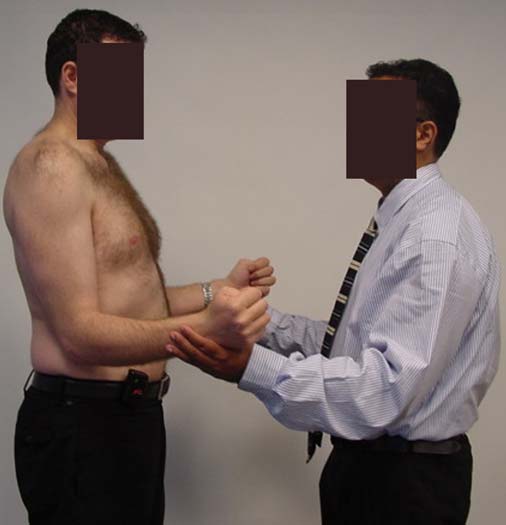
Infraspinatus and teres minor: These muscles are responsible for external rotation of the shoulder. Have the patient flex both elbows to 90 degrees while the examiner provides resistance against external rotation.

http://www.physio-pedia.com/images/4/4b/Infraspinatus_test.jpg

Subscapularis: “Lift-off” test. The patient rests the dorsum of the hand on the lower back (palm out) and then attempts to move the arm and hand off the back.  Patients with tears may be unable to complete test due to pain.

http://www.aafp.org/afp/2008/0215/afp20080215p453-f4.jpg

Show References


Title: Bronchiolitis

Category: Pediatrics

Keywords: Bronchiolitis, RSV (PubMed Search)

Posted: 9/10/2010 by Adam Friedlander, MD

As RSV season approaches, remember these key points in managing bronchiolitis:

Show References


Title: Diagnosing Cyanide Poisoning with Lab Tests

Category: Toxicology

Keywords: cyanide, lactate (PubMed Search)

Posted: 9/9/2010 by Bryan Hayes, PharmD (Updated: 3/4/2026)

In the setting of acute cyanide poisoning, it is virtually impossible to obtain a timely cyanide level to help assess toxicity.  However, there are two diagnostic tests that can help confirm your diagnosis.

  1. Anion gap metabolic acidosis with elevated lactate
  2. Narrowing of the venous-arterial PO2 gradient

Remember cyanide halts cellular respiration meaning the cells cannot utilize oxygen.  Therefore, the venous PO2 should be about the same as the arterial PO2.  The cells then switch to anaerobic metabolism, thereby producing lactate.


Title: How to Perform a Median Nerve Block

Category: Neurology

Keywords: median nerve block, nerve blok, median nerve (PubMed Search)

Posted: 9/8/2010 by Aisha Liferidge, MD

How to Perform a Median Nerve Block

Show References


Title: Pulmonary Contusion Ventilator Management

Category: Critical Care

Posted: 9/7/2010 by Mike Winters, MBA, MD (Updated: 3/4/2026)

Pulmonary Contusion and Ventilator Management

Show References


Title: acute cocaine use and MI

Category: Cardiology

Keywords: cocaine, myocardial infarction, atherosclerosis (PubMed Search)

Posted: 9/5/2010 by Amal Mattu, MD

Acute use of cocaine increases risk of acute MI due to tachydysrhythmias, vasospasm, and increased platelet aggregation. There is a 24-fold increased risk of MI in the first hour after use of cocaine. 6% of patients presenting with cocaine-chest pain rule in for acute MI.

[Weber, Acad Emerg Med 2000]

Show References


Title: Hydrofluoric Acid Burns

Category: Toxicology

Keywords: hydrofluoric acid, burn, chemical burn, HFA, calcium gluconate (PubMed Search)

Posted: 9/5/2010 by Dan Lemkin, MS, MD (Updated: 10/2/2010)

Hydrofluoric acid is a weak acid used primarily in industrial applications for glass etching and metal cleaning/plating. It is contained in home rust removers. Although technically a weak acid, it is very dangerous and burns can be subtle in appearance while having severe consequences.

Hydrofluoric acid burn

Wilkes G. Hydrofluoric Acid Burns. Jan 28, 2010. 
http://emedicine.medscape.com/article/773304-overview

*Extracted from emedicine article.

Show References


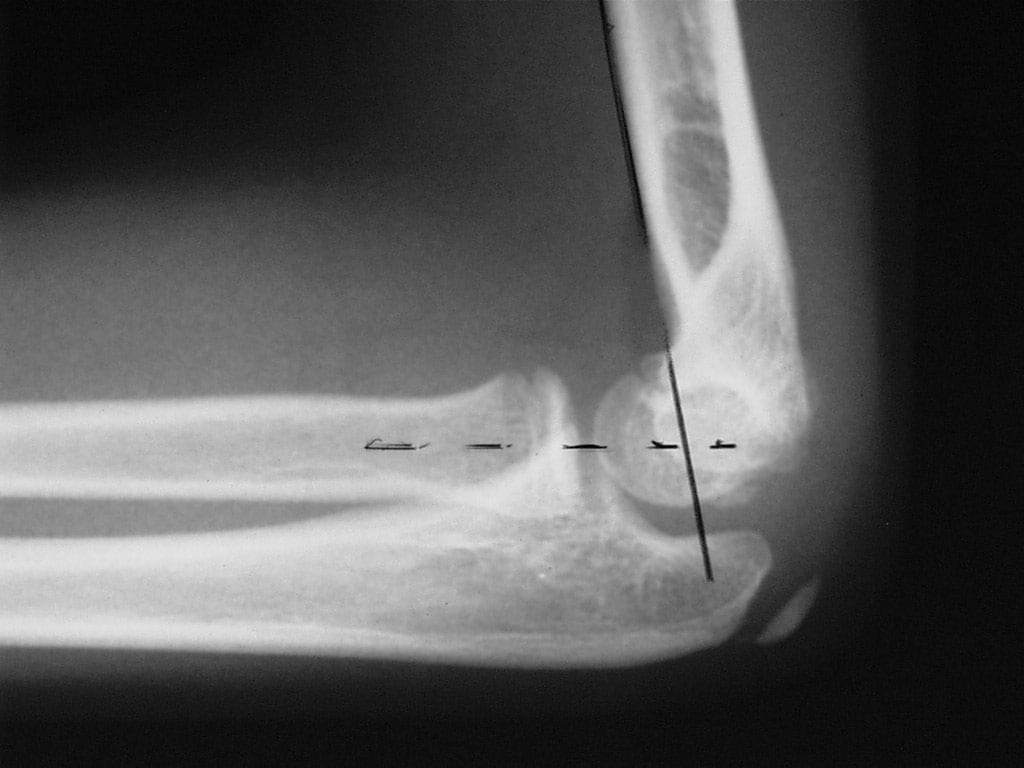
Title: Radiologic evaluation of the elbow (Part 2)

Category: Orthopedics

Keywords: Elbow, radiographs (PubMed Search)

Posted: 9/4/2010 by Brian Corwell, MD

Radiologic evaluation of the elbow (Part 2)

Helpful clues in the evaluation of elbow trauma:

Show References


Title: Epinephrine Digital Injections

Category: Toxicology

Keywords: Epinephrine, epi-pen, digital block, finger, ischemia (PubMed Search)

Posted: 9/2/2010 by Ellen Lemkin, MD, PharmD

A recent study examined the effects of accidental digital epinephrine injection from auto-injectors. 127 cases with complete follow-up had the following effects:

Pharmacologic vasodilators were used in 23%. Four patients had possible digital ischemia. All patients had complete resolution of symptoms, most within 2 hours. No patient was admitted, received hand surgery consultation, or had surgical care. 

Although this speaks for the safety of digital anesthesia using epinephrine, it underscores the importance of providing education to patients who are prescribed epinephrine auto-injectors.


Show References


Title: How to Perform Ulnar Nerve Blocks

Category: Neurology

Keywords: ulnar nerve block, ulnar nerve, nerve block (PubMed Search)

Posted: 9/1/2010 by Aisha Liferidge, MD (Updated: 3/4/2026)


Show References


Title: Cerebral Salt Wasting Syndrome vs. Syndrome of Inappropriate ADH Secretion.

Category: Critical Care

Keywords: SIADH, CSW, syndrome of inappropriate adh, cerebral salt wasting, hyponatremia, neurosurgery (PubMed Search)

Posted: 8/31/2010 by Haney Mallemat, MD (Updated: 3/4/2026)

Hyponatremia plagues many neurosurgical patients due to the syndrome of inappropriate secretion of ADH (SIADH) or the cerebral salt wasting syndrome (CSW). Both diseases may appear similar (hyponatremia, increased urine osmolarity, increased urine sodium, normal adrenal, renal and thyroid function), but there is one BIG difference. Patients with SIADH are euvolemic or hypervolemic (excess ADH causes fluid retention) whereas patients with CSW are fluid depleted (impaired renal handling of sodium and water). To differentiate, look for signs of hypovolemia: orthostatics, dry mucus membranes, hemoconcentration, pre-renal azotemia, and/or hemodynamics (IVC collapse anyone?).

Bottom line: Distinguish SIADH from CSW because the treatments are exact opposites:

SIADH: Fluid restrict

CSW: Give water and salt (i.e., 0.9% saline)

Show References


Previous  |  1 |  ... |  169 |  170 |  171 |  172 |  173 |  174 |  175 |  176 |  177 |  178 |  179 |  ... |  230 |  Next