Previous  |  1 |  ... |  193 |  194 |  195 |  196 |  197 |  198 |  199 |  200 |  201 |  202 |  203 |  ... |  230 |  Next

Title: Aneurysmal SAH

Category: Critical Care

Posted: 3/17/2009 by Mike Winters, MBA, MD (Updated: 3/4/2026)

Early Critical Care Management of Aneurysmal SAH

Show References


Title: Bimanual Laryngoscopy

Category: Airway Management

Keywords: Airway (PubMed Search)

Posted: 3/16/2009 by Rob Rogers, MD (Updated: 3/4/2026)

Keys to a Successful Intubation

Show References


Title: Fractures and Child Abuse

Category: Orthopedics

Keywords: Child Abuse, Fracture (PubMed Search)

Posted: 3/15/2009 by Michael Bond, MD (Updated: 3/4/2026)

A lot of what is taught about fracture patterns in abused children has been extrapolated from post-mortem studies which is a different population then what you will see in the Emergency Department. The study referenced did a metanalysis of all the literature in an attempt to determine what fractures suggest abuse and looked at all comers that had fractures.  Some of the patterns they were able to extrapolate are:


Show References


Title: Misdiagnosis of Appendicitis in the Young Child

Category: Pediatrics

Keywords: Appendicitis, Pediatrics (PubMed Search)

Posted: 3/13/2009 by Don Van Wie, DO (Updated: 3/4/2026)


Show References


Title: Black Box Warning for Metoclopramide

Category: Toxicology

Keywords: metoclopramide, black box warning, tardive dyskinesia (PubMed Search)

Posted: 3/12/2009 by Bryan Hayes, PharmD (Updated: 3/4/2026)

Add metoclopramide (Reglan) to the laundry list of medications with black box warnings from the FDA. Why was a black box warning added?

What implications does this have for our practice in the ED?


Title: Conventions for Performing the NIH Stroke Scale

Category: Neurology

Keywords: nihss, stroke scale (PubMed Search)

Posted: 3/11/2009 by Aisha Liferidge, MD (Updated: 3/4/2026)

When performing the NIH Stroke Scale, keep the following conventions in mind:


-- Administer scale items in their exact order.
-- Avoid coaching the patient.
-- Accept the patient's first effort.
-- Be consistent.
-- Score only what the patient actually does.
-- Include all deficits in scoring.


Title: Oxygenation goals

Category: Critical Care

Posted: 3/11/2009 by Mike Winters, MBA, MD (Updated: 3/4/2026)

Oxygenation goals


Title: Follow-up for the Hypertensive Patient

Category: Vascular

Keywords: Hypertensive (PubMed Search)

Posted: 3/10/2009 by Rob Rogers, MD (Updated: 3/4/2026)

Follow-up for the Hypertensive Patient

We see hypertensive patients every day, every shift. And, we discharge many of them. So, when do you get them follow-up?

The JNC-7 recommends that patients with BPs > 180/110 mm Hg have follow-up within 7 days. Like most of the HTN recommendations in the primary care setting, this recommendation is based on a "smart person" concensus....and no data.

This is a tremendous issue for us in the ED, because we don't want to see a bad outcome in our discharged hypertensive patients.

Some pearls regarding discharging the very hypertensive (but asymtomatic) patient:


Title: pericardial tamponade and positive pressure ventilation

Category: Cardiology

Keywords: tamponade, pericardial tamponade, intubation, positive pressure ventilation, complications (PubMed Search)

Posted: 3/8/2009 by Amal Mattu, MD (Updated: 3/4/2026)

Non-invasive ventilation and standard mechanical ventilation can have very deleterious hemodynamic effects on patients with cardiac tamponade because of the drop in preload that results from positive pressure ventilation. The threshold for intubation in these patients should probably be raised. If you are ever caring for a patient with cardiac tamponade that definitely needs to be intubated and ventilated, be prepared for a significant drop in blood pressure and the potential need for pericardiocentesis. Once the patient is intubated, do everything possible to avoid high ventilatory pressures. [Ho AM, Graham CA, Ng CSH, et al. Timing of tracheal intubation in traumatic cardiac tamponade: a word of caution. Resuscitation 2009;80:272-274.]

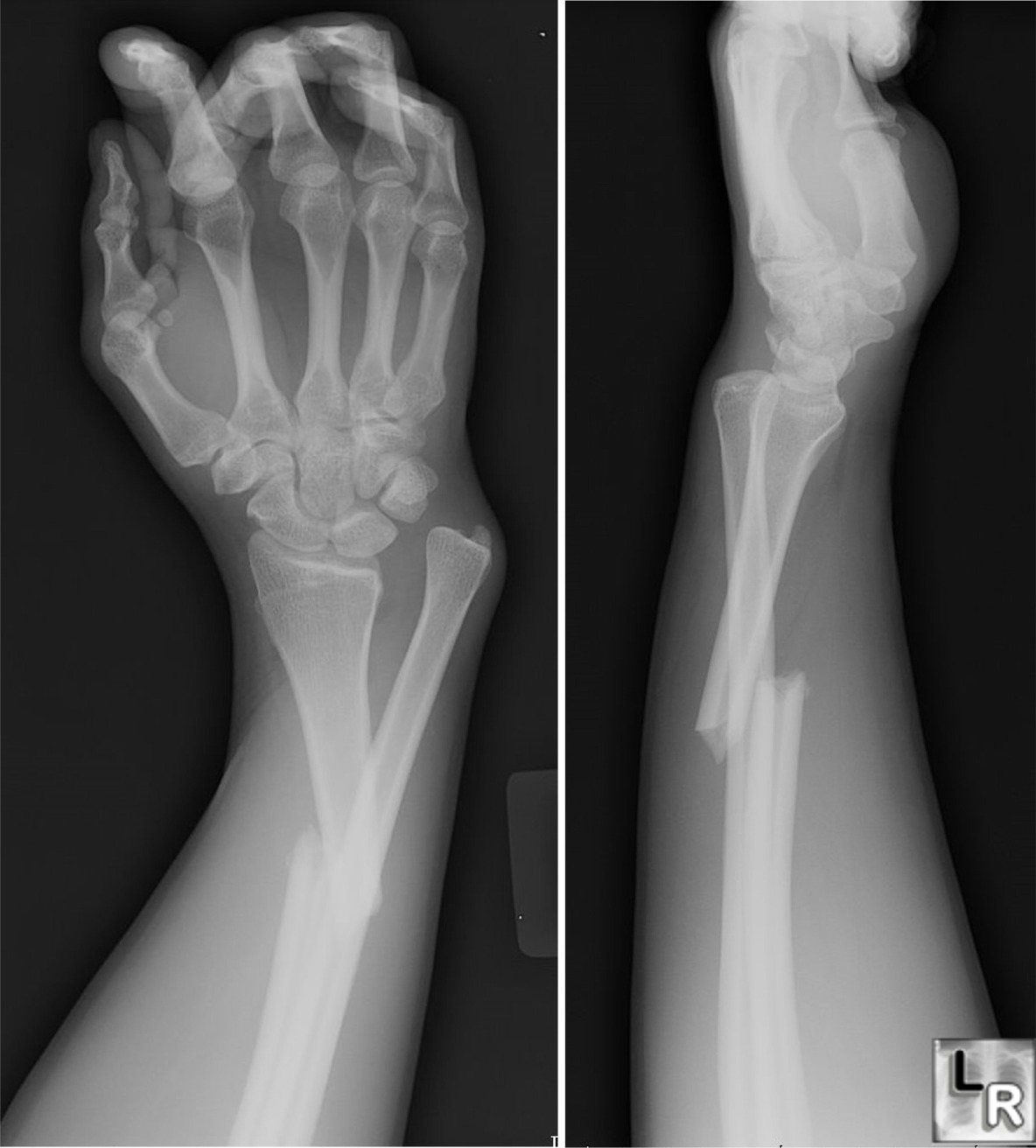
Title: Galeazzi Fracture

Category: Orthopedics

Keywords: Galeazzi, Fracture (PubMed Search)

Posted: 3/7/2009 by Michael Bond, MD (Updated: 3/4/2026)

The Galeazzi Fracture:

To see a photo of a Galeazzi fracture please visit the Learning Radiology Website by clicking on the following link:

http://www.learningradiology.com/caseofweek/caseoftheweekpix2/cow157lg.jpg


Title: Rocky Mountain spotted fever (RMSF)

Category: Pediatrics

Posted: 3/6/2009 by Rose Chasm, MD (Updated: 3/4/2026)

Rocky Mountain spotted fever (RMSF)


Systemic small vessel vasculitis caused by R rickettsii which is transmitted by a tick bite.


Clinical features: fever, headache, myalgia, nausea, vomiting, and characteristic rash. Rash usually appears before the sixth day of the illness initially on the wrists and ankles, and spreads to the trunk within hours.  Initially. It is erythematous and macular, later becoming petechial.

Laboratory findings: thrombocytopenia, anemia, and hyponatremia.

Complications: meningitis, multiorgan involvement, DIC, shock, and death. 

Treatment: doxcycycline (even despite the risk of dental staining in children younger than 8 years old)

Show References


Title: Clevidipine - A new IV calcium channel blocker

Category: Toxicology

Keywords: Clevidipine, calcium channel antagonist, calcium channel blocker, antihypertensive (PubMed Search)

Posted: 3/5/2009 by Ellen Lemkin, MD, PharmD (Updated: 3/4/2026)

Clevidipine

Show References


Title: Cavernous Sinus Thrombosis (Part II)

Category: Neurology

Keywords: cavernous sinus thrombosis, extraocular palsies (PubMed Search)

Posted: 3/5/2009 by Aisha Liferidge, MD (Updated: 3/4/2026)


Title: Evaluation of End Organ Damage in Hypertensive Patients

Category: Vascular

Keywords: Hypertension, End-Organ Damage (PubMed Search)

Posted: 3/3/2009 by Rob Rogers, MD (Updated: 3/4/2026)

Evaluation of End Organ Damage in Hypertensive Patients

No evidence to date supports the ED workup for end-organ damage in asymptomatic hypertensive patients.

End-Organ Damage Pearls:


Title: NMBs in intubated patients

Category: Critical Care

Posted: 3/3/2009 by Mike Winters, MBA, MD (Updated: 3/4/2026)

Neuromuscular Blocking Agent (NMBA)


Title: AMI and normal/non-specific ECGs

Category: Cardiology

Keywords: electrocardiography, acute myocardial infarction (PubMed Search)

Posted: 3/2/2009 by Amal Mattu, MD (Updated: 3/4/2026)

Initially normal ECGs may be found in 8% of patients with an acute MI, and 35% of patients with acute MI may have an initially non-specific ECG. The sensitivity of electrocardiography increases with serial ECG testing, but never reaches 100% in terms of sensitivity or reliability. The bottom line is that although ECGs are very good for ruling IN acute MI, they are not so great at ruling OUT acute MI. The HPI is the most important tool. ["Prognostic Value of a Normal or Nonspecific Initial ECG in AMI," JAMA 2001]

Title: The Ottawa Rules

Category: Orthopedics

Keywords: Ottawa, Ankle, Knee, Foot (PubMed Search)

Posted: 2/28/2009 by Michael Bond, MD (Updated: 3/4/2026)

Most people are familiar with the Ottawa Ankle Rules, but there are also Ottawa Knee and Foot rules.  The Ottawa rules help to limit the number of x-rays you may need in patients that present with ankle, foot or knee pain after an injury.

The Ottawa Ankle Rule

An ankle x-ray is only needed if there pain in the mallelolar area and any of the following:

The Ottawa Foot Rule

A foot x-ray is only needed if there is pain in the midfoot and any of the following:

The Ottawa Knee Rule

A knee x-ray is only needed for knee injury patients when they have any of the following:


Title: Pediatric Seizure Pearls

Category: Pediatrics

Keywords: pediatric seizures (PubMed Search)

Posted: 2/28/2009 by Don Van Wie, DO (Updated: 3/4/2026)

Show References


Title: Pharmacoeconomics

Category: Toxicology

Keywords: ondansetron, albuterol (PubMed Search)

Posted: 2/26/2009 by Fermin Barrueto (Updated: 3/4/2026)

As the economy worsens and our patients pay for more prescriptions out of pocket, here are some tips that may help you better serve your patients: 1) Ondansetron (zofran) is now off patent. Write generic on your script for zofran - for pediatrics the ODT (dissolving tablets) - are all much cheaper ($0.50 to $1.00 per pill or ODT). IV formulation is now cheaper than phenergan. Reglan is probably still the cheapest in most pharmacies. 2) Typical $4 antibiotics are the following: SMP-TMZ (Bactrim), Cephalexin, Amoxicillin, Penicillin, Ciprofloxacin. 3) Albuterol MDIs are now much more expensive because they have to be CFC free. Unfortunately, after this federal regulation, patients will have difficulty getting these inhalers which can be quite expensive. If you write a script and the patient is self-pay, they are going to have difficulty. Hospitals are beginning to discourage "to go" inhalers and even pills due to the fact that insurance companies DO NOT reimburse these costs - only IV meds.

Title: The Crashing Vented Patient

Category: Critical Care

Posted: 2/24/2009 by Mike Winters, MBA, MD (Updated: 3/4/2026)

The Crashing Intubated ED Patient


Previous  |  1 |  ... |  193 |  194 |  195 |  196 |  197 |  198 |  199 |  200 |  201 |  202 |  203 |  ... |  230 |  Next