Previous  |  1 |  ... |  199 |  200 |  201 |  202 |  203 |  204 |  205 |  206 |  207 |  208 |  209 |  ... |  230 |  Next

Title: Salvia Divinorum

Category: Toxicology

Keywords: Drugs of abuse, salvia, sage (PubMed Search)

Posted: 11/7/2008 by Ellen Lemkin, MD, PharmD (Updated: 3/4/2026)

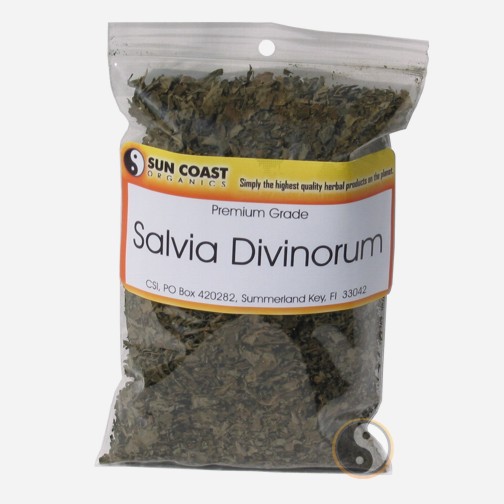
This is a psychoactive herb which can induce strong dissociative effects by stimulation of the kappa receptor. It has become increasingly well known and available in modern culture, and popularized by YouTube Salvia (also known as Sage, Diviner's Sage, Magic Mint, or Sally D) is usually smoked, but can be chewed or ingested.

The high it produces is very intense, but lasts only approximately 10 minutes. Currently many states have enacted legislation against it, including Fla, IL, KA, MI, MO, ND, OK and VA, but it is available over the internet.

  

The following video demonstrates clinical effects of drug.
Although it is amusing, this is not meant to condone use.

(if you can not view the embeded video here is the link)

http://www.youtube.com/watch?v=w6dgXX0ytSo


Title: Chiari Malformations

Category: Neurology

Keywords: chiari malformation, cerebellum, vertigo, congenital abnormalities (PubMed Search)

Posted: 11/5/2008 by Aisha Liferidge, MD (Updated: 3/4/2026)

              -  vertigo

              -  headache

              -  muscle weakness

              -  coordination abnormalities

              -  gait abnormalities

              -  visual abnormalities


Title: PERC Rules have been validated

Category: Vascular

Keywords: PERC Rules (PubMed Search)

Posted: 11/4/2008 by Rob Rogers, MD (Updated: 3/4/2026)

Pulmonary Embolism Rule Out Critieria (PERC) A brief reminder about the PERC rules... Use of the PERC (Pulmonary Embolism Rule-out Criteria) rule can significantly decrease work-up for pulmonary embolism. To apply this rule, the clinician must first use clinical gestalt to classify the patient as low risk. The PERC rule, which consists of eight clinical criteria including history, physical and vital signs, can then be used. If both of these criteria are met, then there is less than a 2 percent risk that this patient has a PE and no further work-up is needed. PERC Rule: Age < 50 years Pulse < 100 bpm SaO2 > 94% No unilateral leg swelling No hemoptysis No recent trauma or surgery No prior PE or DVT No hormone use This rule has now been validated in a large, multicenter trial. Bottom line: If you walk out of the room and your clinical gestalt is "no PE" and the PERC rule is negative, there is a <2% chance of pulmonary embolism (<2% probability, by the way, is what many PE experts consider the test threshold)

Show References


Title: Auto-PEEP

Category: Critical Care

Keywords: auto-peep, mechanical ventilation (PubMed Search)

Posted: 11/4/2008 by Mike Winters, MBA, MD (Updated: 3/4/2026)

Auto-PEEP in the non-COPD patient

Show References


Title: risk factors and CAD

Category: Cardiology

Keywords: coronary heart disease, cardiac disease, risk factors (PubMed Search)

Posted: 11/2/2008 by Amal Mattu, MD (Updated: 3/4/2026)

The classic risk factors for coronary artery disease (e.g. hypertension, diabetes, smoking, etc.) are helpful at predicting the long-term risk of CAD, but they have limited utility at predicting whether a patient with acute symptoms is having an acute coronary syndrome or not. In one recent study of > 800 patients with suspected cardiac chest pain, 12% of patients with NO cardiac risk factors ruled-in for acute MI.

Never rule out ACS in a patient purely based on the absence of traditional cardiac risk factors!

[Body R, McDowell G, Carley S, et al. Do risk factors for chronic coronary heart disease help diagnose acute myocardial infarction in the Emergency Department? Resuscitation 2008;79:41-45.]


Title: High Altitude Illnesses

Category: Misc

Keywords: high altitude illness (PubMed Search)

Posted: 11/1/2008 by Michael Bond, MD (Updated: 3/4/2026)

High altitude illnesses is typically called Acute mountain sickness (AMS) and is associated with two major complications high altitude pulmonary edema (HAPE) and high altitude cerebral edema (HACE).

Symptoms associated with AMS are headache, fatigue, nausea and vomiting, anorexia and insomia. Cough, Cyanosis, hypoxia, and dyspnea are associated with HAPE.  HACE is associated with progressive neurologic symptoms and can lead to ataxia and coma.

Factors that increase your risk for altitude illnesses are:


Title: Bacterial Conjunctivitis in Children

Category: Pediatrics

Keywords: bacterial conjunctivitis (PubMed Search)

Posted: 10/31/2008 by Don Van Wie, DO (Updated: 3/4/2026)

How do we know if we really need to put all those red eyes sent in from daycare centers and schools on antibiotics? The following study shows us why.

Bacterial Conjunctivitis in Children


Show References


Title: MDMA and SIADH

Category: Toxicology

Keywords: siadh, mdma, ecstasy (PubMed Search)

Posted: 10/30/2008 by Fermin Barrueto (Updated: 3/4/2026)

Methylenedioxymethamphetamine (MDMA) or "Ecstasy"

A designer club drug that has been classified as a "hallucinogenic" amphetamine though it does not cause visual hallucinations like are reported with LSD. It has many of the sympathomimetic effects like other amphetamines but its main mechanism of action which both causes the euphoria and toxicity is serotonin agonism. Since Anti-diuretic hormone is released by the hypothalamus under the direct regulation of serotonin, there is a transient but dangerous episode of Syndrome of Inappropriate ADH (SIADH). Combined with the club culture and fear of dehydration while taking MDMA, patients ingest MDMA concomitantly with free water through the night further exacerbating the hyponatremia. The time sequence of events for these patient is (women appear genetically predisposed to this phenomena):

Treatment: Fluid restriction - this is the one time that the 1L NS Bolus can kill a patient with cerebral edema. If you must give fluid give 3% NaCl if there is symptomatic hyponatremia. Remember the patient has dropped their sodium in about 24 hours so you can replenish in about the same time quite safely and even faster in severe cases. Treated correctly, patients improve rapidly - within 24-48 hours. Read a great case report in the reference below.

Show References


Title: Abbreviated NIH Stroke Scale

Category: Neurology

Keywords: NIHSS, stroke scales, motor function, visual fields, language, gaze (PubMed Search)

Posted: 10/29/2008 by Aisha Liferidge, MD (Updated: 3/4/2026)

              --  motor function (right leg)

              --  motor function (left leg)

              --  gaze

              --  visual fields

              --  language

Show References


Title: Ventilator Therapy in ED Patients with ARDS

Category: Critical Care

Keywords: PEEP, mechanical ventilation, ARDS (PubMed Search)

Posted: 10/28/2008 by Mike Winters, MBA, MD (Updated: 3/4/2026)

Ventilator Therapy for ED Patients with ARDS


Title: Reversal of Warfarin

Category: Vascular

Keywords: Warfarin (PubMed Search)

Posted: 10/27/2008 by Rob Rogers, MD (Updated: 3/4/2026)

Reversal of Warfarin

Reversal of Warfarin can be accomplished by administering any of the following:

A few pearls:


Title: syncope vs. seizures

Category: Cardiology

Keywords: syncope, seizure (PubMed Search)

Posted: 10/27/2008 by Amal Mattu, MD (Updated: 3/4/2026)

Syncope patients are often misdiagnosed as having a seizure. Some factors favoring true syncope:
1. Preceding nausea or diaphoreses
2. Oriented (not confused) upon waking (no post-ictal period).
3. Age > 45
4. Prolonged sitting or standing before episode
5. History of CHF or CAD

Factors favoring seizures:
1. History of seizure disorder
2. Tongue biting
3. Confusion upon waking
4. Loss of consciousness > 5 min
5. Age < 45
6. Preceding aura
7. Observed unusual posturing, jerking, or head turning during episode


Title: Management of Felons (Infections that is)

Category: Orthopedics

Keywords: felon, management, incision (PubMed Search)

Posted: 10/25/2008 by Michael Bond, MD (Updated: 3/4/2026)

Management of Felons

For good photos of the incision technique please visit the reference article listed.

Clark, DC. Common Acute Hand Infections. Am Fam Physician 2003;68:2167-76

Show References


Title: Erythema Infectiosum

Category: Pediatrics

Keywords: Erythema Infectiosum,parvovirus B-19 (PubMed Search)

Posted: 10/24/2008 by Don Van Wie, DO (Updated: 3/4/2026)

With the cooler weather on us all our favorite viral infections will start to appear.  Included in this is the "slapped - cheek disease" Erythema infectiosum. 

Erythema Infectiosum


Title: Olanzapine - Know the Adverse Effects

Category: Toxicology

Keywords: anticholinergic, olanzapineA (PubMed Search)

Posted: 10/24/2008 by Fermin Barrueto (Updated: 3/4/2026)

 Olanzapine (Zyprexa)

This is an atypical antipsychotic that gained popularity because it caused less sedation and fewer extrapyramidal effects. However, there are many other adverse effects that need to be emphasized. Some of these may contribute to a patient's condition in the ED:


Title: Antiemetics to Treat Migraine Headaches

Category: Neurology

Keywords: migraine, anitemetic, Reglan, metoclopramide, prochlorperazine, Compazine, diphenhydramine (PubMed Search)

Posted: 10/22/2008 by Aisha Liferidge, MD (Updated: 3/4/2026)


Show References


Title: Influenza and the Critically Ill

Category: Critical Care

Keywords: influenza, zanamivir, oseltamivir (PubMed Search)

Posted: 10/21/2008 by Mike Winters, MBA, MD (Updated: 3/4/2026)

 Influenza and the Critically Ill


Show References


Title: Reversal of Heparin

Category: Vascular

Keywords: HeparinPro (PubMed Search)

Posted: 10/20/2008 by Rob Rogers, MD (Updated: 3/4/2026)

Anticoagulation with Heparin-How to Reverse?

So you just started Heparin on that ACS patient? Just bolused the patient in room 12 with the large PE with a slug of Heparin? The nurse tells you that one of them just vomited blood and the other just had a large bloody bowel movement. What to do, oh, what to do?

How to reverse Heparin...use Protamine:


Title: amiodarone and hypothyroidism

Category: Cardiology

Posted: 10/19/2008 by Amal Mattu, MD (Updated: 3/4/2026)

Amiodarone-induced hypothyroidism is well-reported and should be considered anytime a patient that chronically takes amiodarone presents with hypothyroid symptoms, including decompensated CHF, decreased mental status, or myxedema coma (e.g. bradycardia, hypotension, hypothermia). 

Other drugs that have been implicated in producing hypothyroidism include lithium, iodine, iodinated contrast, and sulfonamides.


Title: Bisphenol-A: A national concern

Category: Toxicology

Keywords: bisphenol A, diabetes (PubMed Search)

Posted: 10/16/2008 by Fermin Barrueto (Updated: 3/4/2026)

Bisphenol A (BPA) is found in epoxy resins that line common food and beverage materials. There has been concern that this compound, like phthalates, may be causing harm through chronic low exposure. An epidemiologic study was performed and published in JAMA that has raised this question. Amazingly, the study did find that:

Show References


Previous  |  1 |  ... |  199 |  200 |  201 |  202 |  203 |  204 |  205 |  206 |  207 |  208 |  209 |  ... |  230 |  Next