To feed of off Dr. Liferidge's last pearl - a few more points relevant to your Emergency Department practice:
Internal Jugular CVC Placement and Posterior Wall Penetration
Aortoenteric Fistula (AEF)-Beware the Upper GI Bleed!
Important points about AEF:
Pearl: Suspect a aortoenteric fistula in any patient with a prior AAA repair who presents with an upper GI bleed (may also be lower GI bleed)
The elderly are at tremendous risk of death after MI, in no small part because we tend to undertreat them. The 30-day mortality rate after MI in patients < 65 is 3%.
In patients 65-74, the 30-day mortality is 10%.
In patients 75-84, the 30-day mortality is 20%.
In patients > 85, the 30-day mortality is 30%.
Be vigilant and be aggressive with elderly patients. Their early management has a tremendous bearing on their later outcomes.
Postpartum Headaches:
Ciguatera
Dexmedetomidine and the Critically Ill
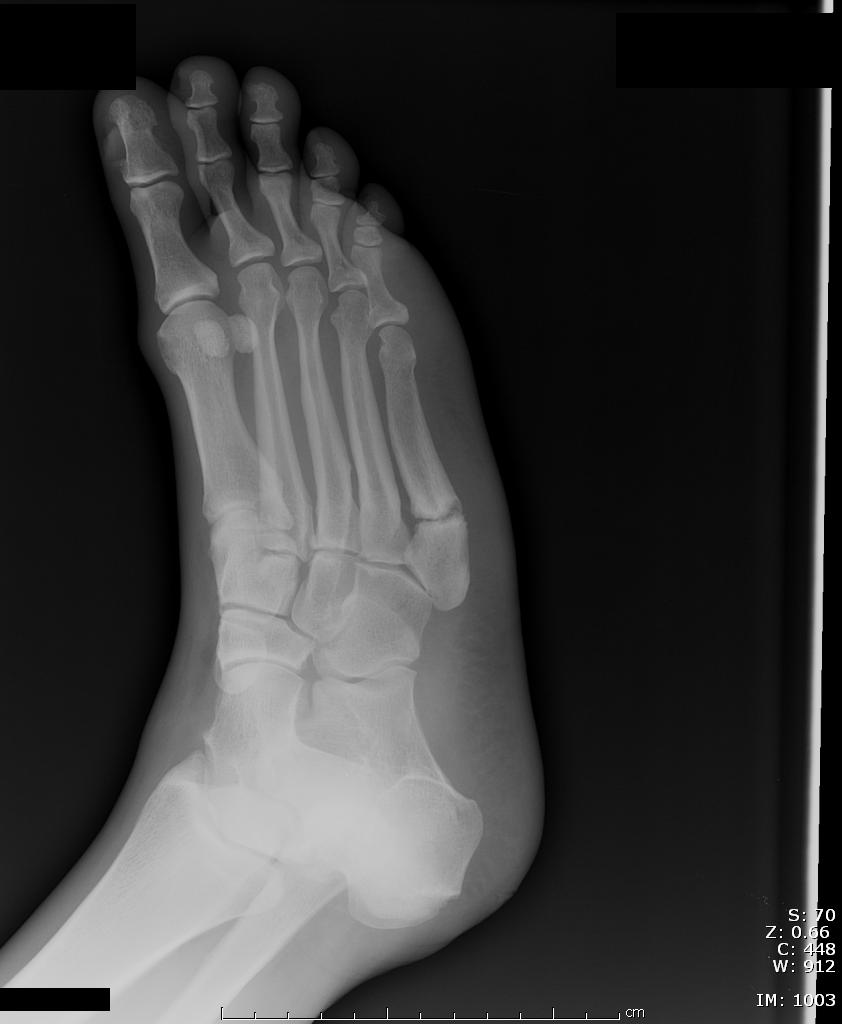
Jones fracture
Presented with persistant foot pain from
Jones fracture malunion.
Lorazepam Infusions
Great case of bradycardia today in the ED-requiring transvenous pacemaker....cause?? K 7.6
Some bradycardia pearls:
A recent study from Mayo evaluated 238 patients with acute pericarditis and found that the "classic" features of acute pericarditis that we learned about are actually not as common as we think:
1. Only 50% of patients reported that their pain was positional and 70% reported that their pain was pleuritic. On the other hand, 12% reported pain that was typical anginal in nature.
2. Only 35-45% of patients reported a recent history of a viral illness.
3. Only 15-25% of patients had a friction rub.
4. Further complicating matters was the presence of positive troponin levels in 13% of the patients.
In this study, 17% of patients were sent for PCI because the treating physicians diagnosed the patients as having an acute MI. This study highlights the importance of maintaining pericarditis in the DDx of any patients with chest pain, even when it "sounds like an MI," and also maintaining vigilance for atypical features of pericarditis.
NG Tubes and Foleys:
Dovetailing off Dr. Hayes Lidocaine pearl on Thursday I thought we could provide an additional pearl on how to decrease pain with the insertion of Foleys and NG tubes.
Most providers use regular surgilube and coat the tip of the NG tube and foley with it prior to inserting it. Unfortunately this tends to only lubricate the first several centimeters of the passage you are trying to transverse, making the rest of the way a little uncomfortable.
Using a Uroget of viscious lidocaine allows you to actually inject the lubricant into the nares or urethral meatus. This will provide better lubrication of the entire passage and also provide some anesthesia.
Even if you do not want to use lidocaine most foley kits come with a syringe full of surgilube that can be injected into the urethral meatus helping to lubricate the passage.
One of the options in our armamentarium prior to inserting an NG tube or performing a non-emergent nasotracheal intubation is nebulized lidocaine. However, the total dose is always a concern with this anesthetic agent before we have to worry about toxicity such as lightheadedness, tremors, hallucinations, seizures, and cardiac arrest. Here are some points to remember:
![]()