Previous  |  1 |  ... |  84 |  85 |  86 |  87 |  88 |  89 |  90 |  91 |  92 |  93 |  94 |  ... |  230 |  Next

Title: Drug-induced Hypoglycemia: An Important Cause of Morbidity

Category: Toxicology

Keywords: Hypoglycemia, Sulfonylureas (PubMed Search)

Posted: 8/4/2016 by Kathy Prybys, MD

Drug-induced hypoglycemia is an often severe and symptomatic. It is a potentially preventable cause of significant morbidity. In one large study, it accounted for 23% for hospital admissions due to adverse drug events and 4.4% of overall admissions. The majority of hypoglycemic events occur with insulin and sulfonylureas. However, multiple drugs can affect glucose homeostasis and have been cited to cause hypoglycemia in therapeutic dose alone or in combination with other medications or illness. Factors that predispose to low blood sugar include reduced food intake, age, hepatic and renal disease, and severe infection. Beware of the possibility of inducing hypoglycemia in patients taking the following:

Agents with lesser quality evidence as predisposing medications or illnesses were present:

Drugs induced hypoglycemia should always be considered in the differential diagnosis of every patient presenting with low blood glucose. Octreotide antagonizes pancreatic insulin secretion and should be considered for first-line therapy in the treatment of sulfonylurea-induced hypoglycemia particularly when glucose levels cannot be maintained by dextrose infusions. Octreotide is administered 50 mcg subcutaneously (1-10 mcg in children) every 12 hours.

Show References


Title: Are synthetic opioids next novel designer drugs of abuse in the U.S?

Category: Toxicology

Keywords: novel synthetic opioid, U-47700 (PubMed Search)

Posted: 8/3/2016 by Hong Kim, MD (Updated: 3/10/2026)

Recently, there have been several news reports regarding the emergence of synthetic opioids in the U.S. and Canada. There are multiple synthetic opioids that have been identified as potential agents of abuse including W-18, U-47700, fentanyl derivatives, AH-7921 and MT-45. These compounds share a similar story with synthetic cannabinoid where they were synthesized for research purpose or by pharmaceutical companies but were not marketed. They are often sold as “research chemicals” over the internet.

In July 2016, three case reports have been published regarding several cases of U-47700 intoxication in San Diego, CA and Dallas, TX.


It is unknown if currently available heroin is cut with above mentioned synthetic opioids. Like other opioid receptor agonists, administration of naloxone will likely reverse the opioid toxidrome. But clinical experience in reversing synthetic opioids intoxication with naloxone is limited.  


Bottom line:

Irrespective of whether an ED patient is exposed to synthetic opioids or "traditional" opioids of abuse (prescription opioid pain medication or heroin), the management of opioid intoxication management remains unchanged for respiratory depression. 

  1. Airway management: bag-valve assisted ventilation if needed
  2. Naloxone administration (initial dose: 0.04 to 0.4 mg IV) with titration as needed. 

Show References


Title: What's an Arbovirus?

Category: International EM

Keywords: Arbovirus, mosquitos (PubMed Search)

Posted: 8/3/2016 by Jon Mark Hirshon, MPH, MD, PhD (Updated: 3/10/2026)

An Arbovirus is a virus transmitted primarily by an arthropod

There are a number of major arbovirus families:

The main viral family that causes substantial human disease is the Flaviviridae family.


Title: Does ETCO2 Predict ROSC in Cardiac Arrest?

Category: Critical Care

Keywords: ROSC, Cardiac Arrest, ETCO2 (PubMed Search)

Posted: 8/2/2016 by Rory Spiegel, MD

Despite a lack of prospective data, end-tidal CO2 (ETCO2) is often proposed as a viable replacement for the traditional pulse check to identify return of spontaneous circulation (ROSC) in patients presenting to the Emergency Department in Cardiac Arrest. A recent study by Tat et al examined this very question. The authors prospectively enrolled 178 patients suffering out-of-hospital cardiac arrest (OHCA) and examined the accuracy of a rise in ETCO2 at predicting ROSC. The authors examined both a rise of 10 and 20 mm Hg in ETCO2. Of the 178 patients included in this cohort, 60 (34%) experienced ROSC. The sensitivity and specificity of ETCO2 to predict ROSC at a threshold of 10 mm Hg was 33% and 97% respectively. At a threshold of 20 mm Hg ETCO2 performed no better with a sensitivity and specificity of 20% and 99% respectively.

What this data suggests is while a rise of ETCO2 of greater than 10 is highly suggestive of ROSC, the contrary cannot be said. The absence of a spike in ETCO2 does not rule out ROSC, as the large majority of patients experiencing ROSC in this cohort did so without demonstrating a significant rise in ETCO2. This evidence suggests that ETCO2 is a poor surrogate for a pulse check.

Show References


Title: A Miller for All? (submitted by Joshua McClain, MD)

Category: Pediatrics

Keywords: airway. mac (PubMed Search)

Posted: 7/29/2016 by Mimi Lu, MD

The pediatric epiglottis is more "U" shaped, often overlies the glottic opening, and is "less in line with the trachea."1 Because of this, it has traditionally been taught that a Miller blade is the ideal laryngoscope.

Varghese et al compared the efficacy of the Macintosh blade and the Miller blade when placed in the vallecula of children between the ages of 1 and 24 months. The blades provided similar views and suffered similar failure rates. When the opposite blade was used as a backup, it had a similar success rate as the opposing blade.2 Passi et al also compared these two blades, this time placing the Miller blade over the epiglottis. Again, similar views were achieved.3

Show References


Title: Subarachnoid hemorrhage - How Do you Diagnose It?

Category: Neurology

Keywords: SAH, headache, LP, CTA (PubMed Search)

Posted: 7/27/2016 by Danya Khoujah, MBBS

Over the past few years, there have been numerous studies discussing the "best" way to diagnose subarachnoid hemorrhage (SAH). These 2016 guidelines review the current evidence.
Classic approach: dry CT, and if negative perform the lumbar puncture (LP)
It is the most common approach, with the most robust evidence. Still considered "standard of care"
Dry CT alone: Sensitivity of a dry CT alone for SAH has increased with improved technology, and the sensitivity is highest when done within the first 6 hours of headache onset. Despite studies quoting a sensitivity of 100% within 6 hours, this evidence is still insufficient due to concerns for selection bias in the study, and the fact that the CTs in the study were read by neuroradiologists.

CT/CTA: CTA is very sensitive for aneurysmal SAH (98% for aneurysms >3mm). CTA would miss non-aneurysmal SAH, but would detect aneurysms that may or may not need to be treated before rupture. It is a reasonable strategy to exclude aneurysmal SAH in select patients, and in patients who refuse LPs or in whom the LP results are equivocal.
Bottom Line: CT/LP is still standard of care, with CT/CTA being an acceptable alternative if LP is equivocal or refused by the patient. CT alone is NOT enough to exclude SAH.

Show References


Title: ETCO2 and Fluid Responsiveness

Category: Critical Care

Posted: 7/26/2016 by Mike Winters, MBA, MD

Predicting Fluid Responsiveness with ETCO2

Show References


Title: Pectoralis Major Rupture

Category: Orthopedics

Keywords: Chest, muscle injury (PubMed Search)

Posted: 7/24/2016 by Brian Corwell, MD

30yo male weight lifter who 10 days ago had a painful left shoulder injury after bench press. The next morning his left anterior chest wall and left upper arm were bruised and swollen. He went to see his PCP who diagnosed him with a muscle strain. 8 days later the bruising and swelling have resolved but he still cant move his shoulder and comes to the ED.

http://321gomd.com/wp-content/uploads/2015/01/pec-major-tears.jpg

The pec major attaches to the humerus and originates from the sternum and clavicle

Injury is usually due to tendon rupture off the humerus but can also occur at the muscle tendon junction or within the muscle belly itself.

Injury is becoming increasingly common due to the popularity in power lifting sports.

Mechanism: excessive tension on a maximally eccentrically contracted muscle.

Patients will complain of pain and weakness of the shoulder.

PE: Swelling and bruising to anterior medial arm. Palpable defect and deformity or anterior axially fold (may be hidden by swelling).

Weakness and pain with adduction and internal rotation and forward flexion

Chronic presentations can be challenging to diagnose. Consider ultrasound

Non operative treatment may be indicated for partial tears (sling, ice, NSAIDs)

Operative repair of tendon avulsions is very successful. Patients age, occupation/activity level and location of injury and condition of tear are considered.


Title: Fentanyl and the Neurologically Injured Patient

Category: Critical Care

Posted: 7/20/2016 by Mike Winters, MBA, MD

Fentanyl and the Neurologically Injured Patient
  • Emergency providers routinely care for neurologically injured patients, such as those with a SAH or TBI.
  • Many of these patients will require airway management. In these patients, it is important to minimize any increase in ICP, as this can adversely effect cerebral perfusion pressure.
  • When intubating the neurocritical care patient, consider a dose of fentanyl (2 to 5 mcg/kg) prior to intubation. This has been shown to decrease the sympathomimetic response to laryngoscopy.

Show References


Title: International Blood Donation

Category: International EM

Keywords: World Health Organization, blood donation (PubMed Search)

Posted: 7/20/2016 by Jon Mark Hirshon, MPH, MD, PhD (Updated: 7/20/2016)


Table 1. Prevalence of TTIs in blood donations (Median, Interquartile range (IQR)), by income groups


HIV

HBV

HCV


High-income countries

0.003%

(0.001% – 0.040%)

0.030%

(0.008% – 0.180%)

0.020%

(0.003% – 0.160%)


Middle-income countries

0.120%

(0.020% – 0.340%)

0.910%

(0.280% – 2.460%)

0.320%

(0.090% – 0.690%)


Low-income countries

1.080%

(0.560% – 2.690%)

3.700%

(3.340% – 8.470%)

1.030%

(0.670% – 1.800%)


Submitted by: Dr. Laura Diegelmann


Title: Non-Musculoskeletal Causes of Neck Pain

Category: Misc

Keywords: Neck pain (PubMed Search)

Posted: 7/16/2016 by Michael Bond, MD (Updated: 3/10/2026)

Non-Musculoskeletal Causes of Neck Pain

Neck pain is a common complaint of people presenting to the ED. Most of the cases will be musculoskeleteal in origin and will respond to conservative therapy with NSAIDs or acetominophen. However, other non-musculoskeletal causes of pain could be lurky behind this benign complaint.

Don't forget to consider:

  1. Early mengingitis (84% of patients with meningitis will complain of neck stiffness)
  2. Myocardial infarction/angina. Women are known to have atypical symptoms and might just have dull pain in their neck. Be sure to ask about whether exertion increases the pain.
  3. Epidural Abscess- fever and neuro symptoms are often missing early on. Make sure to ask about risk factors for spinal epidural abscess.
  4. Vertebral Artery Discection - most common identifiable cause of stroke in your people.  <50% are associated with trauma and <8% of patients have connective tissue disorder. Patients are at increased risk if they have had
    1. Cervical trauma (remember seen in < 50% of cases)
    2. Recent infection
    3. Hypertension
    4. h/o migraines


Title: Upcoming influenza immunization recommendations 2016-2017

Category: Pediatrics

Keywords: Intranasal vaccine, immunizations (PubMed Search)

Posted: 7/15/2016 by Jenny Guyther, MD

Although it is summer, preparations are being made for the 2016-2017 influenza season. The Center for Disease Control (CDC) no longer recommends the live attenuated influenza vaccine (LAIV4). The American Academy of Pediatrics has supported this statement.

The LAIV4 (the only intranasal vaccine available) was offered to patients over the age of 2 years without respiratory problems. Observational studies during the 2013-2015 seasons have shown that the LAIV4 has an adjusted vaccine efficacy of 3% compared to 63% for the inactivated vaccine (intramuscular). Children who received the intranasal vaccine were almost 4 times more likely to get the flu compared to children who received the injection.

Bottom line: Only the intramuscular shot is recommended for this upcoming season. This is causing many primary care practices to scramble to obtain enough vaccine.

Show References


Title: Screening Tool for Large Vessel Occlusion Strokes?

Category: Neurology

Keywords: Large vessel occlusion stroke, endovascular intervention, Field Assessment Stroke Triage for Emergency Destination, FAST-ED, NIHSS, Rapid Arterial Occlusion Evaluation, RACE, Cincinnati Prehospital Stroke Severity scale, CPSS (PubMed Search)

Posted: 7/13/2016 by WanTsu Wendy Chang, MD

 
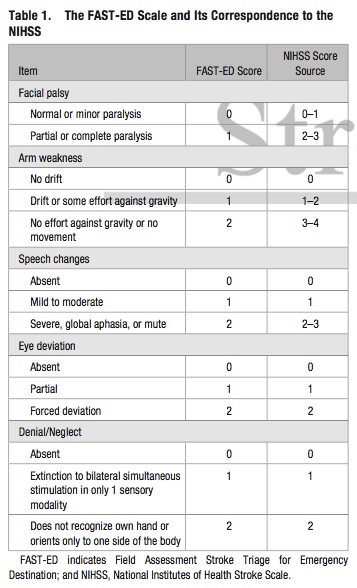
Screening Tool for Large Vessel Occlusion Strokes (LVOS)?
 

Bottom Line: Additional assessment of gaze deviation, aphasia and neglect, as included in the FAST-ED scale, increases the accuracy of predicting LVOS.  

Show References


Title: LVADs and RV Failure

Category: Critical Care

Posted: 7/12/2016 by Mike Winters, MBA, MD

LVADs and RV Failure

Show References


Title: Foot Sesamoid injuries

Category: Orthopedics

Keywords: Foot injury, bipartate (PubMed Search)

Posted: 7/10/2016 by Brian Corwell, MD

Sesamoid Injuries

Unlike other bones in the human body that are connected to each other at joints, sesamoid bones are only connected via tendons (or are imbedded in muscle).

The largest sesamoid bone is the patella.

2 small sesamoid bones lie on the plantar foot near the great toe

Sesamoid bones can fracture and the surrounding tendons can become inflamed (sesamoiditis)

Traumatic injury is usually due to hyperextension and axial loading

Sx: Pain located under the great toe on the ball of the foot (Gradual with sesamoiditis and acutely with a fracture).

There may be associated swelling and bruising. Pain with palpation, flexion and extension.

The medial/tibial sesamoid is larger, has great weight bearing status and is more commonly injured that its lateral counterpart.

In many people (10 - 25%) the medial sesamoid of the foot has two parts (bipartite). This finding is bilateral in 25% of people.

This may confuse some providers as it may appear to be a fracture

Look for a smooth contour to the bones and clinically correlate (bruising, soft tissue swelling, etc.) if it is an incidental finding.

Other radiographic clues include

1) The fractured sesamoid is usually slightly larger than the lateral sesamoid while the bipartite sesamoid has a much larger medial sesamoid than lateral sesamoid

2) The fractured sesamoid shows a sharp, radiolucent, uncorticated line between the two fragments while the bipartite sesamoid has two corticated components

3) The fractured sesamoid fragments often fit together like pieces of a puzzle while the bipartite sesamoid has two components that do not fit together snugly

4) Other means to differentiate the two involve MRI and bone scanning

Treatment involves a stiff-soled shoe or applying a cushioning pad or J-shaped pad around the area to relieve pressure.

It may take months for the pain to subside.

http://www.apfmj-archive.com/afm5_3/afm50.htm#F1

Show References


Title: What is a disaster?

Category: International EM

Keywords: Disaster, mass casuality (PubMed Search)

Posted: 7/6/2016 by Jon Mark Hirshon, MPH, MD, PhD

There are many definitions for a disaster.  Per the International Federation of Red Cross and Red Crescent Societies (IFRC), they define a disaster as:“…a sudden, calamitous event that seriously disrupts the functioning of a community or society and causes human, material, and economic or environmental losses that exceed the community’s or society’s ability to cope using its own resources. Though often caused by nature, disasters can have human origins.”


However, in the heat of the moment, a shorter definition is easier to remember. The IFRC also define a disaster as:


A shorter, more practical definition is:


Show References


Title: Fluoroquinolones and risk of tendon rupture

Category: Pharmacology & Therapeutics

Keywords: fluoroquinolone, tendon rupture (PubMed Search)

Posted: 7/2/2016 by Michelle Hines, PharmD (Updated: 7/2/2016)

Fluoroquinolone antibiotics are used to treat a wide range of infections and as prophylaxis against infection in certain immune compromised patients. In 2008 the FDA issued a boxed warning for tendonitis and tendon rupture for the fluoroquinolone antibiotic class, and in May 2016 a statement recommending the use of alternate therapies for uncomplicated UTIs and upper respiratory infections was issued. The mechanism by which fluoroquinolones causes tendon injury has not been elucidated, but may be related to oxidative stress caused by the overproduction of reactive oxygen species in tenocytes.

Adverse event reporting to the FDA is performed voluntarily by healthcare professionals and consumers through MedWatch. An analysis of tendon rupture events associated with fluoroquinolone use reported to the FDA’s Adverse Event Reporting System (FAERS) database was recently published.

What they found:

Application to clinical practice:

Show References


Title: Sensitivity of plain pelvis radiography in children with blunt torso trauma

Category: Orthopedics

Keywords: Trauma, pelvis, plain films (PubMed Search)

Posted: 6/26/2016 by Brian Corwell, MD

Plain films are commonly used to screen children for pelvic fractures or dislocations following blunt torso trauma

The sensitivity of this common screening practice is unknown

A recent study looked at this question.

Of 451 patients with pelvic fractures or dislocations, 382 had AP radiographs. Injury was correctly identified in 297 patients (sensitivity 78%).

The sensitivity was greater in the sicker subgroups :92% for those requiring operative intervention and 82% for those with hypotension

Plain AP pelvic radiographs should have a limited role in the sole evaluation of children with blunt torso trauma.

They should be incorporated in the assessment of hemodynamically unstable children and those in whom the clinician is not planning on otherwise obtaining an abdominal/pelvis CT.

Show References


Title: Laundry detergent pods exposure - the hidden danger.

Category: Toxicology

Keywords: Pediatric exposure, laundry detergent pods (PubMed Search)

Posted: 6/23/2016 by Hong Kim, MD

Laundry detergent pods were introduced in 2012 to make washing clothes more "convenient." Since then, pediatric exposures to laundry detergent pods have increased as the use of these detergent pods have become more common in homes. Like other household chemical exposure, small, colorful candy like appearances of laundry detergent pods can attract the attention of < 3 years old children resulting in unintentional exposure due to curiosity or taste.

Most frequent clinical effects (2013 - 2014 national poison center data) from exposure to detergents in general (laundry detergent pods and nonpods & dishwasher detergent):

Laundry detergent pod vs. nonpods:

Laundry detergent pods (only) also resulted in following:

Cases of caustic exposure-like injuries have also been reported (corneal abrasion and esophageal injury)

Bottom line:

Pediatric laundry detergent (nonpods) exposures usually have self-limited symptoms. However, laundry detergent pod exposure can cause more serious clinical effects that may require hospitalization.

Show References


Title: Acute Multiple Sclerosis Relapse

Category: Neurology

Keywords: MS, steroids, MRI (PubMed Search)

Posted: 6/23/2016 by Danya Khoujah, MBBS

Multiple sclerosis (MS) relapses are defined as new or worsening neurologic deficits lasting 24 hours or more in the absence of fever or infection. Symptoms may be visual, motor, sensory, balance or cognitive. It is a clinical diagnosis, but the presence of a new gadolinium-enhancing lesion on MRI can be used as a radiologic marker of an MS relapse. However, it is unclear whether asymptomatic lesions should be treated, making it prudent to rely on the clinical evaluation rather than the MRI for diagnosis.

Moderate to severe relapses should be treated within 1 week of onset. The mainstay of treatment for relapses is IV methylprednisolone, usually dosed at 500mg to 1g per day for 3-7 days.

Similar symptoms occurring in the presence of fever, heat exposure, stress or infection (such as urinary or upper respiratory tract infections) are "pseudoexacerbations", and should not be treated as an MS relapse.

Show References


Previous  |  1 |  ... |  84 |  85 |  86 |  87 |  88 |  89 |  90 |  91 |  92 |  93 |  94 |  ... |  230 |  Next