1-20 of 81 results by WanTsu Wendy Chang

Previous |  1 |  2 |  3 |  4 |  5 |  Next

Title: Neurological Adverse Reactions with Antimicrobials

Category: Neurology

Keywords: drug reaction, toxicity, neurotoxicity, antibiotics (PubMed Search)

Posted: 11/11/2021 by WanTsu Wendy Chang, MD

Bottom Line: Recognition of antibiotic associated neurotoxicity reduces unnecessary workup and serious adverse effects. 

Show References


Title: Emergency Department Burr Hole (Submitted by Dr. Christina Powell)

Category: Neurology

Keywords: burr hole, trephination, subdural hematoma, epidural hematoma, herniation (PubMed Search)

Posted: 10/13/2021 by WanTsu Wendy Chang, MD

Your patient presents with a large traumatic subdural hematoma with midline shift and clinical evidence of herniation.  Your nearest neurosurgeon is several hours away, what do you do?

Initial resuscitation should follow ATLS.  Treatment of intracranial hypertension and herniation includes elevating the head of bed, administering osmotic therapies, optimizing analgesia/sedation, and hyperventilation.  If all measures have been exhausted and there is a delay to definitive neurosurgical intervention, an emergency department burr hole may be considered.

Indications:

Contraindications:

Equipment:

Transtemporal Approach:

Additional Points:

Show References


Title: Thrombectomy for Basilar Artery Occlusion?

Category: Neurology

Keywords: stroke, large vessel occlusion, basilar artery, posterior circulation, thrombectomy (PubMed Search)

Posted: 6/9/2021 by WanTsu Wendy Chang, MD

Bottom Line: There is no significant difference between endovascular thrombectomy and medical management for basilar artery occlusion strokes within 6 hours of symptom onset. 

Show References


Title: Factors that Decrease Post-Lumbar Puncture Headaches

Category: Neurology

Keywords: Lumbar puncture, LP, post-dural, headache, intracranial hypotension (PubMed Search)

Posted: 5/12/2021 by WanTsu Wendy Chang, MD (Updated: 3/4/2026)

Bottom Line: The use of atraumatic needles is most effective in reducing the risk of post-LP headaches. These needles are easy to use and have similar rate of success as cutting needles.

Show References


Title: Functional Neurological Disorders in the ED

Category: Neurology

Keywords: functional neurological disorder, FND, stroke mimic, non-epileptic seizure (PubMed Search)

Posted: 4/28/2021 by WanTsu Wendy Chang, MD

Bottom Line: Functional neurological disorders (FND) are commonly encountered in the ED. A thorough neurological exam may reveal positive signs suggestive of FND. Early diagnosis and referral to specialists may improve outcomes. 

Show References


Title: Alteplase Administration Errors in Stroke

Category: Neurology

Keywords: acute ischemic stroke, alteplase, tPA, thrombolysis, error (PubMed Search)

Posted: 4/15/2021 by WanTsu Wendy Chang, MD

Bottom Line: Alteplase administration in acute ischemic stroke is associated with errors, most commonly with over-dosage of the medication.

Show References


Title: The Rising Incidence of Idiopathic Intracranial Hypertension

Category: Neurology

Keywords: Idiopathic intracranial hypertension, IIH, pseudotumor cerebri, obesity, healthcare utilization (PubMed Search)

Posted: 3/10/2021 by WanTsu Wendy Chang, MD

Bottom Line: The incidence and prevalence of IIH is increasing, likely related to rising rate of obesity. This has also been associated with more healthcare utilization compared to the general population.


Show References


Title: Is There a Seasonal Variation to Bell's Palsy?

Category: Neurology

Keywords: Bell's palsy, facial palsy, Lyme disease, Borrelia burgdorferi (PubMed Search)

Posted: 2/24/2021 by WanTsu Wendy Chang, MD (Updated: 3/4/2026)

Bottom Line: In a Lyme-endemic area, the incidence of positive Lyme tests and Bell’s palsy are highest in the Lyme months. This seasonal variation may help guide the management of patients with Bell’s palsy.


Show References


Title: Does My Seizure Patient Need An EEG?

Category: Neurology

Keywords: seizure, status epilepticus, nonconvulsive, electrographic, EEG (PubMed Search)

Posted: 1/27/2021 by WanTsu Wendy Chang, MD (Updated: 3/4/2026)

Bottom Line: Persistent or recurrent seizures are not uncommon in the first 24 hours after status epilepticus even in patients with resolved clinical seizure activity. Early use of EEG can help identify patients who need further escalation of treatment.


Show References


Title: Do All Post-tPA Patients Require ICU Care?

Category: Neurology

Keywords: stroke, thrombolysis, tissue plasminogen activator, tPA, monitoring (PubMed Search)

Posted: 1/13/2021 by WanTsu Wendy Chang, MD

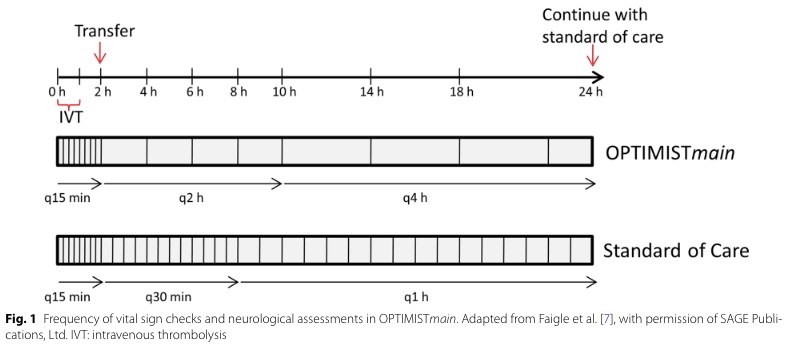
Bottom Line: Patients with NIHSS <10 may be safe for low-intensity post-tPA monitoring if they do not require critical care after an initial period of q15 min standard monitoring for the first 2 hours.
Show References


Title: Does Language Preference Affect Acute Stroke Care?

Category: Neurology

Keywords: acute ischemic stroke, guideline, metric, English, non-English (PubMed Search)

Posted: 12/10/2020 by WanTsu Wendy Chang, MD (Updated: 12/10/2020)

Bottom Line: Patients' language preference does not appear to affect the efficiency of acute ischemic stroke care, especially at experienced high volume stroke centers. 

Show References


Title: What Makes a Headache a Migraine?

Category: Neurology

Keywords: migraine, headache, diagnosis, treatment, prevention (PubMed Search)

Posted: 11/11/2020 by WanTsu Wendy Chang, MD (Updated: 11/13/2020)

Bottom Line: Migraine is a common and debilitating condition that benefits from early treatment. Consider initiating preventive therapy for patients who experience at least 2 migraine days per month and adverse effects despite treatment.

Show References


Title: Central vs. Peripheral Nervous System Lesions A Summary of Clinical Findings

Category: Neurology

Keywords: CNS, PNS, UMN, LMN, reflex, Babinski, tone (PubMed Search)

Posted: 10/14/2020 by WanTsu Wendy Chang, MD

  Central Nervous System Peripheral Nervous System
Pattern of Symptoms
Hemibody involvement
Weakness of UE extensors
Weakness of LE flexors
Distal involvement in polyneuropathy
Distal and proximal involvement in polyradiculoneuropathy
Proximal involvement in polyradiculopathy
Sensory often precedes motor symptoms 
Pure proximal>distal weakness may be due to myopathy or NMJ disorder
Sensory Symptoms
• Central poststroke pain (hyperalgesia, allodynia)
• Sensory level in spinal cord pathology 
• Proprioception involved early in dorsal column disorders
Neuropathic pain (burning, tingling, shock-like) 
Ascending sensory loss involving distal BLE>BUE in polyneuropathy
Proprioception involved late in polyneuropathy
Reflexes
Hyperreflexia in affected limb(s) after acute period
Positive Babinski’s sign
Hyporeflexia in affected limb(s)
Tone Increased after acute period Decreased
UE = upper extremity
LE = lower extremity
NMJ = neuromuscular junction
 
Bottom Line: A systematic approach to the evaluation of weakness and sensory complaints in the ED help differentiate between central vs. peripheral nervous system pathology.


Show References


Title: CVT Presentation and Management

Category: Neurology

Keywords: cerebral venous thrombosis, CVT, symptoms, treatment, endovascular (PubMed Search)

Posted: 9/23/2020 by WanTsu Wendy Chang, MD

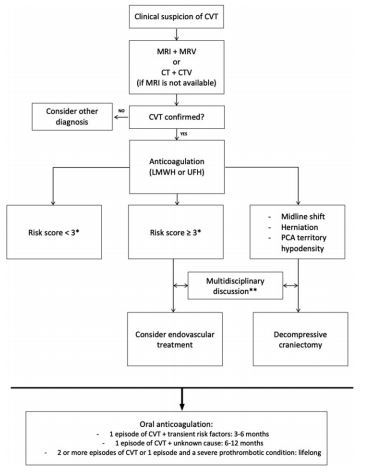
Bottom Line: Severity of CVT presentation depends on the location and clot burden. Anticoagulation is key, though consider endovascular intervention if patient does not improve or deteriorates despite anticoagulation.


Show References


Title: The Rising Incidence of Cerebral Venous Thrombosis

Category: Neurology

Keywords: cerebral venous thrombosis, CVT, prothrombotic, headache (PubMed Search)

Posted: 9/10/2020 by WanTsu Wendy Chang, MD

  • Cerebral venous thrombosis (CVT) is thought to predominantly affect young and middle-aged females. 
    • Known risk factors include prothrombotic states such as malignancy and oral contraceptive use, as well as local infections and head trauma.
  • The incidence of stroke in young adults is rising worldwide.
  • A recent study by Otite et al. examined the incidence of CVT during 2006-2016 in New York and Florida utilizing the State Inpatient Database.
    • CVT remains an uncommon condition though number of admissions increased 70%.
    • Mean age of patients increased with number of hospitalizations in the elderly doubled.
    • Incidence was highest in Blacks, followed by non-Hispanic Whites and Hispanics.
  • This rise in incidence may be related to increased recognition, improved diagnostic studies, increased neuroimaging utilization, emerging or unknown risk factors. 

Bottom Line: The incidence of CVT is increasing with rate of increase higher in males and older females.  Consider CVT beyond traditional risk factors. 


Show References


Title: The Painful Twitch - Trigeminal Neuralgia

Category: Neurology

Keywords: trigeminal neuralgia, TN, tic douloureux, neuropathic facial pain (PubMed Search)

Posted: 8/26/2020 by WanTsu Wendy Chang, MD

Bottom Line: New onset trigeminal neuralgia needs workup for its etiology. Carbamazepine and oxcarbazepine can be effective for symptom management though continuous or long-lasting pain exacerbations are difficult to treat.

Show References


Title: Is That a CSF Leak?

Category: Neurology

Keywords: cerebrospinal fluid, rhinorrhea, otorrhea, halo, double ring, beta-2 transferrin (PubMed Search)

Posted: 8/12/2020 by WanTsu Wendy Chang, MD (Updated: 3/4/2026)

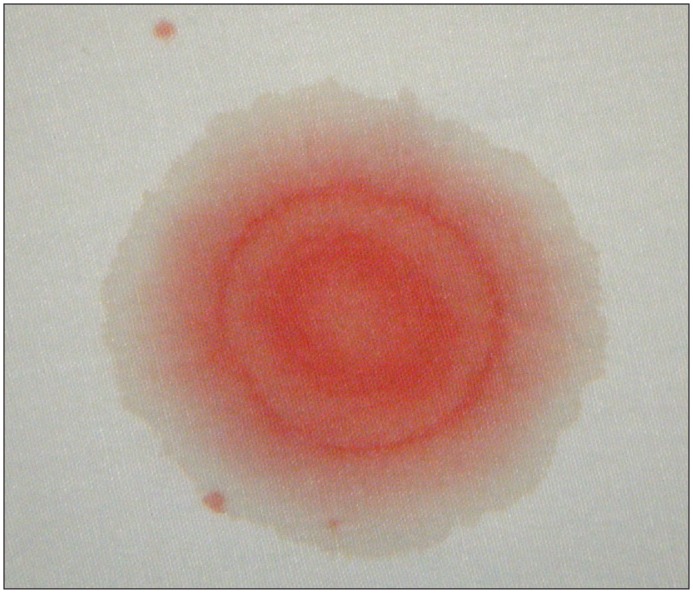
Bottom Line: Beta-2 transferrin is more accurate than the halo sign to identify CSF containing fluid.

Beta-2 transferrin is found in low concentrations in the perilymph in the cochlea, and aqueous and vitreous humor of the eye


Show References


Title: The Headache Formerly Known as Pseudotumor Cerebri (Submitted by Ryan Spangler)

Category: Neurology

Keywords: idiopathic intracranial hypertension, papilledema, intracranial pressure, cranial nerve palsy (PubMed Search)

Posted: 7/8/2020 by WanTsu Wendy Chang, MD

Idiopathic intracranial hypertension (IIH) is a vision-threatening illness with significant morbidity and needs to be considered as a possible headache diagnosis in the ED. Most often, this occurs in women of childbearing age with a BMI >30, but atypical varieties exist.

Symptoms: Headache (90%), visual disturbance, pulsatile tinnitus, horizotal diplopia.

Signs: Papilledema, 6th cranial nerve (abducens) palsy.

Evaluation: Neuroimaging including CTV or MRV to identify alternate cause including cerebral venous outflow obstruction, lumbar puncture with opening pressure >30 cmH2O (25-30 cmH2O is gray zone), blood work per clinical presentation, CSF analysis.

Treatment: No clear consensus, but typically acetazolamide. Severe or refractory symptoms may require surgical intervention such as optic nerve sheath fenestration, VP shunt, venous sinus stenting.

Show Additional Information

Show References


Title: Neurological Conditions Affected by Pregnancy

Category: Neurology

Keywords: pregnancy, postpartum, migraine, RCVS, CVT, Bell's Palsy, facial palsy (PubMed Search)

Posted: 6/10/2020 by WanTsu Wendy Chang, MD

Bottom Line: Pregnancy is associated with an increased risk for RCVS, CVT, and Bell’s Palsy. Pregnancy also affects the frequency of migraines due to hormonal fluctuations.

Show References


Title: What Affects Patient Decision on Head CT in mild TBI?

Category: Neurology

Keywords: traumatic brain injury, clinical decision rule, CT utilization, patient decision, benefit, risk, financial incentive (PubMed Search)

Posted: 5/14/2020 by WanTsu Wendy Chang, MD (Updated: 3/4/2026)

Bottom Line: Discussion of benefit/risk and financial incentive associated with head CT in mild TBI affects patient decision. Interestingly in this population studied, more than half of patients will elect to obtain a head CT even in a low-risk scenario.

Show References


Previous |  1 |  2 |  3 |  4 |  5 |  Next