Clinical signs and symptoms of clonidine overdose include CNS depression, bradycardia, and miosis. Other effects include early hypertension, followed by hypotension and respiratory depression, especially in children.
Although clonidine overdose in children is well described, frequency of clinical signs/symptoms in adults is not well characterized.
Recently, a retrospective study was performed in a hospital in Australia looking at clonidine overdose in adults.
Among isolated clonidine overdose, patients experienced:
Bottom line:
While lung protective ventilatory strategies have long been accepted as vital to the management of patients undergoing mechanical ventilation, the translation of such practices to the Emergency Department is still limited and inconsistent.
Fuller et al employed a protocol ensuring lung-protective tidal volumes, appropriate setting of positive end-expiratory pressure, rapid weaning of FiO2, and elevating the head-of-bed. The authors found the number of patients who had lung protective strategies employed in the Emergency Department increased from 46.0% to 76.7%. This increase in protective strategies was associated with a 7.1% decrease in the rate of pulmonary complications (ARDS and VACs), 14.5% vs 7.4%, and a 14.3% decrease in in-hospital mortality, 34.1% vs 19.6%.
While lung protective ventilatory strategies have long been accepted as vital to the management of patients undergoing mechanical ventilation, the translation of such practices to the Emergency Department is still limited and inconsistent.
Fuller et al employed a protocol ensuring lung-protective tidal volumes, appropriate setting of positive end-expiratory pressure, rapid weaning of FiO2, and elevating the head-of-bed. The authors found that the number of patients who had lung protective strategies employed in the Emergency Department increased from 46.0% to 76.7%. This increase in protective strategies was associated with a 7.1% decrease in the rate of pulmonary complications (ARDS and VACs), 14.5% vs 7.4%, and a 14.3% decrease in in-hospital mortality, 34.1% vs 19.6%.
Phenytoin is a first line anticonvulsant agent for most seizure disorders with the exception of absence and toxin-induced seizures. It has erratic gastrointestinal absorption with peak serum levels occurring anywhere from 3-12 hours following a single oral dose. 90% of circulating phenytoin is bound to albumin but only the unbound free fraction is active to cross cell membranes and exert pharmacological effect. Measured serum phenytoin levels reflect the total serum concentration of both the free and protein bound portions. Therapeutic range is between 10-20 mg/L. Free phenytoin levels are not often measured but are normally between 1-2 mg/L. Individuals with decreased protein binding (elderly, malnourished, hypoalbuminemia, uremia, and competing drugs) may have clincial toxicity despite a normal total phenytoin level. Toxicity consists of predominantly ocular and neurologic manifestations involving the vestibular and cerebellar systems:
| Plasma level, µg/mL | Clinical manifestations |
| <10 | Usually none |
| 10-20 | Occasional mild nystagmus |
| 20-30 | Nystagmus |
| 30-40 | Ataxia, slurred speech, extrapyramindal effects |
| 40-50 | Lethargy, confusion |
| >50 | Coma, rare seizures |
Treatment of overdose is primarily supportive with serial drug level testing and neurologic exams. There is no evidence that gastrointestinal decontamination improves outcome. Routine cardiac monitoring is not necessary for overdose following oral ingestions. Cardiac toxicity is rarely seen and only with parenteral administration.
The World Health Organization (WHO) recently published their first ever list of antibiotic-resistant "priority pathogens". These 12 families of bacterial pathogens have the potential to be a significant threat to human health.
These bacteria are divided in critical, high and medium priority pathogens.
The critical pathogens requiring R & D for new antibiotics are:
1. Acinetobacter baumannii, carbapenem-resistant
2. Pseudomonas aeruginosa, carbapenem-resistant
3. Enterobacteriaceae, carbapenem-resistant, ESBL-producing
22yo college track athlete presents with 3 weeks of gradual onset groin and thigh pain, worse with running, better with rest.
Stress fractures are a common cause of groin pain in athletes, particularly in long distance runners
Fractures occur in the pubic rami and femoral neck
Ask about a sudden change in training regimens
PE: check for tenderness to deep palpation over the pubic ramus. Ask athlete to stand and support full weight on affected leg or perform one legged hop on affected side. Pain out of proportion to physical examination findings.
Imaging: XR usually negative. Bone scans can be positive as early as 4 to 8 days after symptom onset. MRI used to diagnose and rule out other causes of groin pain.
Treatment: Rest for 4 to 6 weeks. Consider making patient non weight bearing if walking causes pain especially with femoral neck fractures on the superior side. Inferior side neck fractures may benefit from prophylactic fixation.
Preoxygenation in Critically Ill Patients
The Beers' Criteria lists 34 classes of medications that may be potentially inappropriate for geriatric patients due to a high risk of complications including increased risk for falls. When prescribing medications from the emergency department in geriatric patients, try to avoid these categories if other options are available.
http://www.americangeriatrics.org/files/documents/beers/BeersCriteriaPublicTranslation.pdf
The addition of diazepam to naproxen for patients with acute, nontraumatic, nonradicular lower back pain did not improve pain or functional outcomes at 1 week or 3 months after ED discharge compared to placebo.
Excited delirium syndrome (EDS) is a life-threatening condition caused by a variety of factors including drug intoxication. EDS is defined as altered mental status, hyperadrenergic state, and combativeness or aggressiveness. It is characterized by tolerance to significant pain, tachypnea, diaphoresis, severe agitation, hyperthermia, non-compliance or poor awareness to direction from police or medical personnel, lack of fatigue, superhuman strength, and inappropriate clothing for the current environment. These patients are at high risk for sudden death. Toxins associated with this syndrome include:
Ketamine at 4mg/kg dose can be given by intramuscular route and has been demonstrated to be safe and effective treatment for EDS.
Emergency department crowding is an almost universal problem. Whether it is called "access block" (Austalia) or "boarding" (United States), it is seen everywhere.
The American College of Emergency Physicians (ACEP) states that "a “boarded patient” is defined as a patient who remains in the emergency department after the patient has been admitted to the facility, but has not been transferred to an inpatient unit."
It should be clear that the primary cause of overcrowding is boarding: the practice of holding patients in the emergency department after they have been admitted to the hospital, because no inpatient beds are available. This practice has been shown to have an adverse impact on patients, with longer delays causing greater morbidity and mortality.
ACEP has created resources to help address this issue, including an emergency medicine practice paper on high impact solutions. See: file:///Users/jhirshon/Downloads/EMPC_Crowding%20IP_092016%20(1).pdf
A recently published study adds to the growing body of literature supporting the use of IV//IM ketamine as a first line agent for the control of the acutely agitated patient. In this observational cohort Riddell et al found patients given ketamine more frequently achieved adequate sedation at both 5 and 10 minutes compared to benzodiazepines, Haloperidol, given alone or in combination. This rapid sedation was achieved without an increase in the need for additional sedation or the rate of adverse events.
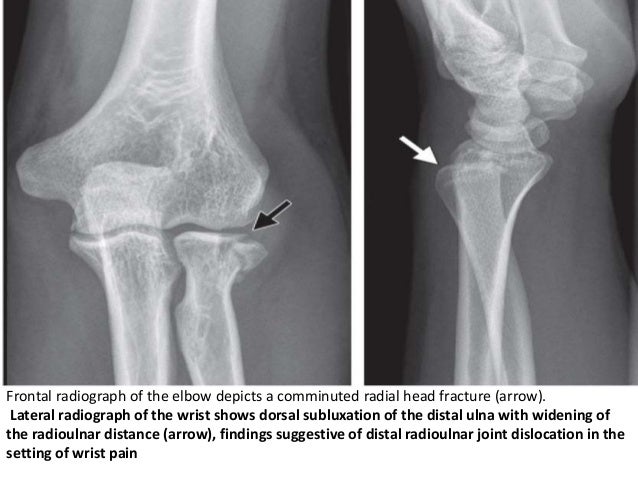
The Essex-Lopresti injury pattern is the lesser known of the triad of forearm injuries (Monteggia & Galeazzi).
It follows the “rule of the ring” aka the life saver candy rule: You can’t break a life saver in just one place.
These injury patterns are frequently missed because our eyes are drawn to the fracture and miss the associated dislocation.
The Essex-Lopresti fracture pattern involves a fracture of the radial head with concomitant dislocation of the distal radio-ulnar joint (DRUG)
-With associated interosseous membrane disruption
Think of it as the Maisonneuve fracture of the forearm.
Mechanism: fall from height/high energy forearm trauma.
PE: Suspect if patient has significant tenderness at the DRUG with a radial head fx.
Patients have worse outcomes if injury is missed on initial presentation due to radial migration and instability.
Take home point: Remember the rule of the ring. Remember to exam the elbow with wrist injuries and the wrist with all elbow injuries
Treatment of Low Back Pain
A recent recommendation from the American College of Physicians (Internal Medicine) now recommends nonpharmacologic therapies as the first line treatment of acute or subacute lower back pain lasting 12 weeks or less. This might bring more people to our Emergency Departments so it is important that we know their current recommendations.
Some nonpharmacologic therapies recommended are:
For acute back pain they recommend:
For chronic back pain:
A 12 year old with arm pain after doing push ups during gym class. What is the diagnosis?
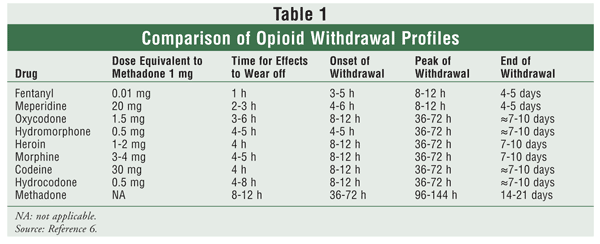
The current opioid epidemic is considered the worst drug crisis in American history responsible for 50,000 deaths per year in the US from overdose of heroin and opioid prescription drugs. A 200% increase in the rate of overdose deaths involving opioids occurred between 2000 and 2014. The continued rise in opioid related deaths calls for an urgent need for treatment. Three types of medication-assisted therapies (MATs) are available for treating patients with opioid addiction:methadone, buprenorphine, and naltrexone. Suboxone a combination of buprenorphine and naloxone, is emerging as one of the best choices for the following reasons: