Previous  |  1 |  ... |  155 |  156 |  157 |  158 |  159 |  160 |  161 |  162 |  163 |  164 |  165 |  ... |  230 |  Next

Title: Bougie-Assisted Cricotyrotomy

Category: Critical Care

Keywords: bougie, cricothyrotomy, trauma, critical care, intubation, failed airway (PubMed Search)

Posted: 8/16/2011 by Haney Mallemat, MD

The open cricothyrotomy technique is taught as the trauma airway standard when one “cannot intubate and cannot ventilate” however, it is not without difficulty and limitations. The B.A.C.T. (Bougie-Assisted Cricothyrotomy Technique) may improve the procedure by using a bougie to assist.

Steps for the B.A.C.T. (as described in the paper):
1. Stabilize the larynx with the thumb and middle finger, then identify the cricothyroid membrane.
2. Make a transverse stabbing incision with a scalpel through both skin and cricothyroid membrane.
3. Insert tracheal hook at the inferior margin of the incision and pull up on the trachea.
4. Insert a bougie through the incision with curved tip directed towards the feet
5. Pass 6-0 endotracheal tube or Shiley over bougie into trachea.

Advantages of a bougie:
1. Thin and easy to insert into incision
2. Tactile feedback from tracheal rings confirms proper placement
3. Ensures that stoma will not be lost during procedure

EMRAP.tv has a great video of Dr. Darren Braude demonstrating the procedure;
http://bit.ly/nB3BMG

Show References


Title: bacteremia in the elderly

Category: Geriatrics

Keywords: infection, sepsis, bacteremia, geriatrics, elderly (PubMed Search)

Posted: 8/14/2011 by Amal Mattu, MD

The most common sources of bacteremia and serious bacterial infections in the elderly are the GU tract, the respiratory tract, and #3-the abdomen.

This third source is a bit of a surprise to many clinicians but worth remembering. Always consider the abdomen as the source of dangerous infections in the elderly when the source is not clearly the lungs or urine!

Show References


Title: Acute brachial plexus neuritis

Category: Orthopedics

Keywords: Brachial plexus neuritis, neck pain (PubMed Search)

Posted: 8/13/2011 by Brian Corwell, MD (Updated: 3/5/2026)

Acute brachial plexus neuritis is an uncommon disorder that is easily confused with cervical radiculopathy.

Patients present with a characteristic pattern of acute onset of burning pain.  Pain subsides in days to weeks and is then followed by profound weakness and muscle wasting changes affecting the shoulder  and upper extremity. Weakness is best identified in the deltoid, biceps and rotator cuff muscles. Strength gradually recovers over 3-4 months.

DDX:  The constellation of pain, weakness and sensory loss associated with cervical radiculopathy tend to occur simultaneously.  Also cervical radiculopathy tends to involve only a  single root.

ED treatment is with analgesics and physical therapy and PCP referral for outpatient MRI/EMG. Consider a sling in those with severe shoulder weakness.

Show References


Title: Adenosine in Patients Using Caffeine

Category: Toxicology

Keywords: adenosine, caffeine (PubMed Search)

Posted: 8/11/2011 by Bryan Hayes, PharmD (Updated: 8/11/2011)

Caffeine can interfere with the successful reversion of paroxysmal supraventricular tachycardia (SVT) by adenosine.

Caffeine is an adenosine receptor blocker.

Ingestion of caffeine less than 4 hours before a 6-mg adenosine bolus significantly reduced its effectiveness in the treatment of SVTTheophylline is similar but not many patients are prescribed it anymore.

An increased initial adenosine dose may be indicated for these patients. A first dose of 12 mg (instead of 6), followed by 2nd and 3rd doses of 18 mg (instead of 12) may be indicated.

Show References


Title: Does Administering Antibiotics Before Lumbar Puncture Affect CSF Analysis?

Category: Neurology

Keywords: cerebrospinal fluid, meningitis, lumbar puncture (PubMed Search)

Posted: 8/10/2011 by Aisha Liferidge, MD

Show References


Title: ED Thoracotomy

Category: Critical Care

Posted: 8/9/2011 by Mike Winters, MBA, MD

When may an ED thoracotomy be futile?

Show References


Title: What's the Diagnosis? Images submitted by Dr. Joy Kay

Category: Visual Diagnosis

Posted: 8/8/2011 by Haney Mallemat, MD (Updated: 8/8/2011)

Question

13 year-old right-hand dominant male following assault with blunt object. Diagnosis?


Show Answer

Show References


Title: drug effects in the elderly

Category: Geriatrics

Keywords: geriatrics, polypharmacy, elderly (PubMed Search)

Posted: 8/7/2011 by Amal Mattu, MD (Updated: 3/5/2026)

Here are a few important points to keep in mind when evaluating elderly patients in the ED or when prescribing a new drug:

Pay special attention to medication lists and new prescriptions in the elderly....much more attention than with younger patients!

Show References


Title: Oral Phenytoin Loading

Category: Pharmacology & Therapeutics

Keywords: phenytoin (PubMed Search)

Posted: 8/6/2011 by Bryan Hayes, PharmD (Updated: 8/6/2011)


Title: Noteworthy updates seen in the 2010 PALS guidelines

Category: Pediatrics

Posted: 8/5/2011 by Vikramjit Gill, MD (Updated: 3/5/2026)

1)      C-A-B for CPR. Now recommended to start compressions immediately instead of the conventional rescue breaths.

2)      Capnography during CPR. Continuous capnography recommended during CPR to guide the resuscitation, especially the effectiveness of chest compressions.

a.     If ETCo2 is less than 10 to 15 mm Hg consistently, focus your efforts on improving chest compressions.

3)      Etomidate for RSI induction.  Okay to use in infants and children, BUT not recommended for pediatric patients in septic shock.  Etomidate was not addressed in 2005 guidelines.

4)      Cuffed ET tubes. Acceptable to use in infants and children.

5)      Limit FiO2 after resuscitation.  Keep O2 sats ≥94%.  Avoid hyperoxia.

6)      Therapeutic hypothermia after cardiac arrest.  Recommendation based off of adult data, no pediatric prospective RCT done on this.  This is beneficial in adolescents with out-of-hospital VF arrest.

a.      Consider therapeutic hypothermia for infants and children.

b.      Cool to 32oC-34oC                                      


Show References


Title: acetaminophen

Category: Toxicology

Keywords: acetaminophen,pain (PubMed Search)

Posted: 8/4/2011 by Ellen Lemkin, MD, PharmD


o   The FDA is now asking manufacturers to limit the amount of acetaminophen in combination products to 325 mg per dose.

o   The higher dose formulations will be phased out by 2014.

o   The FDA is also considering lowering the maximum total to 3 gm per day, and a maximum dose of 650 mg per dose

o   This does not pertain to OTC, but this is likely to change in the near future; Johnson & Johnson (manufacturer of Tylenol) has already adopted these recommendations.

Show References


Title: Use of Thrombolytics for Acute Ischemic Stroke after Minor Surgery

Category: Neurology

Keywords: thrombolytics, acute ischemic stroke, stroke, hemorrhage, dental procedures, minor surgery (PubMed Search)

Posted: 8/3/2011 by Aisha Liferidge, MD

Show References


Title: Pregnancy Pearls in Trauma

Category: Critical Care

Keywords: trauma, resuscitaiton, pregnancy, IVC, supine hypoventilation, edema, intubation, RSI, desaturaiton (PubMed Search)

Posted: 8/2/2011 by Haney Mallemat, MD

Pregnancy causes many physiologic changes, which may be challenging during trauma resuscitations. A few pearls on the ABC’s:

Airway

Breathing

Circulation

Show References


Title: The Ten Commandments in Emergency Medicine-Advice for the Old and the New

Category: Medical Education

Keywords: Interns, Emergency Medicine (PubMed Search)

Posted: 8/1/2011 by Rob Rogers, MD (Updated: 3/5/2026)

In a 1991 article published by Wrenn and Slovis, the ten commandments of emergency medicine are discussed. This is an awesome article and a must read for everyone in EM.

Michelle Lin recently mentioned these on her blog, Academic Life in Emergency Medicine....

The Ten Commandments of Emergency Medicine:

1. Secure the ABC's
2. Consider or give naloxone, glucose, and thiamine
3. Get a pregnancy test
4. Assume the worst
5. Do not send unstable patients to radiology
6. Look for common red flags
7. Trust no one, believe nothing (not even yourself)
8. Learn from your mistakes
9. Do unto others as you would do to your family (and that includes coworkers)
10. When in doubt, always err on the side of the patient

These are great teaching pearls for new interns and for the rest of us as well....

Show References


Title: Wound Repair

Category: Misc

Keywords: Wound, Repair (PubMed Search)

Posted: 7/30/2011 by Michael Bond, MD

Wound Repair

A pearl last year addressed the irrigation of wound and the fact that the type of fluid (sterile versus tap water) does not affect infection rates but rather the volume of irrigation is most important.

Sterile versus unsterile gloves have also been studied, and it turns out that clean unsterile gloves have the same rate of infection as sterile gloves but come with a substantial cost savings.

When caring for a contaminated wound it is most important to remove any gross contamination, and then irrigate the wound as much as possible.  A 20 mL syringe with an 18G angio-catheter provides the proper pressure to remove debris without causing tissue damage. The wound can then be closed wearing the gloves that are most comfortable or accessible to you.

Finally, from a medicolegal standpoint it is always best to inform the patient that you have tried to remove all of the contamination but there is still a chance that the wound can get infected. 


Title: Acute Poststreptococcal Glomerulonephritis

Category: Pediatrics

Posted: 7/29/2011 by Mimi Lu, MD

Acute Poststreptococcal Glomerulonephritis (APSGN) is a sequela of group A beta-hemolytic streptococci (GAS) infection of the skin or pharynx with nephrogenic strains of GAS.  Damage to the kidneys is due to deposition of antigen-antibody complexes in the glomeruli

Presentation:

- Onset of APSGN averages 10 days after pharyngitis and 3 weeks following cellulitis.
- Nephritic syndome - hematuria (classically "coa-colored"), mild proteinuria, edema (periorbital), hypertension
- Additional symptoms: orthopnea, dyspnea (volume overload), lethargy, vomiting, fever, headache

Testing:

- Urinalysis (hematuria, proteinuria), creatinine (with subsequent hyperkalemia, acidosis)
- Bacterial cultures of skin or pharynx not useful as rarely positive at time of presentation
- Antistreptolysin O (ASO) titer elevated if preceding pharyngitis but rarely skin infections
- Antideoxyribonuclease B (anti-DNAse B) titers typically elevated in both
- Suppressed C3 level

Treatment:

- Predominately symptomatic: salt an water restriction
- Treatment of hyperkalemia, hypertension (loop diuretics)
- Antibiotics vs GAS (although does not affect clinical course of APSGN, eradicates GAS in individual and reduces transmission of nephrogenic GAS to community
- Profound renal failure may require hemodialysis or peritoneal dialysis

Prognosis (favorable):

- Hypertension and gross hematuria resolve over weeks (microscopic may last years)
- Proteinuria resolves over months
- Creatinine returns to baseline over 3-4 weeks


Reference:

Kit, Brian. Assess the volume status and electrolytes in children with poststreptococcal glomerulonephritis. Avoiding Common Pediatric Errors. 2008. p356-57.


Title: Fluoroquinolone-Induced Tendon Rupture

Category: Toxicology

Keywords: fluroquinolone, tendon rupture (PubMed Search)

Posted: 7/28/2011 by Bryan Hayes, PharmD

The incidence of tendon rupture related to fluoroquinolone use is reported to be in the range of 1 in 6000.

The risk of tendon rupture associated with FQ use is increased in those older than 60 years of age, those taking steroids, and in patients who have received heart, renal, or pulmonary transplants.

There is no evidence that tendon rupture is more likely for patients taking levofloxacin compared to other FQs.

Show References


Title: Central Pontine Myelinolysis - What it is and How to Prevent it

Category: Neurology

Keywords: central pontine myelinolysis, hypernatremia (PubMed Search)

Posted: 7/27/2011 by Aisha Liferidge, MD (Updated: 3/5/2026)


Title: Blood Pressure Measurements in the Critically Ill Obese Patient

Category: Critical Care

Posted: 7/26/2011 by Mike Winters, MBA, MD

Blood Pressure in the Critically Ill Obese Patient

Show References


Title: What's the Daignosis?

Category: Visual Diagnosis

Posted: 7/25/2011 by Haney Mallemat, MD (Updated: 8/28/2014)

Question

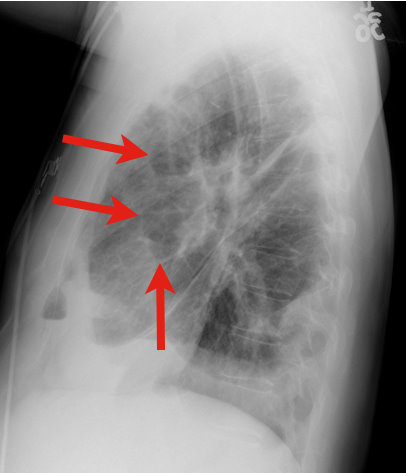
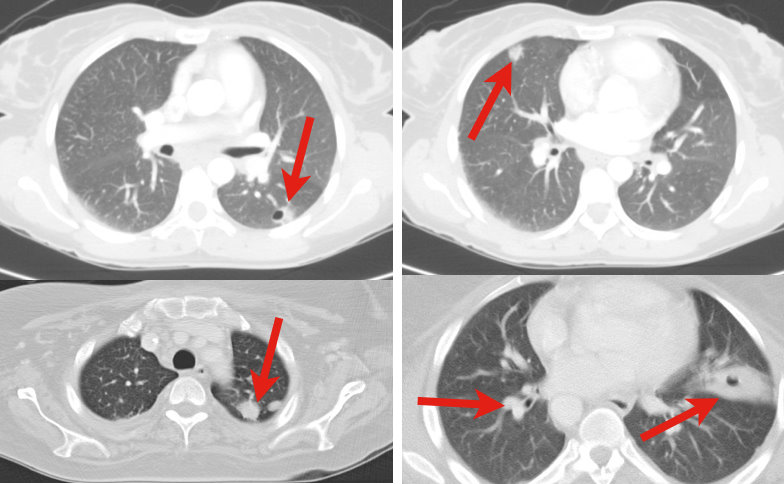
34 y.o. male with history of IVDA (intravenous drug abuse) complains of fever, chills and cough. Diagnosis?


Show Answer

Show References


Previous  |  1 |  ... |  155 |  156 |  157 |  158 |  159 |  160 |  161 |  162 |  163 |  164 |  165 |  ... |  230 |  Next