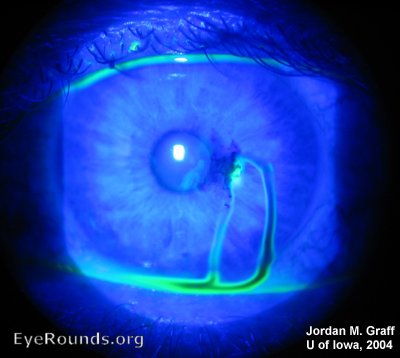
Prior research has shown that EPs can accurately detect ocular pathology using POCUS.
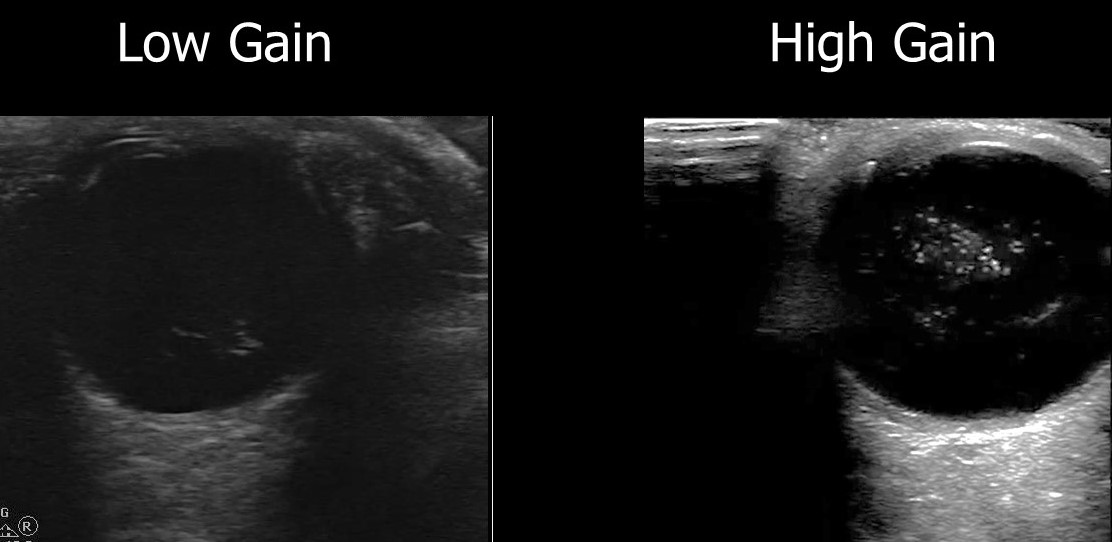
A recent retrospective review looked at how ultrasound image gain levels impacted the accuracy of POCUS for detection of retinal detachment, retinal hemorrhage and posterior vitreous detachment.
They included 383 ED patients who received ocular POCUS and ophthalmology consultations.
Conclusions: The authors found that increasing the gain for ocular POCUS images allowed for increased sensitivity.
Here is an example of a vitreous hemorrhage on ocular POCUS using low gain and high gain.
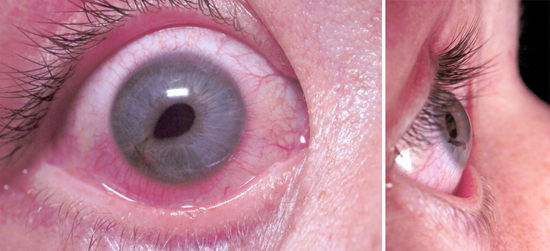
All to often we see children that are sent to the ED for "Pink Eye" as the school nurse will not allow them back into class unless they are treated with antibiotics. A recent study out of New York identified 4 factors that are associated with low risk (<8% chance) of bacterial (culture postive) conjunctivitis. They are:
An editorial in journal watch comments that if this study can be replicated in other geographic areas we could change the practice of prescribing antibiotics that are not necessary.
Iritis is a common diagnosis in the ED, but did you know it was actually a subset of Uveitis.
Uveitis is an inflammation of one or all parts of the uveal tract which consists of the iris, the ciliary body, and the choroid.
The subsets of uveitis are:
Treatment of iritis and uveitis next week.
Some of the causes of acute vision loss are:
Vision loss whether acute or chronic is a common presenting complaint to the ED. This will be the first in a series of pearls on the subject. This pearl will address the nomenclature used by ophthalmology based on the length of vision loss.
• Transient visual obscuration - Episodes lasting seconds. Usually associated with papilledema and increased intracranial pressure.
• Amaurosis fugax - Brief, fleeting attack of monocular partial or total blindness that lasts seconds to minutes
• Transient monocular visual loss or transient monocular blindness - A more persistent vision loss that lasts minutes or longer
• Transient bilateral visual loss - Episodes affecting one or both eyes or both cerebral hemispheres and causing visual loss
• Ocular infarction - Persistent ischemic damage to the eye, resulting in permanent vision loss
MEWDS (Multiple Evanescent White Dot Syndrome)