441-460 of 465 results with category "Orthopedics"

Previous  |  1 |  ... |  18 |  19 |  20 |  21 |  22 |  23 |  24 |  Next

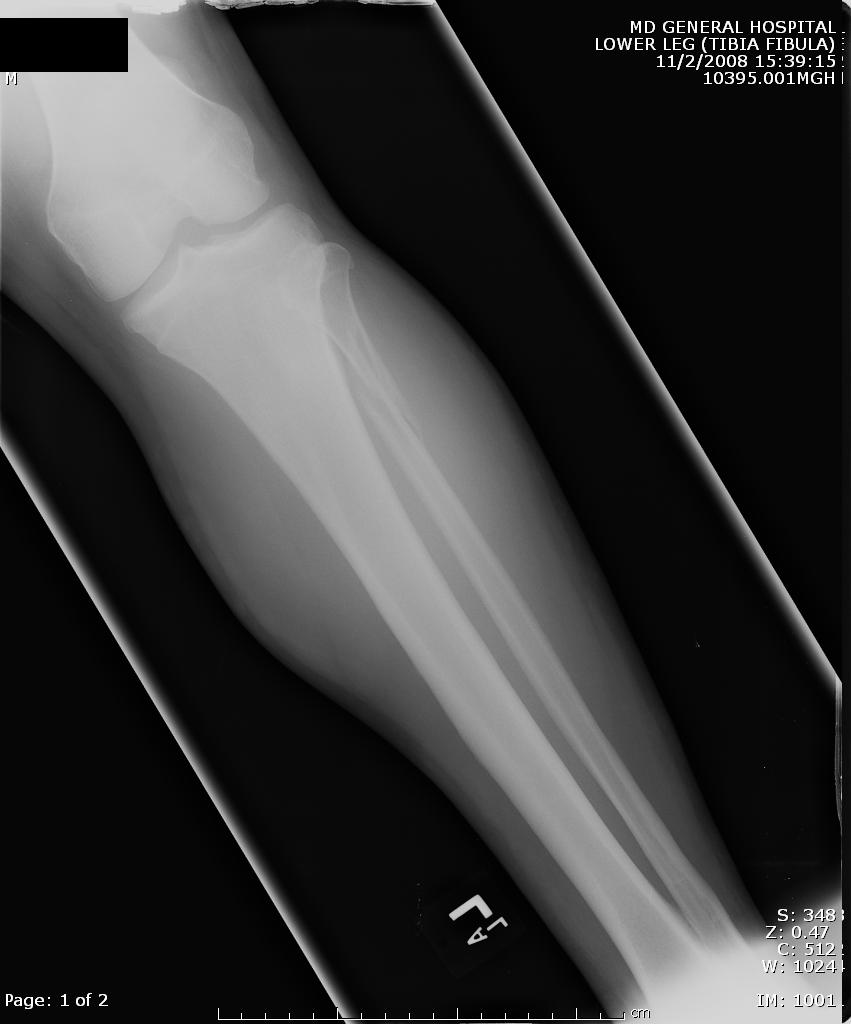
Title: Maisonneuve Fracture

Category: Orthopedics

Keywords: maisonneuve, tibia, fibula, fracture, ankle, orthopedic (PubMed Search)

Posted: 11/8/2008 by Dan Lemkin, MS, MD (Updated: 3/4/2026)

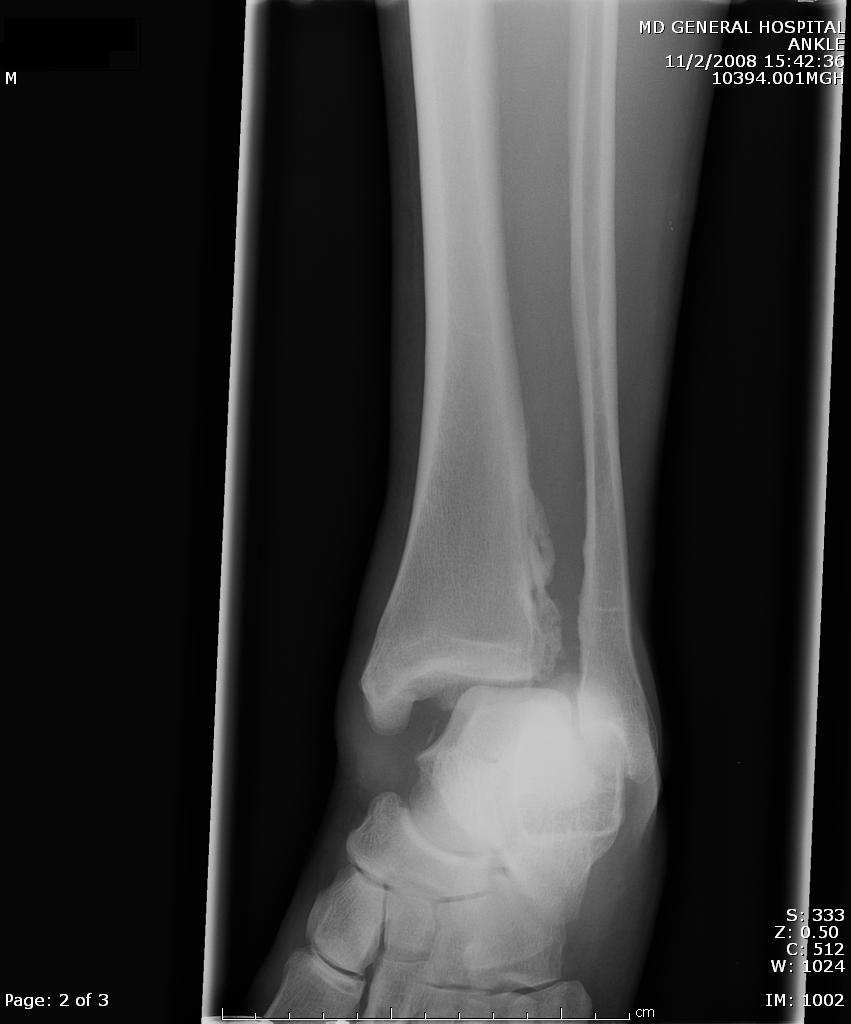
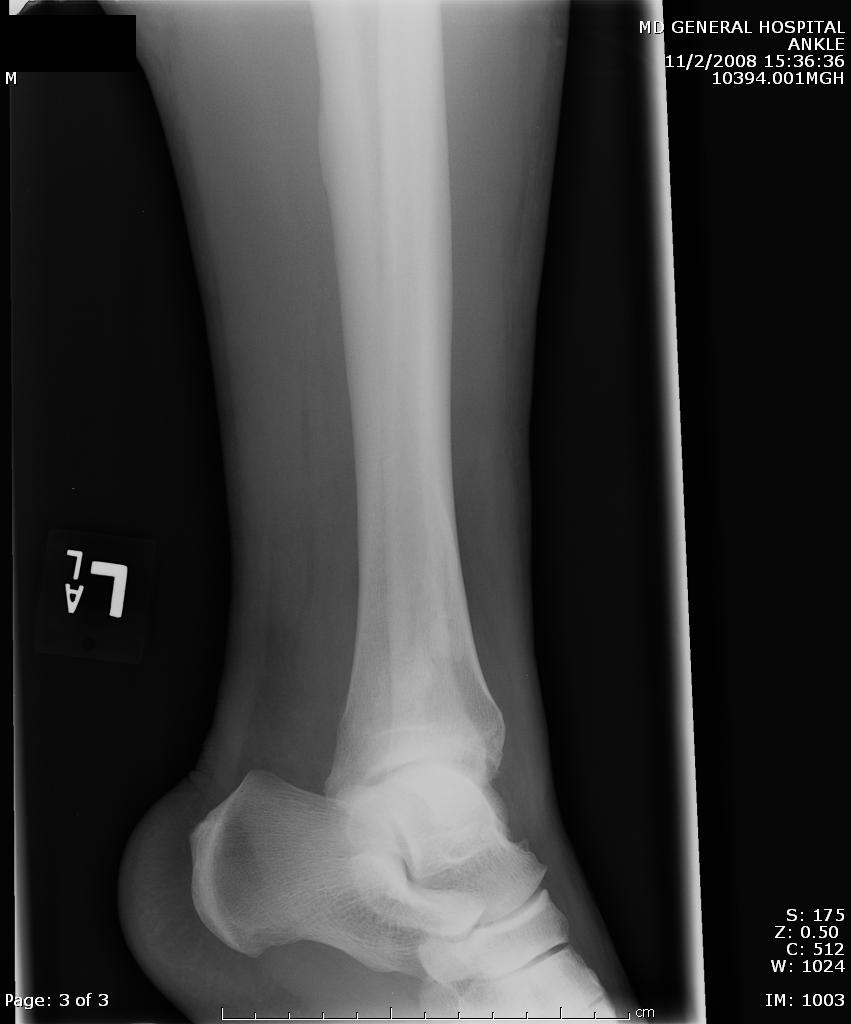
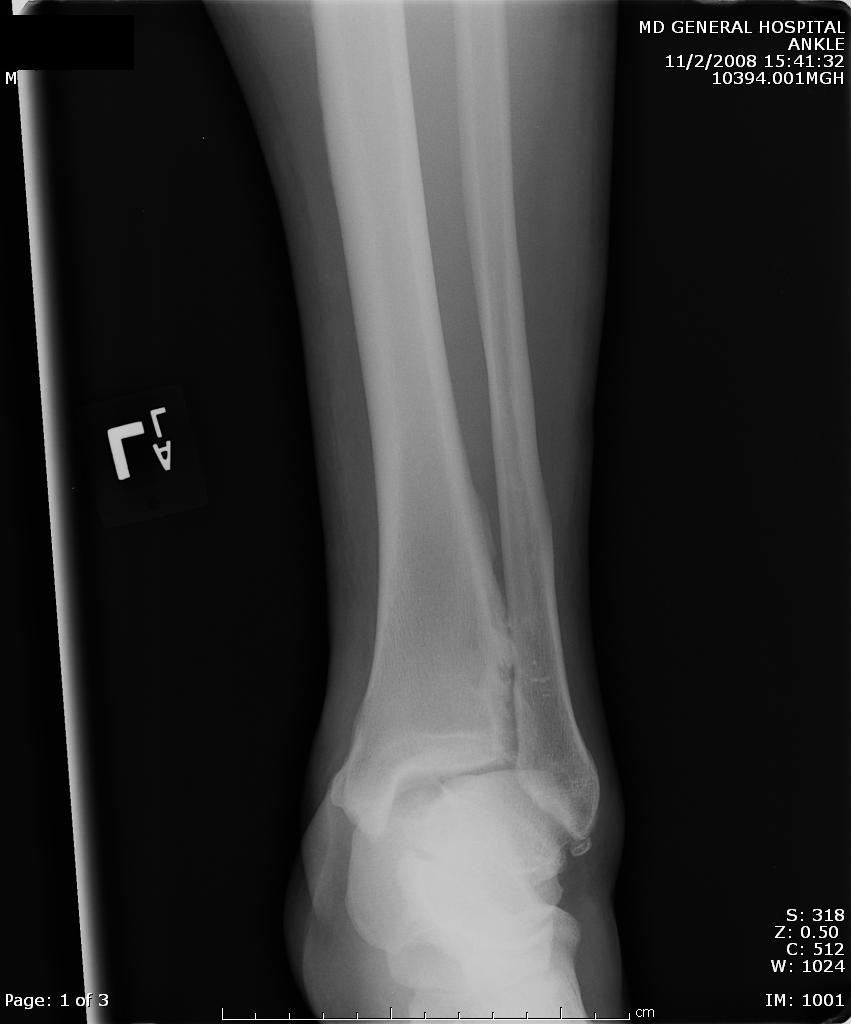
A maisonneuve fracture is a fracture dislocation resulting from external rotational forces to ankle -- through interosseous ligament to fibula.

If stability is questionable, orthopedic evaluation under anesthesia is required. Additionally always consider compartment syndrome. Do not rely on Kanduval's signs (pain, paraesthesia, pallor, poikilothermia, pulselessness) - "... with the exception of pain and paraesthesia, these traditional signs are not reliable." Emergent orthopedic consultation and compartment pressure assessment should be performed. (see attached photos)


Show References


Title: Management of Felons (Infections that is)

Category: Orthopedics

Keywords: felon, management, incision (PubMed Search)

Posted: 10/25/2008 by Michael Bond, MD (Updated: 3/4/2026)

Management of Felons

For good photos of the incision technique please visit the reference article listed.

Clark, DC. Common Acute Hand Infections. Am Fam Physician 2003;68:2167-76

Show References


Title: Mallet Finger

Category: Orthopedics

Keywords: Mallet Finger, Extensor Tendon Injury (PubMed Search)

Posted: 10/5/2008 by Michael Bond, MD (Updated: 3/4/2026)

Mallet Finger:

A common injury resulting in a tear or avulsion of the extensor digitorium tendon inserting into  the base of the distal phalanx.  Occurs due to hyperflexion of the finger usually as of a esult of it getting jammed on a ball while playing sports.  Most can be treated non-surgically.

The distal phalanx must be kept in full extension for 6 to 8 weeks. This is one of the few times that the finger should not be splinted in the position of function.

Make sure that patient is informed that if they remove the splint and flex their finger the 6 to 8 week healing window will be reset to day 0.  These patients should not be doing ROM exercises and must wear the splint full time.


Title: Splint Pearls

Category: Orthopedics

Keywords: Splint, Basic, Position (PubMed Search)

Posted: 8/23/2008 by Michael Bond, MD (Updated: 3/4/2026)

Splinting Pearls:

  1. When using plaster of paris remember to use at least 10 layers for upper extremities and 15-20 layers for lower extremities.
  2. Always apply the splint so that the joint above and below the fracture is immobilized.
  3. On radius and ulnar fractures, a sugar tong splint will provide better immobilzation as it also prevents supination/pronation where a posterior long arm or volar splint only prevent flexion and extension.
  4. Remember to make sure that the hand is placed in the position of function.
  5. Though not required a stockinette provides an additional layer of skin protection and helps to make the ends of the splint looking cleaner.  It can also help hold the splint in place as you ace wrap it.
  6. Finally, make sure that you document neurovascular status pre and post splint placement and if any manipulation is done you should have a follow up xray taken to ensure alignment is satisfactory.


Title: Olecranon Bursitis

Category: Orthopedics

Keywords: olecranon, bursitiis, septic, treatment (PubMed Search)

Posted: 8/17/2008 by Michael Bond, MD (Updated: 3/4/2026)

Olecranon Bursitis is inflammation and swelling of the bursa overlying the olecranon process of the ulna.  Can result from trauma, overuse, or infection. 

Treatment can consist of:

Remember aspiration has some major risks that need to be explained to the paitent:

They also need to know that the fluid will likely reaccumulate.  So aspiration is not a guaranteed cure. 


Title: Tessaly Test for Meniscal Injuries

Category: Orthopedics

Keywords: Tessaly, Meniscal, Tear, Knee Exam (PubMed Search)

Posted: 8/2/2008 by Michael Bond, MD (Updated: 3/4/2026)

When examining a knee for a meniscal injury the commonly described tests are the McMurray Test and Apley Test.  However, these tests have sensitivities of 48-68% and 41% respectfully, and specificities of 86-94% and 86-93% respectfully.  Depending on whether you are looking at the medical or lateral meniscus.

The Tessaly Test that was first described in 2005 can be performed with knee in either 5 or 20 degrees of flexion and has a senstivity of 89-92% and specificity of 96-97% when performed in 20 degrees flexion.  The test also tends to be easier to perform.

To perform the test:

  1. Stand on affected leg only with the other leg held up in the air.  The examiner holds hands for balance.
  2. Flex knee to be test to 20 degrees, while the other leg is held in the air
  3. Internally and Externally Rotate Knee
  4. Positive test is pain at medial or lateral joint line with possible locking/catching sensation

Essentially you and your patient will look like you are doing the twist as they rotate their knee with you holding their hands.


Show References


Title: Fracture Management

Category: Orthopedics

Keywords: Fracture, Management, Billing (PubMed Search)

Posted: 7/20/2008 by Michael Bond, MD (Updated: 3/4/2026)

Fracture Management:


In order to maximize billing when caring for patients with fractures two things should be done:

  1. The physician does not need to place the splint, but the physican must document that they checked the splint for proper placement and alignment for it to be billed appropriately..
  2. Emergency physicians also provide a lot of "definitive" care for fractures.  (i.e.: we provide the same care that the treating specialist would provide) and can bill for a higher level if this is documented properly. 
    1. For instance, if you are treating a impacted, stable distal radius fracture with a splint and pain medication this is the same definitive care the orthopedist would do as they are only going to exchange your splint for  a cast. 
    2. Another example is the treatment of rib fractures which may consist only of pain control, incentive spirometry and instructions to prevent pneumonia.
    3. In these patients, have the patients follow up more than 48 hours later.  If you document that the patient will followup in less than 48 hours, most auditors and billing companies will assume you are not providing definitive care and will not code for the higher earning RVU.

Finally,  you should obtain post-reduction x-rays on any fracture that you manipulate and document that the patient is neurovascularly intact prior to discharge.


Title: Scaphoid Fracture

Category: Orthopedics

Keywords: scaphoid, fracture (PubMed Search)

Posted: 7/13/2008 by Michael Bond, MD (Updated: 3/4/2026)

SCAPHOID FRACTURE:


Title: Joint Fluid Analysis

Category: Orthopedics

Keywords: Arthrocentesis, Joint, Fluid, Septic (PubMed Search)

Posted: 7/6/2008 by Michael Bond, MD (Updated: 3/4/2026)

Joint Fluid Analysis:

This is hte session in Baltimore for crab eating and beer drinking so we begin to see an increase in Gout pain.  For those that are presenting with their first episode and you are concerned that they might have a septic joint, I am including this pearl to help analysis the fluid you will obtain from arthrocentesis.


Synovial Fluid Interpretation
Diagnosis Appearance WBC PMNs Glucose % of
Blood Level
Crystals
 Normal  Clear  <200  <25  95 - 100  None
 Degenerative
Joint Disease
 Clear  <4000  <25  95 - 100  None
 Traumatic
Arthritis
 Straw colored  <4000  <25  95 - 100  None
 Acute Gout  Turbid  2000 - 50,000  >75  80 - 100  Negative birefringence
 PseudoGout  Turbid 2000 - 50,000  >75  80 - 100  Positive birefringence  
 Septic Arthritis  Purulent / turbid  5000 - > 50,000  >75  < 50  None
 Rheumatoid
Arthritis
 Turbid  2000 - 50,000  50-75  ~75  None

 To view a gout crystal click this link.

To view a pseudogout crystal. Click this link

Pearls: 

Show References


Title: Calcaneus Fractures

Category: Orthopedics

Keywords: calcaneus, fracture, compartment (PubMed Search)

Posted: 6/29/2008 by Michael Bond, MD (Updated: 3/4/2026)

Calcaneus Fractures

Normally occur due to axial loading mechanism such as:

Miscellanous Facts:

  1. 70% of calcaneal fractures are intra-articular
  2. 10-15% are associated with spinal compression fractures
  3. Estimated that 7-10% will have a fracture of the contralateral foot
  4. Monitor for compartment syndrome of the foot.  Deep central compartment is most commonly affected with calcaneus fractures

Pearls:

  1. Strongly consider getting Lumbar Spine Films and x-rays of the opposite foot in anybody that has a calcaneus fracture.
  2. Perform frequent reassessments, and do not hesitate to check compartment pressures if you suspect they might be elevated.


Title: Hip Fractures

Category: Orthopedics

Keywords: hip, fracture, mri, plain films (PubMed Search)

Posted: 6/21/2008 by Michael Bond, MD (Updated: 3/4/2026)

Hip Fractures:

Typically divided into four types:

  1. Intracapsular,
    1. femoral head and neck fractures
  2. Extracapsular
    1.  trochanteric,
    2. Intertrochanteric
    3. subtrochanteric fractures. 

Here is a link to a picture with a good representation of the different types of fractures.

Show References


Title: Lisfranc Fractures

Category: Orthopedics

Keywords: Lisfranc Fracture (PubMed Search)

Posted: 6/2/2008 by Michael Bond, MD (Updated: 3/4/2026)

  Lisfranc Fracture:

Typically consists of a fracture of the base of the second metatarsal and dislocation, though it can also be associated with fractures of a cuboid.  Common current  mechanism is when a person steps into a hole and twists the foot.Originally described when a horseman would fall of their horse with their foot still trapped in a stirrup.

Diagnosis should be considered if patient has difficult weight bearing with pain on palpation over the 2nd and 3rd metacarpal head with an appropriate mechanism.

Pearls:


Title: Clavicle Fractures

Category: Orthopedics

Keywords: Clavicle, fracture, surgery (PubMed Search)

Posted: 5/25/2008 by Michael Bond, MD (Updated: 3/4/2026)

I remember being taught as a medical student that clavicle fractures could be treated conservatively.  A direct quote was "if both ends of the clavicle are in the same room it will heal".

Though conservative treatment with a sling for 6 weeks with early pendulum ROM exercises for the shoulder is appropriate for the vast majority of clavicle fractures surgery should be considered for those that have:

  1. An open fracture
  2. Significant angulation with tenting of the skin
  3. Midshaft fractures that have overlap or displacement greater than 1 cm.
  4. Displaced fractures of the distal clavicle [high rate of non-union]
  5. Surgery can also be beneficial to those that do a lot of lifting or want to return to work as quick as possible.


Title: Extensor Tendon Injuries

Category: Orthopedics

Keywords: Mallet finger, Extensor Injury (PubMed Search)

Posted: 5/18/2008 by Michael Bond, MD (Updated: 3/4/2026)

Extensor Tendon Injuries [Mallet Finger]


Title: Posterior Interosseous Nerve Compression Syndrome

Category: Orthopedics

Keywords: Posterior Interosseous Nerve, Compression, Radial Tunnel (PubMed Search)

Posted: 5/11/2008 by Michael Bond, MD (Updated: 3/4/2026)

Posterior Interosseous Nerve Compression Syndrome

As eluded to last week Posterior Interosseous Nerve (PIN) Compression Syndrome, a deep branch of the radial nerve, is felt to be radial tunnel syndrome with paralysis.


Title: Radial Tunnel Syndrome

Category: Orthopedics

Keywords: Radial Tunnel Syndrome (PubMed Search)

Posted: 5/3/2008 by Michael Bond, MD (Updated: 3/4/2026)

For those at the University of Maryland that got the chance to hear my lecture this week, you learned about Cubital tunnel syndrome [ulnar neuropathy], the second most common compressive neuropathy.  Carpal Tunnel syndrome remains the number one compressive neuropathy, and this pearl, for the sake of completeness, will address Radial tunnel syndrome.

Radial Tunnel Syndrome


Stay tuned for next week for Posterior Interosseous Nerve syndrome.


Title: Turf Toe

Category: Orthopedics

Keywords: Turf Toe (PubMed Search)

Posted: 4/27/2008 by Michael Bond, MD (Updated: 3/4/2026)

Turf Toe:

Most commonly seen in atheletes who compete on artificial turf.  Presents as pain over the 1st Metatarsalphalangeal  (MTP) joint. 


Title: Achilles Tendon Rupture

Category: Orthopedics

Keywords: Achilles Tendon Rupture (PubMed Search)

Posted: 4/19/2008 by Michael Bond, MD (Updated: 3/4/2026)

Achilles Tendon Rupture

This addition was sent in my Dr. Andrew Milstein:

Thanks for the Orthopedics update.  A few pearls for Achilles Tendon Rupture --> often these patients may present like a typical ankle sprain patient and are placed in a hallway chair.  You can't do an adequate Thompson Test while someone is sitting in a chair.  If you're concerned, lay them down on a stretcher to do the test.


Title: DeQuervain's and Intersection Syndrome

Category: Orthopedics

Keywords: DeQuervain, Intersection, Tenosynovitis (PubMed Search)

Posted: 3/30/2008 by Michael Bond, MD (Updated: 3/4/2026)

DeQuervain and Intersection Syndromes:


Title: Sternoclavicular Dislocation

Category: Orthopedics

Keywords: Sternoclavicular, Dislocation, Posterior (PubMed Search)

Posted: 3/24/2008 by Michael Bond, MD (Updated: 3/4/2026)

Sternoclavicular Dislocation:

Sorry this is being delivered to you late.


Previous  |  1 |  ... |  18 |  19 |  20 |  21 |  22 |  23 |  24 |  Next