61-80 of 380 results with category "Neurology"

Previous  |  1 |  2 |  3 |  4 |  5 |  6 |  7 |  8 |  9 |  ... |  19 |  Next

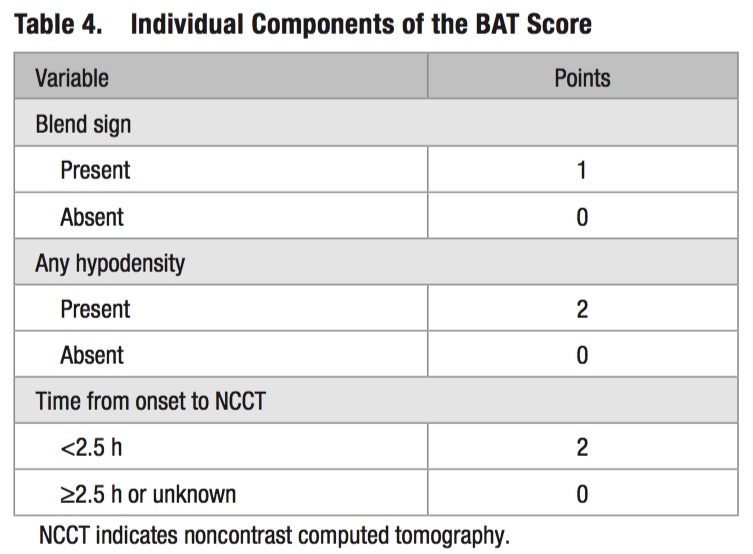
Title: Predicting ICH Expansion

Category: Neurology

Keywords: Intracerebral hemorrhage, ICH, hematoma expansion, prediction score, BAT score (PubMed Search)

Posted: 5/9/2018 by WanTsu Wendy Chang, MD (Updated: 3/4/2026)

Show Additional Information

Show References


Title: Atypical Stroke Symptoms

Category: Neurology

Keywords: stroke, altered mental status, gender, sex, confusion (PubMed Search)

Posted: 3/28/2018 by Danya Khoujah, MBBS (Updated: 3/4/2026)

Patients may present atypically with ischemic strokes, reporting symptoms such as face or hemibody pain, lightheadedness, mental status change, headache and non-neurological symptoms.

Up to 25% of patients will have these symptoms.

Women are more likely than men to present with these atypical (or “nontraditional”) symptoms, especially altered mental status.

Show References


Title: Prehospital Stroke Scales for Large Vessel Occlusion

Category: Neurology

Keywords: stroke, prehospital, large vessel occlusion, NIHSS, RACE, LAMS, VAN (PubMed Search)

Posted: 3/14/2018 by WanTsu Wendy Chang, MD (Updated: 3/4/2026)

Show Additional Information

Show References


Title: Headache in the Bodybuilder

Category: Neurology

Keywords: headache, steroids, bleed (PubMed Search)

Posted: 2/28/2018 by Danya Khoujah, MBBS

Benign headaches are common in bodybuilders. However, several less benign headaches are worth noting:

All except the first two are exclusively reported in patients on anabolic steroids, growth hormone, and/or “energy” supplements. Make sure to ask your patient about these risk factors.


Show References


Title: Occipital Nerve Block for Migraine?

Category: Neurology

Keywords: occipital nerve block, migraine, headache (PubMed Search)

Posted: 2/15/2018 by WanTsu Wendy Chang, MD (Updated: 2/15/2018)

Show References


Title: Brain Tumor Imaging 101

Category: Neurology

Keywords: edema, hemorrhage, tumor, CT, MRI, contrast (PubMed Search)

Posted: 1/24/2018 by Danya Khoujah, MBBS (Updated: 3/4/2026)

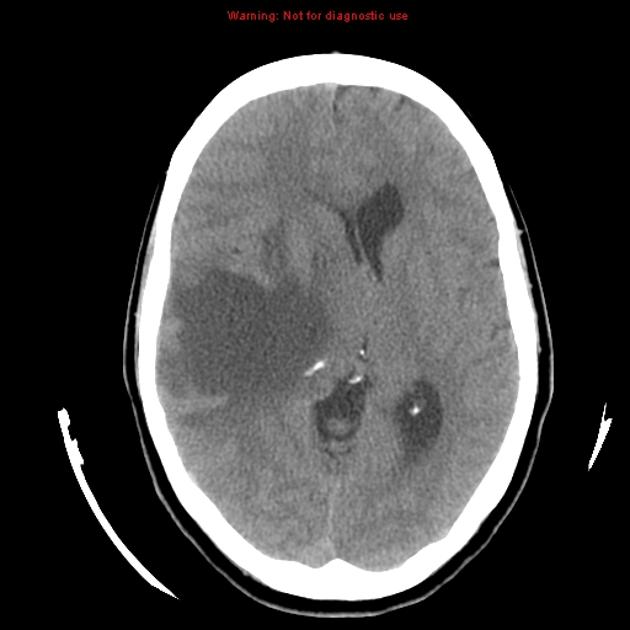
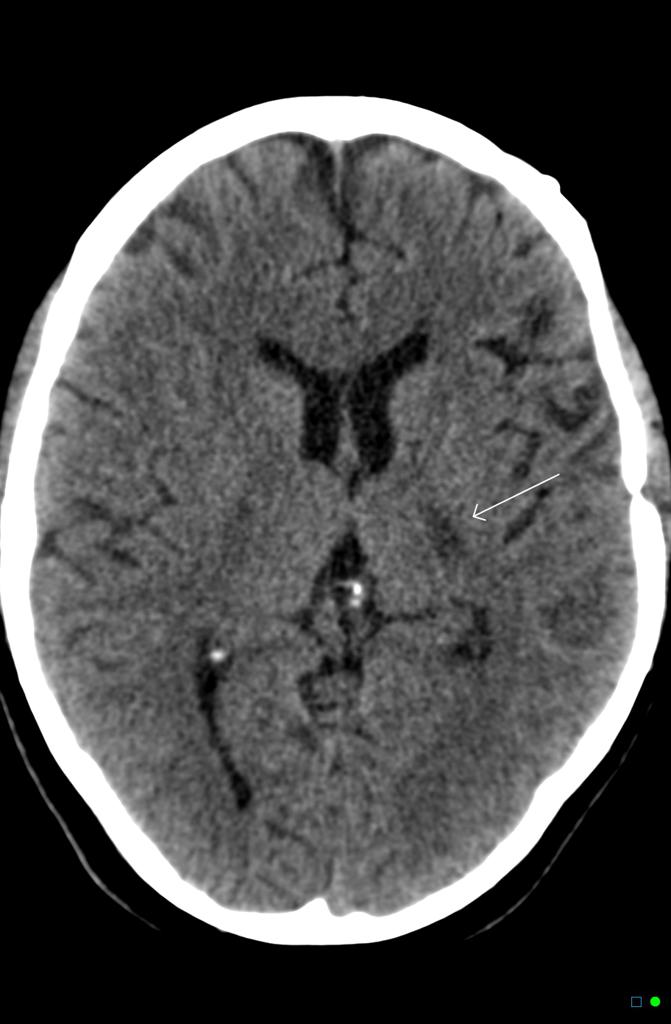
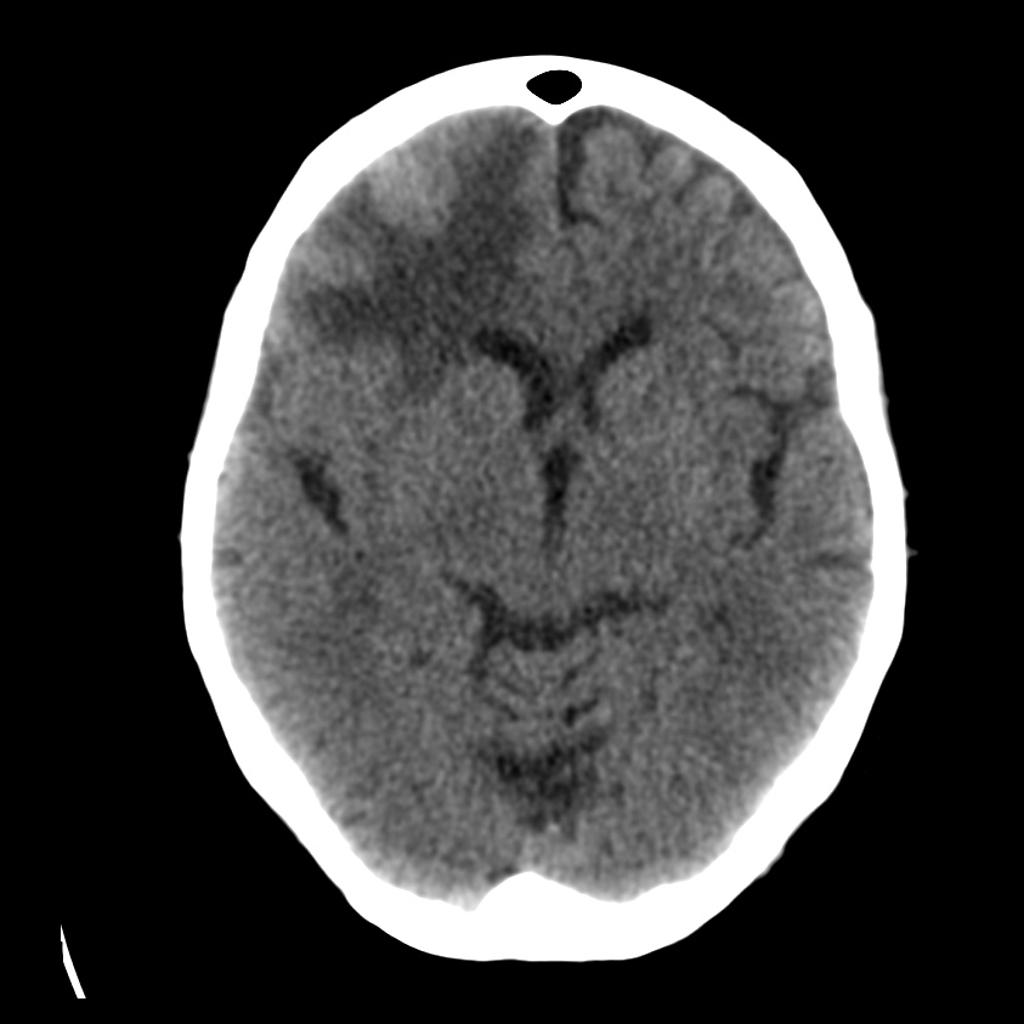
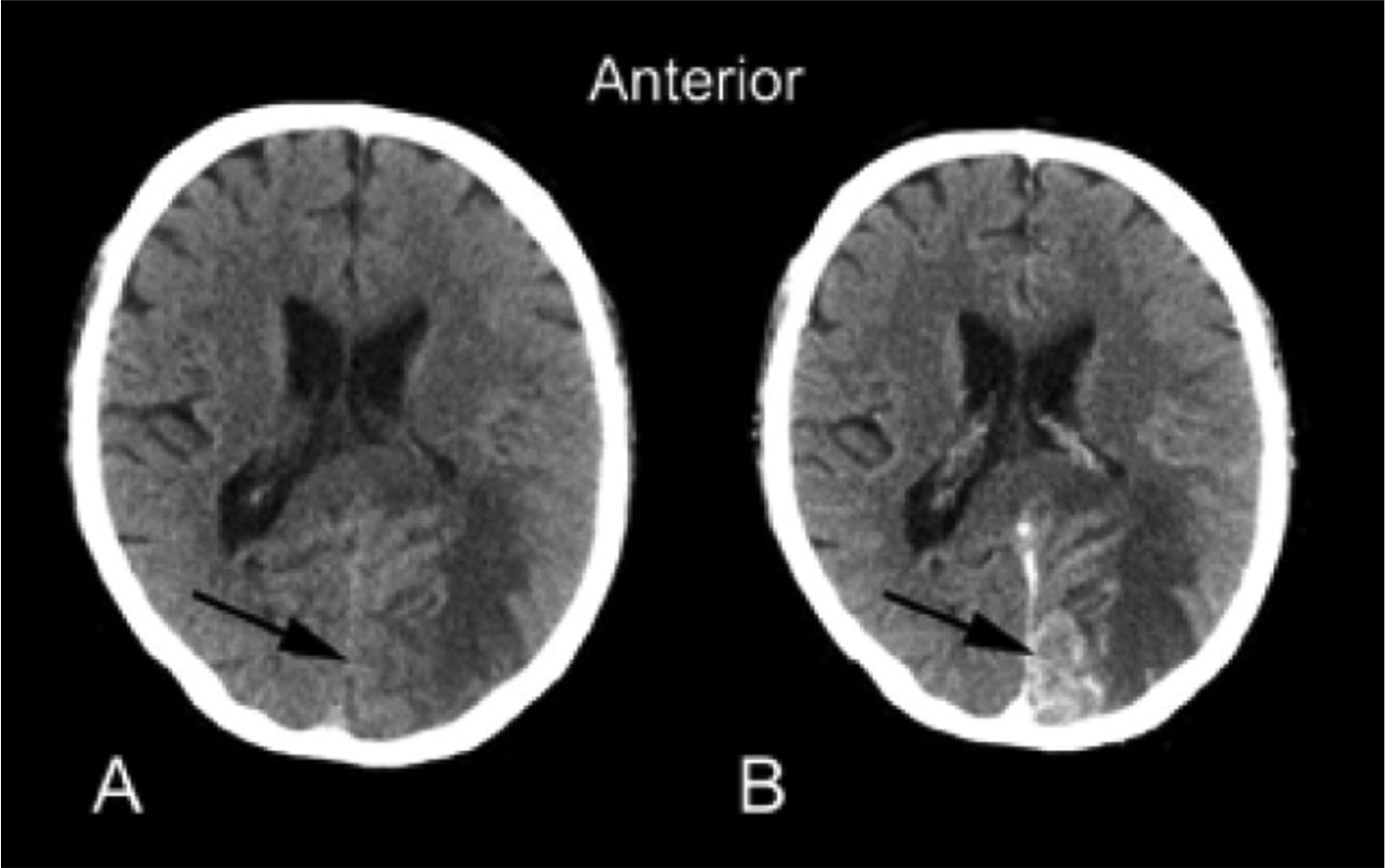
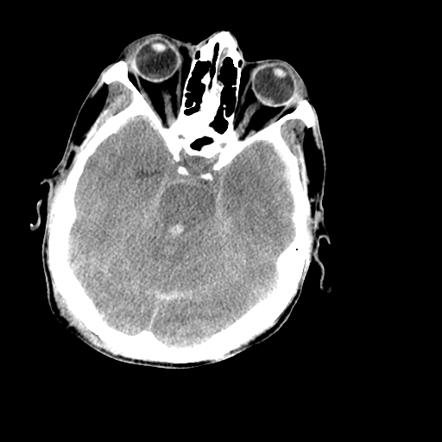
Although MRI is more sensitive for identifying tumors of the CNS, CT is usually the first line imaging modality in the ED. Some pearls:

  • Hyperattenuation = bright = dense (blood)
  • Hypoattenuation = dark = radiolucent (fluid, air, lipid, scar)
  • Masses that are darker + increased volume or mass effect = edema (image 1)
  • Masses that are darker + decreased volume = scar tissue or atrophy (image 2)
  • Masses that are bright + edema = hemorrhage (image 3)
  • Adding IV contrast improves detection of tumors: abnormal enhancement from disruption of blood brain barrier, necrosis or increased vascularity. (Image 4)

Image 1 Courtesy of Radiopedia.orgImage 2: courtesy of Dr Chris O'Donnell, Radiopaedia.orgImage 3: courtesy of Dr David Cuete, Radiopaedia.orgImage 4: Courtesy of David Kernick, and Stuart Williams Br J Gen Pract2011;61:409-411

Show References


Title: Reversible Cerebral Vasoconstriction Syndrome (RCVS)

Category: Neurology

Keywords: RCVS, thunderclap headache, migraine, SAH (PubMed Search)

Posted: 1/10/2018 by WanTsu Wendy Chang, MD

Bottom Line: Consider RCVS in the differential of thunderclap headache and in patients who present with worse than usual migraine headache.

Show References


Title: Cerebral Venous Thrombosis (CVT)

Category: Neurology

Keywords: headache, seizure, stroke, neurological deficit, thrombogenic (PubMed Search)

Posted: 12/27/2017 by Danya Khoujah, MBBS (Updated: 3/4/2026)

Cerebral venous thrombosis is a rare (but dangerous) cause of headaches and strokes in patients below the age of 50. It includes thrombosis of the cerebral veins and major dural sinuses. 
A d-dimer can NOT be used to rule it out, as it would be falsely negative in up to 40% of patients. A dry head CT is completely normal in 30% of patients, with nonspecific changes present in another 30%.

Take home: If you are considering the diagnosis, obtain a CT venography (95% sensitive) and don’t rely on a negative dimer or dry head CT.


Show References


Title: A New DAWN for Stroke Intervention?

Category: Neurology

Keywords: DAWN, thrombectomy, mismatch, wake-up, stroke, penumbra (PubMed Search)

Posted: 12/13/2017 by WanTsu Wendy Chang, MD

Bottom Line: The use of neuroimaging to identify an ischemic penumbra that may benefit from thrombectomy may be considered even for patients with time of last known well beyond 6 hours.

Show Additional Information

Show References


Title: Guillain-Barre's less evil twin - CDIP!

Category: Neurology

Keywords: GBS, weakness, intubation, CSF, LP (PubMed Search)

Posted: 11/22/2017 by Danya Khoujah, MBBS

CDIP, or chronic inflammatory demyelinating polyradiculoneuropathy, is an immune-mediated polyneuropathy which presents similarly to Guillain-Barré Syndrome (GBS). However, it is not as dangerous as GBS. Patients present with symmetric proximal and distal weakness with reduced or absent deep tendon reflexes, just like GBS. The difference is that in typical CDIP, patients have prominent sensory signs, no autonomic dysfunction, no facial weakness, no preceding infectious illness, and most importantly no respiratory failure. It also continues to progress past 4 weeks.

CSF is not diagnostic, and may show albuminocytologic dissociation. The diagnostic test is nerve conduction studies. 

Show References


Title: Isolated Aphasia - Is It a Stroke?

Category: Neurology

Keywords: aphasia, stroke, middle cerebral artery, MCA, mimic, NIHSS (PubMed Search)

Posted: 11/8/2017 by WanTsu Wendy Chang, MD

Take Home PointThis small but interesting study looked at the incidence of isolated aphasia presenting for concern of stroke. They found that none of their patients had evidence of an infarct, suggesting that strokes affecting language without motor or sensory deficits are uncommon.

Show Additional Information

Show References


Title: Guillain- Barr Syndrome

Category: Neurology

Keywords: weakness, infection, paralysis, intubation, influenza, vaccine (PubMed Search)

Posted: 10/25/2017 by Danya Khoujah, MBBS

It's respiratory infection and flu vaccine season! Time to brush up on Guillain-Barré Syndrome..

- It is the most common cause of acute or subacute flaccid weakness worldwide

- 70% of cases are preceded by an infection in the past 10-14 days, but most are minimized or forgotten by the patient. 40% of these infections are by Campylobacter jejuni.

- 30% develop respiratory failure requiring intubation and ventilation

- Half of the patients will develop their maximum weakness by 2 weeks, most will develop it by 4 weeks.

Show References


Title: Traumatic Brain Injury in Older Adults - The Silver Tsunami?

Category: Neurology

Keywords: traumatic brain injury, TBI, fall, subdural hematoma, SDH, elderly (PubMed Search)

Posted: 10/11/2017 by WanTsu Wendy Chang, MD

Traumatic brain injury (TBI) is associated with close to half of major trauma admissions in adults over age 65 in the U.K.

Falls accounted for 85% of all TBIs, while 45% of patients had subdural hematomas (SDH).

More than 3/4 of patients were treated conservatively, though outcomes were not significantly better than those who underwent neurosurgical intervention.

Higher age is associated with higher mortality and greater disability.

Bottom Line: Trauma in older adults is increasing and fall prevention is important in reducing significant injuries.

Show References


Title: tPA Contraindications

Category: Neurology

Keywords: stroke, tPA, thrombolytics, ICH, hemorrhage, adverse events (PubMed Search)

Posted: 9/28/2017 by Danya Khoujah, MBBS

Classically, the list of contraindications for tPA in stroke has been extensive and excludes a significant percentage of patients. This scientific statement from AHA clarifies the evidence behind these contraindications, and in short, expands the population of patients that should be considered for tPA.
The following is NOT considered a contraindication for tPA: 
- Age over 80 
- Severe stroke (NIHSS >25)
- Improving symptoms, if patient remains moderately impaired and potentially disabled
- A small (<10 mm) unruptured and unsecured intracranial aneurysm (NOT other vascular malformations)
- Extra-axial intracranial neoplasms (e.g. meningiomas, pituitary adenomas)
- Blood glucose of >400mg/dL that is subsequently normalized
- Seizure at onset of stroke if residual impairment is secondary to stroke not a postictal phenomenon 

Show References


Title: IV vs. Non-IV Benzodiazepines for Cessation of Seizures

Category: Neurology

Keywords: seizure, status epilepticus, benzodiazepine, RAMPART, pediatric (PubMed Search)

Posted: 9/13/2017 by WanTsu Wendy Chang, MD (Updated: 9/14/2017)

IV vs. Non-IV Benzodiazepines for Cessation of Seizures

Show Additional Information

Show References


Title: Rapid detection of bacterial meningitis using point-of-care glucometer

Category: Neurology

Keywords: meningitis, CSF, glucose, glucometer (PubMed Search)

Posted: 8/24/2017 by WanTsu Wendy Chang, MD

 
Rapid detection of bacterial meningitis using point-of-care glucometer

Show References


Title: Pituitary Apoplexy

Category: Neurology

Keywords: pituitary apoplexy, subarachnoid hemorrhage, meningitis, headache, CT, MRI (PubMed Search)

Posted: 8/9/2017 by Danya Khoujah, MBBS (Updated: 3/4/2026)

Pituitary apoplexy is a sudden hemorrhage or infarction of the pituitary.

Bottomline: Keep pituitary apoplexy in your differential when considering SAH or meningitis, especially in the presence of risk factors, and have a low threshold to order an MRI. 

Show References


Title: What is the cause of this patient's decreased vision?

Category: Neurology

Keywords: Terson syndrome, vitreous hemorrhage, intraocular hemorrhage, subarachnoid hemorrhage (PubMed Search)

Posted: 7/12/2017 by WanTsu Wendy Chang, MD

Question

50 YOF with acute onset of worst headache of life associated with nausea and vomiting.  Patient is somnolent, will rouse to noxious stimuli and complains of a headache as well as decreased vision.

Show Answer

Show References


Title: Autoimmune Neurological Disease

Category: Neurology

Keywords: autoimmune, cancer, encephalopathy (PubMed Search)

Posted: 6/28/2017 by Danya Khoujah, MBBS

One of the differentials of a subacute neurological deficit (usually with a fluctuating course) is autoimmune neurologic disorders. This can encompass anything from neuropathic symptoms, to cerebellar pathology, to encephalitis-like picture. A personal or family history of autoimmune disease or malignancy should heighten suspicion, and the CSF is likely an inflammatory CSF profile as well (pleocytosis). Neural autoantibodies confirm the diagnosis, and are usually performed in both the serum and the CSF. Most laboratories perform a global screen for a number of potential antibodies that fit the concerning clinical picture, rather than one or two tests.
In addition, autoimmune CNS pathology is concerning for a paraneoplastic syndrome e.g. teratoma, lymphoma or small cell lung cancer.

Take Home Message: If suspecting an autoimmune pathology due to the risk factors and subacute nature of the disease, obtain some extra CSF to run the necessary tests after consulting with neurology. 

Show References


Title: What is the role of EEG for first-time seizures in the ED?

Category: Neurology

Keywords: seizure, electroencephalogram, EEG, epilepsy, antiepileptic (PubMed Search)

Posted: 6/14/2017 by WanTsu Wendy Chang, MD


What is the role of EEG for first-time seizures in the ED?

Take Home Point:  A 30-minute routine EEG in the ED in adults with an uncomplicated first-time seizure revealed a substantial number of epilepsy diagnosis and can change ED management with immediate initiation of antiepileptic medication.

Show Additional Information

Show References


Previous  |  1 |  2 |  3 |  4 |  5 |  6 |  7 |  8 |  9 |  ... |  19 |  Next