101-120 of 268 results by Michael Bond

Previous  |  1 |  2 |  3 |  4 |  5 |  6 |  7 |  8 |  9 |  10 |  11 |  ... |  14 |  Next

Title: Septic Arthritis

Category: Orthopedics

Keywords: Septic Arthritis, Diagnosis (PubMed Search)

Posted: 12/18/2010 by Michael Bond, MD (Updated: 12/19/2010)

Septic Arthritis

It is generally taught that if the synovial fluid white blood count (WBC) is less than 50,000 it is not septic, however, there is growing evidence that a clear delineation in the WBC between septic arthritis and inflammatory arthritis is not possible.  In fact, inflammatory arthritis (rheumatoid and gout) actually increases your risk for septic arthritis and the two can coexist.  Gram stains of the fluid  only show organisms in 50% of those with septic arthritis so you also can not rely on them either.  Inflammatory markers (CRP, ESR) can be elevated with inflammatory or septic arthritis so they too can not differentiate between the two.

In the end, because of the risk of permanent joint dysfunction, it is important to make the diagnosis on clinical grounds and treat empirically if you are unsure.  Err on the sound of treatment.  Serial joint aspirations to drain synovial fluid have the same outcomes as operative washout.

A recent article that discusses the concerns with making the diagnosis of septic arthritis is:

Mathews et al. Bacterial septic arthritis in adults. Lancet (2010) vol. 375 (9717) pp. 846-55

Show References


Title: Spondyl.... Definitions

Category: Orthopedics

Keywords: spondyloysis, spondylosis, spondylolistesis, spondylitis (PubMed Search)

Posted: 12/4/2010 by Michael Bond, MD (Updated: 3/4/2026)

Dr. Corwell covered Spondyloysis in July 2010  https://umem.org/res_pearls_referenced.php?p=1134 but if you are like me you might have trouble remembering the differences between the following terms:

Show References


Title: Evaluation of Potential Intra-Articular Joint Lacerations

Category: Orthopedics

Keywords: Methylene Blue, Intra-articular, Joint (PubMed Search)

Posted: 11/21/2010 by Michael Bond, MD

Evaluation of Potential Intra-Articular Joint Lacerations

Skin and soft tissue injuries in proximity to a joint often prompt concern of whether the injury violated the joint space.  Joint Space involvement is important to exclude as it can lead to septic joints and long term disability.

One easy way to determine if the joint capsule has been violated is to inject methylene blue into the joint and watch to see if any of the methylene blue extravasates through the soft tissue.

Indications for a methylene blue injection include:

  1. Periarticular fracture
  2. Visible joint capsule
  3. Proximity to a joint

There are no absolute contraindications.  Though clearly the procedure does not need to be done when the injury  highly suggests an open joint injury and the patient will require operative debridement and exploration.

To watch a video of a injection head to eMedicine by clicking http://emedicine.medscape.com/article/114453-overview

Show References


Title: Risk Factors for Spinal Epidural Abscesses

Category: Orthopedics

Keywords: Spinal Epidural Abscess (PubMed Search)

Posted: 10/30/2010 by Michael Bond, MD (Updated: 3/4/2026)

Risk Factors for Spinal Epidural Abscesses

Building on Dr. Corwell's pearl from last week concerning Spinal Epidural Abscess, risk factors for Spinal Epidural Abscesses other than IV drug abuse are:

  1. Diabetes
  2. ESRD
  3. Septicemia
  4. HIV infection
  5. Malignancy
  6. Morbid obesity
  7. Long-term corticosteroid use
  8. Alcoholism
  9. Infection at a distal site
  10. Indwelling catheters
  11. Spinal surgery

The infection can occur via three routes 1) hematogenous spread 2) Direct Extension from a local infection such as osteoomyelitis, and 3) iatrogenic introduction which is thought to be responsible for 14-22% of the cases.  A catheter in the epidural space for more than 2 days has a infection rate of 4.3%.

Show References


Title: Subungual Hematomas

Category: Orthopedics

Keywords: Subungual Hematomas (PubMed Search)

Posted: 10/16/2010 by Michael Bond, MD (Updated: 3/4/2026)

Subungual Hematomas:

Show References


Title: Patellofemoral Syndrome (Chondromalacia Patella)

Category: Orthopedics

Keywords: Patellofemoral syndrome (PubMed Search)

Posted: 10/2/2010 by Michael Bond, MD

Patellofemoral Syndrome (Chondromalacia Patella)

Show References


Title: Pain Control in the Elderly

Category: Orthopedics

Keywords: Pain, Geriatrics (PubMed Search)

Posted: 9/18/2010 by Michael Bond, MD (Updated: 3/4/2026)

Pain Control in the Elderly

So the take home lesson for this pearl is that the elderly have a lower risk of delirium if their pain is treated appropriately.

Show References


Title: Frozen Shoulder - Adhesive Capsulitis

Category: Orthopedics

Keywords: Adhesive Capsulitis (PubMed Search)

Posted: 8/28/2010 by Michael Bond, MD

Adhesive Capsulitis -- Frozen Shoulder

  1. Characterized by pain and loss of motion or stiffness in the shoulder.Normally not seen below the age of 40, affects ~2% of the population and diabetics are at increased risk.
  2. Due to thickening and contracture of the capsule surrounding the shoulder joint.
  3. Can occur after trauma to the shoulder if the shoulder is not moved early enough, but is also know to occur idiopathically.
  4. X-rays are only helpful to rule out other causes of the shoulder pain and are typically normal in Adhesive capsulitis.
  5. Typically will get better on its own over 2-3 years.
    1. Physical Therapy and home exercises aimed at restoring ROM can shorten the duration of pain and stiffness.
    2. Surgery can be done if there is no improvement with medical management and physical therapy.
  6. Prevention strategies include early ROM exercises in those with shoulder injuries especially in the elderly diabetic.

Show References


Title: Rotator Cuff Tears

Category: Orthopedics

Keywords: Rotator Cuff Tears, Chronic, Acute (PubMed Search)

Posted: 8/21/2010 by Michael Bond, MD

Rotator Cuff Tears:

Four muscles make up the rotator cuff (SITS) which control internal and external rotation of the shoulder and abduct the shoulder.

  1. Supraspinatus
  2. Infraspinatus
  3. Teres Minor
  4. Subscapularis

Tears can be due to acute injuries (falls, heavy lifting, forceful abduction), though the majority (>90%) of rotator cuff tears are chronic in nature and due to subacromial impingement and decreased blood supply to the tendons.

Most patients can be treated with sling immobilization, NSAIDs and referral to sports medicine or orthopaedic surgeons.  Elderly patients should be referred quickly as prolonged immobilization can lead to a frozen shoulder.

Show References


Title: Common Injuries and Their Associated Complications

Category: Orthopedics

Posted: 8/7/2010 by Michael Bond, MD (Updated: 3/4/2026)

Some common injuries and their board review associated complications

Show References


Title: Diabetic Ketoacidosis Treatment

Category: Endocrine

Keywords: DKA, Management (PubMed Search)

Posted: 7/31/2010 by Michael Bond, MD

Diabetic Ketoacidosis Treatment:

Show References


Title: Anticholinergic or Sympathomimetic

Category: Toxicology

Keywords: anticholinergic, sympathomimetic, pupil (PubMed Search)

Posted: 7/22/2010 by Michael Bond, MD (Updated: 7/24/2010)

A patient arrives via EMS agitated with VS: P 140, BP 155/100, R 18, T 101F. There is an admitted drug exposure and you examine his eyes which are dilated. You shine the light in the eyes - if the pupil reacts, would that be consistent with anticholinergic or sympathomimetic toxidrome?

Answer: Anticholinergic exposure paralyzes pupillary constrictor muscles and causes dilated pupils that do not react to light. Think about when you go to the eye doctor's office. They put homoatropine in your eyes so that when they look with the slit lamp they can see the retina without interference from pupillary constriction. Sympathomimetic exposure like cocaine activates pupillary dilator muscles, the constrictors are still intact and will give a reflexive constriction to light.  This patient has reactive pupils and by the mere fact is in Baltimore probability dictates a sympathomimetic exposure like cocaine.

Show References


Title: Pediatric Fractures -- Salter Harris Classification System

Category: Orthopedics

Keywords: Salter Harris (PubMed Search)

Posted: 7/17/2010 by Michael Bond, MD

The Salter Harris  Classification System is used in pediatric epiphyseal fractures.  The higher the type of fracture the poorer the prognosis

Some common exam facts about Salter Harris Fractures are:

  1. The type II fracture is the most common.
  2. The small metaphyseal fragment in Salter Harris type II and IV fractures is called the Thurston Holland Sign.
  3. Type III and IV fractures often require open reduction and internal fracture due to the fracture extending into the joint.
  4. Type V fractures may appear normal, but the epiphyseal plate is crushed and the blood supply is interrupted.

The Classification system as listed by Type:

A image of the fractures can be found on FP Notebook at http://www.fpnotebook.com/_media/OrthoFractureSalterHarris.jpg

Show References


Title: Diverticular Bleeding

Category: Gastrointestional

Keywords: Diverticular, bleeding, gastrointestinal (PubMed Search)

Posted: 7/3/2010 by Michael Bond, MD

Diverticular Bleeding

Show References


Title: Odontoid Fracture

Category: Orthopedics

Keywords: Odontoid, fracture (PubMed Search)

Posted: 6/26/2010 by Michael Bond, MD (Updated: 3/4/2026)

Odontoid Fractures:

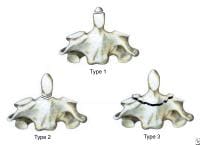
There are three types of C2 odontoid fractures:

  1. Type I is an oblique fracture through the upper part of the odontoid process. This fracture is normailly stable and can be treated with a hard cervical collar.
  2. Type II is a fracture occurring at the base of the odontoid as it attaches to the body of C2.  These fractures can be treated surgically, or conservatively with hard collar or a halo brace
  3. Type III fractures occurs when the fracture line extends through the body of the axis. These fractures are normally treated surgically with or without a halo brace.

Odontoid Fractures

Show References


Title: Toxicodendron dermatitis

Category: Dermatology

Keywords: Toxicodendron dermatitis, treatment (PubMed Search)

Posted: 6/19/2010 by Michael Bond, MD (Updated: 3/4/2026)

Toxicodendron dermatitis:

This is the contact dermatitis caused by the plant genus Toxicodendronm, better known as Poison Ivy.  Here are some types to prevent the dermatitis and how to treat it:

  1. Barrier products like Ivy Block® are on the market that go on like suntan lotion and provides a protective barrier on your skin that prevents the plants urushoil, the toxin responsible for the dermatitis, from making contact with your skin. This can help prevent the dermatitis if you are able to wash the oils off.
  2. Most soaps can not remove urushiol and may actually increase its spread. Several products are on the market, one being Zanfel® , that are a little more effective than water in removing the urushiol which can help to minimize the dermatitis and its spread.
  3. The mainstay of treatment is systemic steroids.  This condition does not do well with a short (5 day) burst therapy and patients will typically get a rebound dermatitis when the burst is complete.  Patients should be placed on a 14 day steroid taper.

Show References


Title: Calcaneus Fractures

Category: Orthopedics

Keywords: Calcaneus Fracture, Bohler Angle (PubMed Search)

Posted: 6/13/2010 by Michael Bond, MD

Calcaneus Fractures:

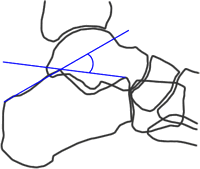
Calcaneus fractures can easily be missed on plain films and the true extent of the injury might not be appreciated until a CT is done.  However, you can increase your change of picking up a calcaneal fracture by evaluating Bohler's Angle. 

Lateral radiographs of the foot are needed to evaluate the Bohler angle.  This is the angle made by drawing a line from anterior process of the calcaneus to the peak of the posterior articular surface and a second one drawn  from the peak of the posterior articular surface to the peak of the posterior tuberosity. (See Picture) The average angle is 25-40°. Angles less than 25' are strongly suggestive of a fracture and the patient should probably get a CT of their foot if there is clinical suspicion.

Bohler's Angle

Show References


Title: Wound Care

Category: Orthopedics

Keywords: Wound Care, Antiseptics (PubMed Search)

Posted: 6/5/2010 by Michael Bond, MD

Wound Care:

Patients and many providers want to irrigate or wash a wound with an antiseptic solution in order to decrease the risk of infection.  Most studies have shown that irrigation whether with tap water or sterile water is effective enough in reducing bacterial counts in a wound so does adding an antiseptic solution offer any additional benefit.

It turns out that hydrogen peroxide, and iodine based solutions can actually hinder wound healing as they causes delays in the migration and proliferation of fibroblasts at concentrations that are not even bactericidal.  Chlorhexidine, and silver containing antiseptics [i.e.: silver sulfadiazine and silver nitrate] are bactericidal at concentrations that do not affect fibroblasts.

So in the end, if you feel the need to use an antiseptic, use chlorhexidine or a silver containing antiseptic.  The use of hydrogen peroxide and iodine based solutions should be abandoned as they are not even bactericidal at concentrations that have profound affects on the fibroblasts.

Show References


Title: Septic Arthitis and BioMarkers

Category: Orthopedics

Keywords: Septic Arthritis (PubMed Search)

Posted: 5/29/2010 by Michael Bond, MD (Updated: 3/4/2026)

Septic Arthritis versus Arthritis:

Though CRP and ESR levels are significantly higher in patients that have septic arthritis, a 1998 study showed that there is extensive overlap between patients with septic arthritis  crystal assoicated arthritis that both CRP and ESR have low sensitivity, specificity and predictive values.  Peripherial WBC counts did not differ between the two disease processes..

The morale of the story:  If you are suspecting septic arthritis you need to  perform an arthorcentesis to analysis the synovial fluid.  Systemic biomarkers can not support one diagnosis over the other.

Show References


Title: Osteomyelitis

Category: Orthopedics

Keywords: Osteomyelitis (PubMed Search)

Posted: 5/22/2010 by Michael Bond, MD

Osteomyelitis:

Show References


Previous  |  1 |  2 |  3 |  4 |  5 |  6 |  7 |  8 |  9 |  10 |  11 |  ... |  14 |  Next