221-240 of 380 results with category "Neurology"

Previous  |  1 |  ... |  7 |  8 |  9 |  10 |  11 |  12 |  13 |  14 |  15 |  16 |  17 |  ... |  19 |  Next

Title: How to Perform Ulnar Nerve Blocks

Category: Neurology

Keywords: ulnar nerve block, ulnar nerve, nerve block (PubMed Search)

Posted: 9/1/2010 by Aisha Liferidge, MD (Updated: 3/4/2026)


Show References


Title: Sensory Function of Hand Examination

Category: Neurology

Keywords: hand examination, sensory function, median nerve, ulnar nerve, radial nerve (PubMed Search)

Posted: 8/25/2010 by Aisha Liferidge, MD (Updated: 8/28/2014)


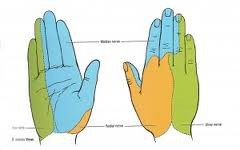
              --  ulnar nerve >>> supplies palmar surface and dorsal tips of little finger and medial half of ring finger, including

                   adjacent parts of hand.

              --  median nerve >>> supplies palmar and dorsal aspects of thumb, index finger, middle finger, and lateral half

                   of ring finger, including adjacent parts of hand.

              --  radial nerve >>> supplies most of dorsal surface of hand.


Title: Treatment of Cervicogenic Headaches

Category: Neurology

Keywords: cervicogenic headache, headache (PubMed Search)

Posted: 8/18/2010 by Aisha Liferidge, MD

Show References


Title: Recognizing Cervicogenic Headaches

Category: Neurology

Keywords: headaches, cervicogeic headache (PubMed Search)

Posted: 8/12/2010 by Aisha Liferidge, MD (Updated: 3/4/2026)

Consider the diagnosis of a Cervicogenic Headache when the following findings are present:

A. Pain localized to the neck and occipital region, potentially with projection to forehead, orbits, temples, vertex or ears.

B. Pain is precipitated or aggravated by particular neck movements or sustained postures.

C . At least one of the following:

1. Resistance to or limitation of passive neck movements.

2. Changes in neck muscle contour, texture, tone or response to active and passive stretching and contraction.

3. Abnormal tenderness of neck muscles.

D. Radiological imaging reveals at least one of the following:

1. Movement abnormalities in flexion/extension.

2. Abnormal posture.

3. Fractures, congenital abnormalities, bone tumors, rheumatoid arthritis or other distinct pathology (not spondylosis or osteochondrosis).

Show References


Title: Cluster Headaches

Category: Neurology

Keywords: Cluster, headaches (PubMed Search)

Posted: 8/4/2010 by Aisha Liferidge, MD (Updated: 3/4/2026)

Cluster headaches are defined as a group of at least five headache attacks causing unilateral orbital, supraorbital and/or temporal pain, with at least one of the following simultaneous associated findings on the affected side:

  1. conjunctival injection
  2. lacrimation
  3. nasal congestion
  4. rhinorrhea
  5. ptosis
  6. miosis
  7. sweating on the forehead

Cluster headaches can occur at a frequency of one every other day t  eight episodes per day.

Show References


Title: Migraine Headaches with Aura Criteria

Category: Neurology

Keywords: migraine headache with aura, aura, headache (PubMed Search)

Posted: 7/28/2010 by Aisha Liferidge, MD (Updated: 3/4/2026)

Migraine with aura (MA) diagnostic criteria

A. At least two attacks with at least 3 of the following:

1. One or more fully reversible aura symptoms (indicates focal cerebral cortical and/or brain stem functions).

2. At least 1 aura symptom develops gradually over greater than 4 minutes, or 2 or more symptoms occur in succession.

3. No aura symptom lasts greater than 60 minutes.

4. Headache follows aura with free interval of at least 60 minutes.

B. At least 1 of the following aura features establishes a diagnosis of migraine with typical aura:

1. Homonymous visual disturbance.

2. Unilateral paresthesias and/or numbness.

3. Unilateral weakness.

4. Aphasia or speech difficulty.

Show References


Title: Recognizing Migraine Headache without Aura by Diagnostic Criteria

Category: Neurology

Keywords: Migraine headache without aura, Headache, International Headache Society, International Headache Society Criteria for Migraine (PubMed Search)

Posted: 7/21/2010 by Aisha Liferidge, MD (Updated: 3/4/2026)


          A.

              1.  Pulsatile or throbbing in quality

              2.  Unilateral in location

              3.  Moderate to severe in intensity

              4.  Aggravated by activity (i.e.climbing stairs, exertion), plus

         B.  at least 1 of the following 2 during the headache  ("VP"): 

              1.  Vomiting and/or nausea

              2.  Photophobia and/or phonophobia


Show References


Title: Recognizing Lacunar Infarcts: Classic Syndromes

Category: Neurology

Keywords: stroke, lacunar infact, clumsy hand dysarthra syndrome, hemiparesis, ataxia (PubMed Search)

Posted: 7/14/2010 by Aisha Liferidge, MD (Updated: 3/4/2026)


  1. Pure motor hemiparesis.
  2. Pure sensory syndrome.
  3. Ataxic hemiparesis (ipsilateral cerebellar and motor symptoms).
  4. Clumsy hand dysarthria syndrome (ipsilateral hand weakness, patient may say their hand "feels awkward," dysarthria more pronounced than the weakness).


Title: How Long to Detect Stroke on CT?

Category: Neurology

Keywords: stroke, brain CT (PubMed Search)

Posted: 7/7/2010 by Aisha Liferidge, MD (Updated: 3/4/2026)


Show References


Title: TIA as a Precursor to Stroke

Category: Neurology

Keywords: TIA, Stroke (PubMed Search)

Posted: 7/1/2010 by Aisha Liferidge, MD (Updated: 3/4/2026)


Title: Multiple Sclerosis - MRI Imaging Abnormalities

Category: Neurology

Keywords: MS, multiple sclerosis, brain, mri, dawson's fingers (PubMed Search)

Posted: 6/23/2010 by Aisha Liferidge, MD (Updated: 3/4/2026)


Title: Use of Nicardipine for Intracranial Hemorrhage and Related Hypertensive Emergency

Category: Neurology

Keywords: nicardipine, calcium channelblocker, hypertensive emergency, intracranial hemorrhage, hypertension, stroke (PubMed Search)

Posted: 6/16/2010 by Aisha Liferidge, MD (Updated: 3/4/2026)


Show References


Title: Tips for Increasing CSF Flow During Lumbar Puncture

Category: Neurology

Keywords: lumbar puncture, LP, spinal tap (PubMed Search)

Posted: 6/9/2010 by Aisha Liferidge, MD (Updated: 3/4/2026)

Once you've punctured the spinal canal space during lumbar puncture, the following tips can be used to improve the rate of cerebrospinal fluid (CSF) flow, should it be suboptimal:

  1. Ask the patient to cough or bear down as in the Valsalva maneuver.
  2. Ask an assistant to intermittently press on patient's abdomen.
  3. Turn the spinal needle 90 degrees such that the bevel is cephalad.
  4. Use a larger diameter spinal needle (increases risk of post-lumbar puncture headache).


Title: Optic Neuritis: Clinical Findings and Significance

Category: Neurology

Keywords: optic neuritis, multiple sclerosis, blindness, visual abnormality (PubMed Search)

Posted: 6/2/2010 by Aisha Liferidge, MD (Updated: 3/4/2026)


Show References


Title: Stroke Awareness Month: Did you know?

Category: Neurology

Keywords: stroke (PubMed Search)

Posted: 5/26/2010 by Aisha Liferidge, MD (Updated: 3/4/2026)


Title: Stroke Awareness Month: F.A.S.T. Recognition

Category: Neurology

Keywords: stroke, F.A.S.T., stroke recognition, public education (PubMed Search)

Posted: 5/19/2010 by Aisha Liferidge, MD

Stroke strikes F.A.S.T. and must be recognized quickly for optimized management.

The following Face, Arms, Speech test, known as F.A.S.T., is an easy and quick bedside teaching tool that can be used to spread awareness about how to recognize and respond to stroke symptoms:

F = Ask person to smile. Does one side of face droop down?

A = Ask person to raise both arms. Does one arm drift downward?

S = Ask person to say a simple phrase. Does speech sound slurred or strange?

T = If any of the above findings are observed, it's time to call 911 immediately.

Show References


Title: Stroke Awareness Month: Patient Education & Managing Risk Factors

Category: Neurology

Keywords: stroke, stroke awareness month, stroke risk factors, patient education (PubMed Search)

Posted: 5/12/2010 by Aisha Liferidge, MD (Updated: 3/4/2026)

              --  Hypertension                        

              --  Diabetes

              --  Atrial Fibrillation

              --  Hypercholesterolemia

              --  Physical Inactivity

              --  Tobacco Use

              --  Alcohol Use

              --  Obesity


Show References


Title: Stroke Awareness Month: Recognizing Clinical Findings

Category: Neurology

Keywords: stroke awareness month, stroke (PubMed Search)

Posted: 5/5/2010 by Aisha Liferidge, MD (Updated: 3/4/2026)


              1.  Walk;
Is their balance off?
              2.  Talk; Is their speech slurred or face droopy?
              3.  Reach;
Is one side weak or numb?
              4.  See;
Is their vision all or partly lost?
              5.  Feel; Is their headache severe?


Title: Idiopathic Intracranial Hypertension: Diagnosis

Category: Neurology

Keywords: idiopathic intracranial hypertension, pseudotumor cerebri, benign intracranial hypertension, papilledema, lumbar puncture (PubMed Search)

Posted: 4/28/2010 by Aisha Liferidge, MD (Updated: 3/4/2026)

  1. Non-focal neurologic examination (except for 6th nerve palsy in some cases)
  2. Elevated opening pressure on lumbar puncture, > 20 to 25 mmH2O (perform only after risk for herniation assessed!)
  3. Normal cytologic and chemical cerebrospinal fluid analysis
  4. Small, symmetric brain ventricles on neuroimaging
  5. Exclusion of other sources of IH such as venous sinus thromboses by obtaining an MRI/venographic study of the head

Show References


Title: Brachial Plexus Injuries

Category: Neurology

Keywords: brachial plexus, brachial plexus injuries, Erb palsy (PubMed Search)

Posted: 4/21/2010 by Aisha Liferidge, MD (Updated: 3/4/2026)

Show References


Previous  |  1 |  ... |  7 |  8 |  9 |  10 |  11 |  12 |  13 |  14 |  15 |  16 |  17 |  ... |  19 |  Next