Chlorhexidine (CHG) has rapidly become the antiseptic of choice for most skin preparation prior to any percutaneous procedures including:
- venipuncture
- laceration repair,
- joint aspiration
- lumbar puncture???
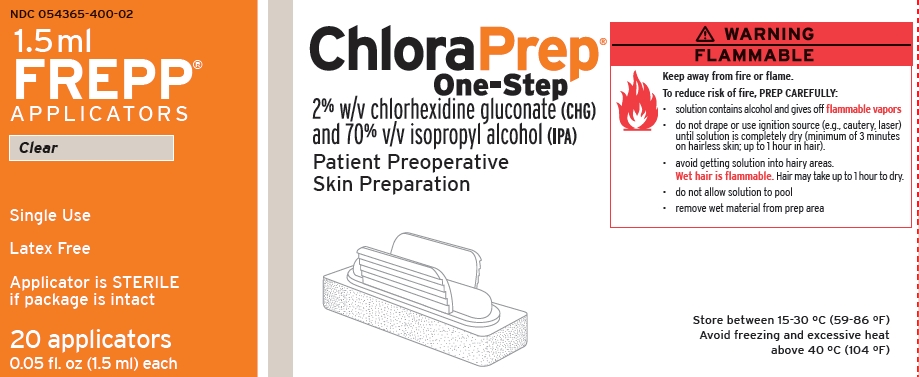
The Chlorprep(R) label notes: "DO NOT USE FOR LUMBAR PUNCTURE OR IN CONTACT WITH THE MENINGES" (attached)
Authors of the British Royal College of Anaesthetists 3rd National Audit Project provided some guidance for the use of chlorhexidine for spinal procedures
- Clinicians must take care to prevent CHG from reaching the CSF
- Keep CHG away from other drugs and equipment being used
- Allow solution to dry prior to beginning procedure
- Avoid using solutions > 0.5% chlorhexidine
- Further comments
- Chlorhexidine 0.5% in alcohol 70% is the optimal skin preparation for neuroaxial procedures
- Risk of vertebral canal sepsis is greater than the very rare risk of neurotoxicity and arachnoidits from chlorhexidine
- This is OFF-LABEL use and should be instituted formally at a departmental level with an audit process for complications
Further: Correspondance from the Journal of Regional Anesthesia and Pain Medicine
"Dr. David Hepner published a correspondence in the April 2007 issue of Anesthesiology that stated the expert panel for Regional Anesthesia and Pain Medicine “felt strongly that although the US Food and Drug Administration has not approved chlorhexidine before lumbar puncture, it has a significant advantage over povidone iodine because of its onset, efficacy, and potency” and commented that “interestingly, povidone iodine is also not approved for lumbar puncture."
Chlorhexidine off-label use is supported in academic literature. Due to specific labeling prohibiting use, a formal institutional policy to support such use may be indicated.
Cook TM, Fischer B, Bogod D, et. al. Antiseptic solutions for central neuraxial blockade: which concentration of chlorhexidine in alcohol should we use? British Journal of Anaesthesia.2009. 103(3):456-457
http://bja.oxfordjournals.org/cgi/content/extract/103/3/456
http://www.apsf.org/newsletters/html/2008/fall/02_ltrchlorprep.htm
http://www.apsf.org/newsletters/html/2008/fall/10_fdaquest.htm
Attachments
