521-540 of 860 results with category "Critical Care"

Previous  |  1 |  ... |  22 |  23 |  24 |  25 |  26 |  27 |  28 |  29 |  30 |  31 |  32 |  ... |  43 |  Next

Title: How to warm your frozen patient

Category: Critical Care

Keywords: accidental hypothermia, rewarming, ecmo, artic sun (PubMed Search)

Posted: 2/11/2014 by Feras Khan, MD (Updated: 3/6/2026)

A 50yo man found dow in the snow was brought into our ER last week in cardiac arrest with a bladder temperature of 21° C. Let’s warm him up!

  1. Heated humidified oxygen via mechanical ventilation at 42-46°
  2. IV normal saline warmed to 41-43° C
  3. Cardio-pulmonary bypass: 1-2° C increase every 5 minutes
  4. ECMO (best option in cardiac arrest): Up to 4-6° C/hr. VV or VA ECMO. Provides Cardio-pulmonary support. Can continue CPR while placing a cannula.
  5. CVVH: less costly, more available, 1-4°C/hr. Case reports only. 
  6. Artic Sun; external rewarming pads: used in hypothermia protocols. Easy to use. Case reports only.
  1. Pleural irrigation: one chest tube in the mid-clavicular line w saline at 42° and another chest tube in the post-axillary line and connected to a pleurovac.
  2. Peritoneal lavage: 8 Fr catheter into the peritoneum using a standard paracentesis method. Use 40-45° C dialysate.
  3. Gastric, bladder, colonic irrigations

We were able to get ROSC with CPR and ACLS and then used Artic Sun to re-warm successfully.

Other tips/tricks:

Attachments


Title: Mechanical Ventilation During ECMO

Category: Critical Care

Keywords: VV-ECMO, mechanical ventilation, ultra-lung protective ventilation (PubMed Search)

Posted: 2/4/2014 by Mike Winters, MBA, MD

Mechanical Ventilation During ECMO

Show References


Title: Necrotizing Skin and Soft Tissue Infections (NSSTIs)

Category: Critical Care

Posted: 1/28/2014 by Haney Mallemat, MD

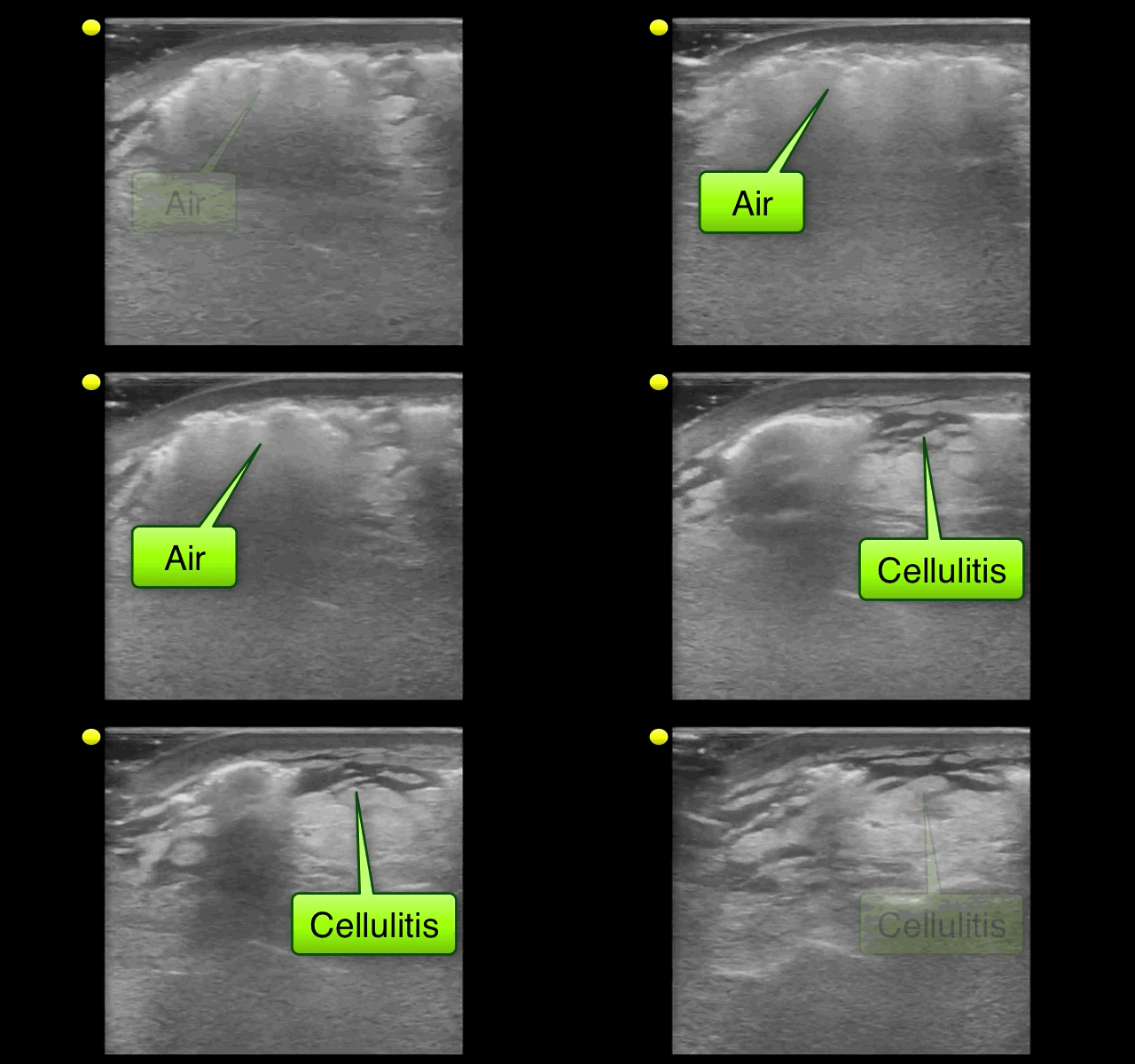
NSSTIs occur secondary to toxin-secreting bacteria; NSSTIs are surgical emergencies with a high-morbidity / mortality

Risk factors: immunocompromised host (DM, AIDS, etc.), intravenous drug use, malnourishment, peripheral vascular disease

Type I (polymicrobial; most common), Type II (monomicrobial; typically clostridia, streptococci, staph, or bacteroides), Type III (Vibrio vulnificus; seawater exposure)

Signs / Symptoms: pain out of proportion to exam (occasionally no pain at all), skin findings (blistering / bullae, gray-skin discoloration, or “Dishwater-like” discharge), or systemic toxicity (altered mental status, elevated lactate, etc.)

Diagnostic radiology

Treatment is emergent surgical debridement with simultaneous hemodynamic resuscitation PLUS broad-spectrum antibiotics; consider clindamycin becuase it has anti-toxin activity

Adjunctive therapies include Intravenous intraglobulin (neutralizes toxins secreted by bacteria) and hyperbaric oxygen
Show References


Title: A-lines: A Significant Source of Preventable Blood Stream Infections

Category: Critical Care

Keywords: arterial line, catheter related blood stream infections (PubMed Search)

Posted: 1/21/2014 by John Greenwood, MD (Updated: 1/21/2014)


Arterial Catheter-Related Blood Stream Infections

Whether arterial lines are a potential source of catheter-related blood stream infections (CRBSIs) is highly-debated; however, based on a recent systematic review they are an under recognized and significant source of CRBSIs.


Bottom Line(s) 

  1. Arterial lines appear to be a significantly under recognized source of CRBSI's in critically-ill patients.  If you are deciding to place an a-line for invasive blood pressure monitoring, strongly consider the radial site and use a chlorhexidine sponge or dressing to try and minimize the risk of future BSI.
     
  2. There is a paucity of data regarding the utility of maximal barrier techniques when inserting peripheral arterial lines.  With arterial catheter infection rates approaching that of central venous catheters, we should probably be inserting a-lines with the same sterile technique.

Show References


Title: Determination of Brain Death

Category: Critical Care

Keywords: brain death (PubMed Search)

Posted: 1/14/2014 by Feras Khan, MD

Determination of Brain Death

  • With the recent media spotlight on brain death (irreversible end of brain activity) due to a few recent cases, it would be helpful to review the definition.
  • Rule out alternative causes including hypothermia, drug-induced coma, metabolic abnormalities, or severe electrolyte disturbances.
  • A clear irreversible cause must be known based on history and diagnostic studies.

Clinical Examination

  • Patient should be unresponsive to verbal or noxious stimulation, with the exception of spinally mediated responses.
  • Absence of brainstem Reflexes
  1.             No pupillary response
  2.             Absent corneal reflex
  3.             Absent gag and cough reflex
  4.             Absent cervico-ocular reflex (Doll’s Eyes Maneuver)
  5.             Absent vestibulo-ocular reflex (Cold Calorics)
  • Apnea Testing  (disconnecting the ventilator and evaluating respiratory drive)

If apnea testing cannot be performed due to instability, hypoxia, or cardiac arrhythmias, then a confirmatory test should be performed (from highest to lowest sensitivity):

  •  Angiography (lack of intracranial flow)
  •   EEG
  •   Transcranial Doppler
  •   Technetium-99 brain scan
  •   Somatosensory evoked potentials

There is state to state variation on who can perform the test and how many separate examinations need to be performed before brain death can be legally declared.

For a great review on some of the pitfalls in making the diagnosis and difficulties with the examination, please see the attached article. 


Show References

Attachments


Title: LVAD Pearls

Category: Critical Care

Posted: 1/7/2014 by Mike Winters, MBA, MD (Updated: 3/6/2026)

Pearls for the Crashing LVAD Patient

Show References


Title: VAD thrombosis: A Must Know VAD Complication

Category: Critical Care

Keywords: Left Ventricular Assist Device, LVAD, Critical Care, Cardiology, Heart Failure, Thrombosis, LVAD Complications (PubMed Search)

Posted: 12/31/2013 by John Greenwood, MD


VAD thrombosis: A Must Know VAD Complication

The HeartMate left ventricular assist device (LVAD) is one of the most frequently placed LVADs today. Originally, it was thought to have a lower incidence of thrombosis due to its mechanical design. However, a recent multi-center study published in the NEJM reported a dramatic increase in the rate of thrombosis since 2011 in the HeartMate II device.  The report found:

Pump thrombosis is a major cause of morbidity and mortality (up to almost 50%!!) and is a can't miss diagnosis.  It's important to keep thrombosis on the differential for any VAD patient presenting with:

Useful lab findings suggestive of thrombosis include:

Bottom Line: In the patient with suspected VAD thrombosis, it is important to contact the patient's VAD team immediately (CT surgeon, VAD coordinator/nurse, VAD engineer).  Treatment should begin with a continuous infusion of unfractionated heparin, while other treatment options can be discussed with the VAD team.

Show References


Title: One for All or Two for Some? Double-coverage for potential pseudomonal infections?

Category: Critical Care

Posted: 12/24/2013 by Haney Mallemat, MD

The morbidity and mortality from pseudomonas aeruginosa infections is high and empiric double-antibiotic coverage (DAC) is sometimes given; quality evidence for this practice is lacking.

Although there is little supporting data, the following reasons have been given for DAC:

The potential harm of antibiotic overuse cannot be ignored, however, and include adverse reaction, microbial resistance, risk of super-infection with other organisms (e.g., Clostridium difficile), and cost.

There may be a signal in the literature demonstrating a survival benefit when using DAC for patients with shock, hospital-associated pneumonia, or neutropenia. The IDSA guidelines, however, do not support DAC for neutropenia alone; only with neutropenia plus pneumonia or gram-negative bacteremia.

Bottom line: Little data supports the routine use of DAC in presumed pseudomonal infection. It may be considered in patients with shock, hospital-associated pneumonia, or neutropenia (+/- pneumonia), but consult your hospital’s antibiogram or ID consultant for local practices.

Show References


Title: Hepatic Encephalopathy (HE)

Category: Critical Care

Keywords: Hepatic encephalopathy, HE, liver failure, cirrhosis (PubMed Search)

Posted: 12/17/2013 by Feras Khan, MD (Updated: 3/6/2026)

Hepatic Encephalopathy (HE)

Pathogenesis: Several theories exist that include accumulation of ammonia from the gut because of impaired hepatic clearance that can lead to accumulation of glutamine in brain astrocytes leading to swelling in patients with hepatic insufficiency from acute liver failure or cirrhosis.

Clinical Features:

Diagnostic tests: Ammonia levels are routinely drawn but must be drawn correctly without the use of a tourniquet, transported on ice, and analyzed within 20 minutes to get an accurate result. Severity of HE does not correlate with increasing levels.

Management:

1.     Airway protection as needed

2.     Correct precipitating factors (GI bleed, infection-SBP, hypovolemia, renal failure)

3.     Consider neuro-imaging if new focal neurologic findings are found on exam

4.     Correct electrolyte imbalances

5.     Lactulose by mouth (PO/Naso-gastric tube or Rectally)

a.     10-30 g every 1-2 hours until bowel movement or lactulose enema (300 mL in 1 L water)

b.     Facilitates conversion of NH3 to NH4+, decreases survival of urease-producing bacteria in the gut

6.     Rifaximin 550 mg by mouth BID (minimally absorbed antibiotic with broad-spectrum activity)

7.     Do not limit protein intake acutely

8.     TIPS reduction in certain patients with recurrent HE

9.     Transplant referral as needed

10.  Consider other causes if patient does not improve within 24-48hrs. 

Show References


Title: The CORE Scan

Category: Critical Care

Posted: 12/10/2013 by Mike Winters, MBA, MD (Updated: 3/6/2026)

The Concentrated Overview of Resuscitative Efforts (CORE) Scan

Show References


Title: Vent Management: Finding the AutoPEEP!

Category: Critical Care

Keywords: Mechanical Ventilation, autoPEEP, PEEP, obstructive lung disease, critical care (PubMed Search)

Posted: 12/3/2013 by John Greenwood, MD (Updated: 12/3/2013)


Vent Management: Finding the AutoPEEP!

OK, so we all know not to, "...Fall asleep on Auto-PEEP" thanks to Dr. Mallemat's pearl that can be seen here.  But now the question is, how do you know if your patient is air-trapping?

There are 3 ways you can look for evidence of Auto-PEEP on the ventilator:

  1. Do an end-expiratory hold:  If the measured PEEP is more than the PEEP set on the vent after a 2-3 second hold, the difference is your Auto-PEEP.

  2. Look at the expiratory flow waveform:  If the waveform does not return to baseline (still expiring when inspiratory ventilation occurs), there's Auto-PEEP!

  3. Compare the inspiratory vs. expiratory volumes.  If the inspiratory volumes are much higher then the expiratory volumes, consider Auto-PEEP.

Show References


Title: Dexmedetomidine...Better Than (Just) Benzos?

Category: Critical Care

Posted: 11/26/2013 by Haney Mallemat, MD

The management of alcohol withdrawal syndrome (AWS) includes supportive care focusing on the ABC’s and administration of benzodiazepines (BDZ). 

While BDZ are effective in the treatment of AWS, some patients may require very high doses of BDZ to control symptoms (tachycardia, hypertension, diaphoresis, etc.); unfortunately, high-doses of BDZ may lead to suppression of the respiratory drive and endotracheal intubation.

Dexmedetomidine (DEX) is a sedative agent that is an intravenous alpha2-agonist (it's like clonidine); it reduces sympathetic outflow from the central nervous system and it may help treat withdrawal syndromes. The major benefit of DEX is that it does not suppress the respiratory drive, thus intubation is not required.

Smaller trials and case series have shown that patients with AWS who were treated with BDZ in addition to DEX had better symptom control, lower overall BDZ doses, and less respiratory depression/intubation.

Bottom-line: While more trials are needed, consider adding DEX for patients with AWS who require high-doses of BDZ.

Show References


Title: Ottawa Rules for Subarachnoid Hemmorhage (SAH)

Category: Critical Care

Keywords: subarachnoid hemmorhage, sah (PubMed Search)

Posted: 11/19/2013 by Feras Khan, MD (Updated: 3/6/2026)

Ottawa Rules for Subarachnoid Hemmorhage (SAH)

Background

Design

Results

132 (6.2%) had SAH

Decision rule including any:

  1. age 40 years or older
  2. neck pain or stiffness
  3. witnessed LOC
  4. onset during exertion

Had 98.5% sensitivity (95% CI, 94.6%-99.6%) and 27.5% specificity (95% CI, 25.6%-29.5%)

Adding “thunder-clap” headache and “limited neck flexion on examination” (inability to touch chin to chest or raise the head 8cm off the bed if supine) resulted in 100% (95% CI, 97.2%-100%) sensitivity.

The rule was then evaluated using a bootstrap analysis on old cohort data to validate the rule.

Conclusion/Limitations


Show References

Attachments


Title: Acalculous Cholecystitis

Category: Critical Care

Posted: 11/12/2013 by Mike Winters, MBA, MD (Updated: 3/6/2026)

Acalculous Cholecystitis in the Critically Ill

Show References


Title: Ineffective Triggering - The Most Common Vent Dyssynchrony

Category: Critical Care

Keywords: Mechanical ventilation, Critical Care, Intubation (PubMed Search)

Posted: 11/5/2013 by John Greenwood, MD (Updated: 11/5/2013)


Ineffective triggering is the most common type of ventilator dyssynchrony.  The differential diagnosis includes:

Auto peep is the most common cause of ineffective triggering and will often occur as a patient cannot create enough inspiratory force to overcome their own intrinsic peep (PEEPi).  Patients who are severely tachypnic or those with obstructive lung disease are at high risk for auto peep (not enough time to exhale).

Ineffective triggering can also occur if the patient cannot create enough of a negative inspiratory force to trigger the vent to deliver a positive pressure breath. Prolonged period of mechanical ventilation, over sedation, high cervical spine injuries, or diaphragmatic weakness are common causes.

Lastly, improper trigger sensitivities may make it difficulty for the ventilator to sense when the patient is attempting to take a spontaneous breath.  

For an example of a patient with ineffective triggering, check out: http://marylandccproject.org/2013/10/28/vent-problems1/

Show References


Title: Simple tips for managing the critically-Ill pregnant patient

Category: Critical Care

Posted: 10/29/2013 by Haney Mallemat, MD

The pregnant patient normally has increased cardiac output and minute ventilation by the third trimester. Despite this increase, however, these patients have little cardiopulmonary reserve should they become critically-ill.

Remember the mnemonic T.O.L.D.D. for simple tips that should be done for the pregnant patient who presents critically-ill or with the potential for critical illness: 


Show References


Title: TRALI- Transfusion related lung injury

Category: Critical Care

Keywords: TRALI, TACO, Transfusion, acute lung injury (PubMed Search)

Posted: 10/22/2013 by Feras Khan, MD

Background

Definition

Pathogenesis

Two-hit hypothesis: first hit is underlying patient factors causing adherence of neutrophils to the pulmonary endothelium; second hit is caused by mediators in the blood transfusion that activate the neutrophils and endothelial cells.

Differential

Can be confused or overlap with TACO or transfusion-associated volume/circulatory overload, which presents similarly but has evidence of increased BNP, CVP, pulmonary wedge pressure, and left sided heart pressures. Patients with TACO tend to improve with diuretic treatment

Supportive tests

Treatment

Show References


Title: High-Yield Pearls for the ICU Patient Bording in the ED

Category: Critical Care

Posted: 10/16/2013 by Haney Mallemat, MD

There have been so many great talks at ACEP 2013, but Dr. Michael Winters' talk "The ICU is NOT Ready for Your Patient" was chock full of great critical care pearls. Here are just a few:

Show References


Title: Improve your Resuscitation! Tools for the Resus Room

Category: Critical Care

Keywords: CPR, Cardiac Arrest, ACLS, Chest Compression (PubMed Search)

Posted: 10/8/2013 by John Greenwood, MD


Want to improve your chances of success in the resus room?  Download a metronome app on your smartphone and set it to a rate of 100-120 beats per minute.  There are a number of cheap (usually free) metronome applications for both iOS and Android devices.

A recent review looked at the evidence behind CPR feedback devices and found:

  • There was a significant improvement in the hands-off time per minute during CPR
  • The proportion of intubation attempts taking under 20 seconds improved
  • There were Increased survival rates when implemented in the pre-hospital setting 

So instead of going to iTunes and downloading the Bee Gees, go over to the App store and download a free metronome.  Your resus team will be able to stay on track with their compressions and even better - they won't have to hear you sing!

Show References


Title: Vasopressin, Steroids, and Epi .Oh my! A new cocktail for cardiac arrest?

Category: Critical Care

Posted: 10/1/2013 by Haney Mallemat, MD (Updated: 10/1/2013)

Show References


Previous  |  1 |  ... |  22 |  23 |  24 |  25 |  26 |  27 |  28 |  29 |  30 |  31 |  32 |  ... |  43 |  Next