241-260 of 321 results by Haney Mallemat

Previous  |  1 |  ... |  8 |  9 |  10 |  11 |  12 |  13 |  14 |  15 |  16 |  17 |  Next

Title: Carcinoid-induced Heart Failure

Category: Critical Care

Posted: 5/22/2012 by Haney Mallemat, MD (Updated: 5/22/2012)

Carcinoid tumors are neuroendocrine malignancies typically located in the GI tract; most commonly in the terminal ilium and appendix.

Carcinoid tumors produce serotonin, histamine, bradykinin, and/or prostaglandin that result in diarrhea, facial flushing, or bronchospasm. These vasoactive substances may also lead to hypotension and vasodilatory shock.

The tumor may also affect the tricuspid and pulmonary valves leading to right-heart failure secondary to valvular regurgitation, stenosis or both.

Treatment is directed at controlling the malignancy (e.g., octotrotide and tumor resection) as well as managing the right-sided heart failure when it occurs (e.g., inotropes, diuretics, vasopressors, etc.).


Show References


Title: Psoas Abscess

Category: Visual Diagnosis

Posted: 5/14/2012 by Haney Mallemat, MD

This week's visual pearl is an interesting ultrasound of a psoas abscess submitted by Dr. Sa'ad Lahri. He is an Attending physician in the Emergency Department of the Khayelitsha Hospital in Cape Town, South Africa. The video quality is grainy, but it automatically replays so you can watch it a few times.

http://ultrarounds.com/ultrarounds.com/Visual_Pearl_May_14,_2012.html

Show References


Title: Severe Acute Pancreatitis

Category: Critical Care

Posted: 5/8/2012 by Haney Mallemat, MD

Severe acute pancreatitis (SAP) is a life-threatening form of pancreatitis, with up to 30% mortality.

SAP may lead to hypovolemic shock (secondary to vasodilation and capillary leak), hypoxemia (from acute respiratory distress syndrome), and multi-organ failure.

Suspect SAP with signs and symptoms of pancreatitis plus any of the following:

Treatment of SAP should focus on:

Show References


Title: What's the Diagnosis?

Category: Visual Diagnosis

Posted: 4/30/2012 by Haney Mallemat, MD (Updated: 4/30/2012)

Question

68 yo man presents with new-onset seizures; his CT is shown below. What is your differential diagnosis?

Show Answer


Title: Mediastinitis

Category: Critical Care

Posted: 4/24/2012 by Haney Mallemat, MD

Mediastinitis is an infection of the mediastinum; a rapidly fatal surgical emergency if not recognized and treated early.

Causes include esophageal perforation, oropharyngeal infections (e.g., Ludwig’s angina), prevertebral or carotid space infections, and iatrogenically (endoscopy, hypopharyngeal perforations during intubation, etc.).

Plain films (neck / chest) may serve as a screening tool, but CT best defines the source and extent of disease; the CT below demonstrates gas within the soft-tissues and the mediastinum (red arrrows).

Infections may be polymicrobial and broad-spectrum antibiotics with anaerobic coverage (e.g., pipercillin-tazobacam) should be started initially.

Immediate treatment should also include:


Bonus Pearl

Can't keep up with all the great educational stuff in Emergency Medicine and Critical Care? Let the professionals at Life in the Fastlane do it for you (http://lifeinthefastlane.com). These guys scour the web and blog about the best educational pearls, podcasts, and radoiolgic finds...and they're also quite the laugh. Check them out today!

Show References


Title: What s the Diagnosis? Case submitted and written by Dr. Zachary Dezman

Category: Visual Diagnosis

Posted: 4/16/2012 by Haney Mallemat, MD (Updated: 4/16/2012)

Question

67 yo male presents with burning substernal chest pain; worse with meals and when supine. What's the diagnosis?


Show Answer


Title: Reducing nosocomial sepsis

Category: Critical Care

Posted: 4/10/2012 by Haney Mallemat, MD (Updated: 8/12/2014)

Sepsis is one of the top 10 causes of death in the U.S. and its incidence is on the rise.

The financial burden of sepsis is also growing; it is estimated that between 2000 and 2005 the overall cost of ICU hospitalization rose from $56.6 billion to $81.7 billion per year with severe sepsis accounting for $16.7 billion.

Although we may not be able to immediately modify the incidence of community-acquired sepsis, hospital-acquired sepsis can be reduced; for example, many cases of nosocomial sepsis are associated with catheter blood stream infections secondary to central-lines.

There are several simple strategies to prevent catheter-related blood-stream infections:

Remember: We play a large role in reducing nosocomial sepsis; be vigilant about your sterile techniques during central catheter insertions and question the need for every single line.


Bonus pearl (only for iPhone): MDRNTools is a FREE app (that’s right, FREE!) with lots of ED and ICU applications such as an IV med calculator, an RSI handbook, a Stroke Scale calculator, and more.

Download http://itunes.apple.com/us/app/mdrntools/id505794224?mt=8&ls=1

Show References


Title: Want more apnea time during Rapid Sequence Intubation? Raise the head of the bed.

Category: Critical Care

Keywords: apnea time, rapid sequence intubation, atelectasis, crticial care, intubation, hypoexemia, obesity (PubMed Search)

Posted: 3/27/2012 by Haney Mallemat, MD (Updated: 3/27/2012)

The supine position during rapid sequence intubation may result in posterior lung atelectasis thereby reducing lung volumes, oxygenation reserve, and ultimately apnea time.

Several studies have shown that elevating the head of the bed by at least 20 degrees or placing a patient in reverse Trendelenberg position (for patients with contra-indications to elevating the head of the bed) during RSI may significantly increase apnea time.

Elevating the head of the bed may be especially helpful for patients with BMIs >35

Show References


Title: What's the Diagnosis? Case submitted and written by Dr. Zachary Dezman

Category: Visual Diagnosis

Posted: 3/26/2012 by Haney Mallemat, MD (Updated: 3/26/2012)

Question

26 year old male with pain when he extends his 4th finger as well as swelling of that digit. Diagnosis?

Show Answer


Title: Safer Intubation with a nasal cannula? Introducing Apneic Oxygenation

Category: Critical Care

Posted: 3/14/2012 by Haney Mallemat, MD (Updated: 3/14/2012)

Pre-oxygenation prior to rapid sequence intubation (RSI) is performed to prevent hypoxemia during endotracheal intubation.

An appropriate period of pre-oxygenation will potentially increase the amount of apnea time during intubation, however patients with certain critical illnesses (e.g., severe pneumonia) may desaturate faster than expected.

Apnea time can be increased by maintaining high-flow oxygen by nasal cannula (e.g., 15L), during application of the bag-valve mask and during the time of attempted endotracheal tube placement; this concept is known as apneic oxygenation.

Apneic oxygenation is based on the principle that when patients are apneic, alveoli absorb oxygen into the blood stream at a rate of approximately 250 mL/minute, creating a diffusion gradient from the pharynx (containing a high-density of oxygen from the nasal cannula) to a lower concentration of oxygen in the alveoli.

Although a patient’s oxygenation can be maintained longer using apneic oxygenation, its application does not remove the continuous buildup of CO2 in the alveoli during apena. Therefore, respiratory acidosis can result after a prolonged period of apneic oxygenation. 

The complete article describing the physiology and practical applications can be found here....it's free! http://www.annemergmed.com/article/S0196-0644(11)01667-2/fulltext

Show References


Title: What's the Diagnosis? Case submitted and written by Dr. Zachary Dezman

Category: Visual Diagnosis

Posted: 3/12/2012 by Haney Mallemat, MD (Updated: 8/12/2014)

Question

14 year-old male presents with right-sided testicular pain. What's the diagnosis?


Show Answer


Title: Ventricular Assist Devices

Category: Critical Care

Keywords: VAD, ventricular assist device, hear failure, shock, hemodynamics (PubMed Search)

Posted: 2/28/2012 by Haney Mallemat, MD

Ventricular assist devices (VAD) pump blood from the left, right or both ventricles for patients in severe ventricular failure.

VADs may be placed temporarily (as a bridge to transplant) or permanently in patients who are not transplant candidates (also known as Destination Therapy)

Certain types of VADs continuously pump blood in a non-pulsatile fashion. In these cases, a patient may be perfusing normally without a palpable pulse.

Familiarity with potential VAD complications is important as a patient with a VAD may be presenting to an ED near you. Complications include:

Show References


Title: What's the Diagnosis? Case submitted by Dr. Bethany Radin

Category: Visual Diagnosis

Posted: 2/27/2012 by Haney Mallemat, MD (Updated: 8/28/2014)

Question

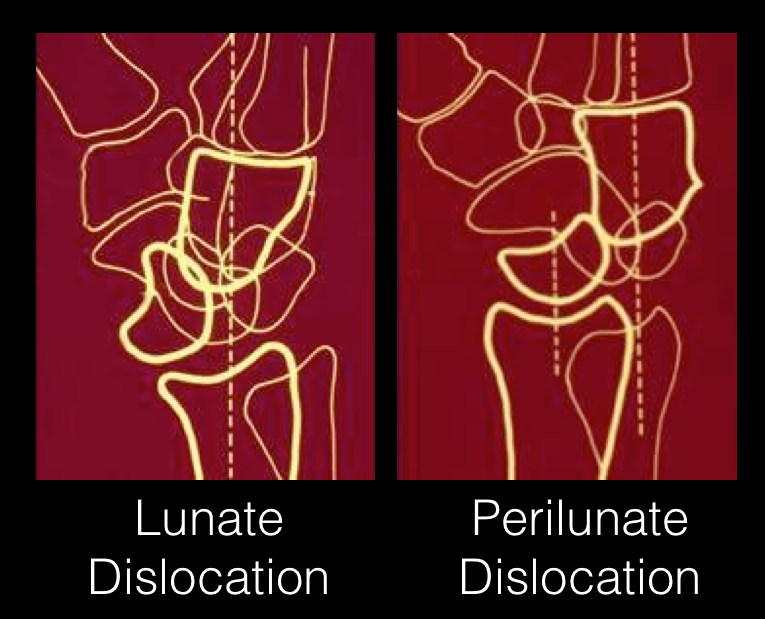
24 year-old male presents following fall from a scaffolding and complains of wrist pain. Diagnosis?

Show Answer


Title: Fluid boluses don't always work....

Category: Critical Care

Keywords: pericardial tampaonde, shock, tamponade, fluids, hypoperfusion (PubMed Search)

Posted: 2/14/2012 by Haney Mallemat, MD (Updated: 2/15/2012)

A fluid bolus is often the first-line therapy for patients with pericardial tamponade. A fluid bolus, however,  may not always improve hemodynamics.

The cardiac index of forty-nine patients with cardiac tamponade was assessed before and after a 500 cc normal saline bolus:

Bottom-line: A fluid bolus may a reasonable first choice in a hypotensive patient with tamponade, but remember that fluid boluses may not always work. Attempts at fluid resuscitation should never delay definitive treatment with pericardiocentesis.

Show References


Title: What's the Diagnosis? Case submitted by Dr. Joeseph Martinez

Category: Visual Diagnosis

Posted: 2/13/2012 by Haney Mallemat, MD (Updated: 8/28/2014)

Question

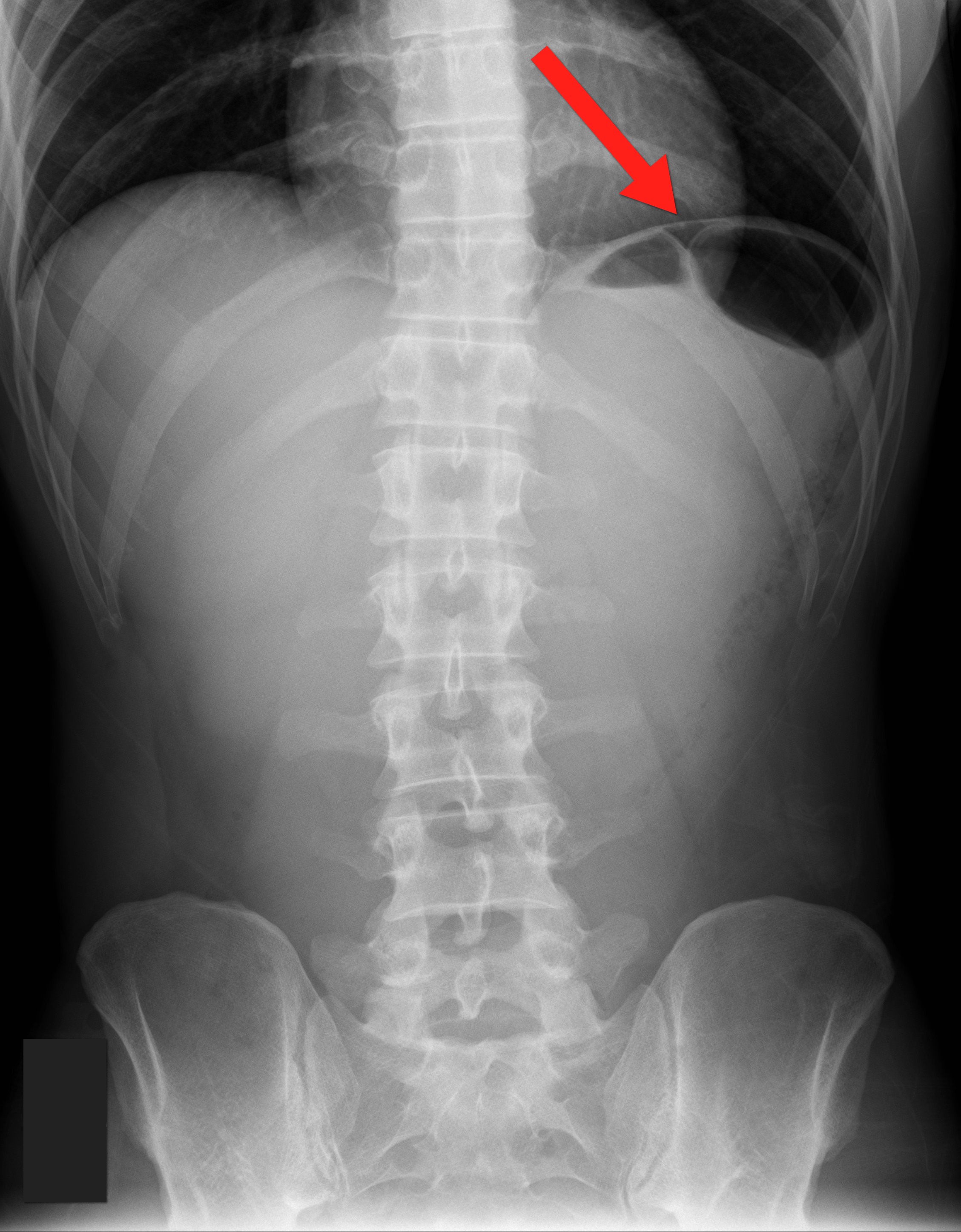
35 year old male with sudden onset of abdominal pain. Diagnosis?

Show Answer

Show References


Title: What's the Diagnosis? By Michael Allison

Category: Visual Diagnosis

Posted: 2/6/2012 by Haney Mallemat, MD (Updated: 8/28/2014)

Question

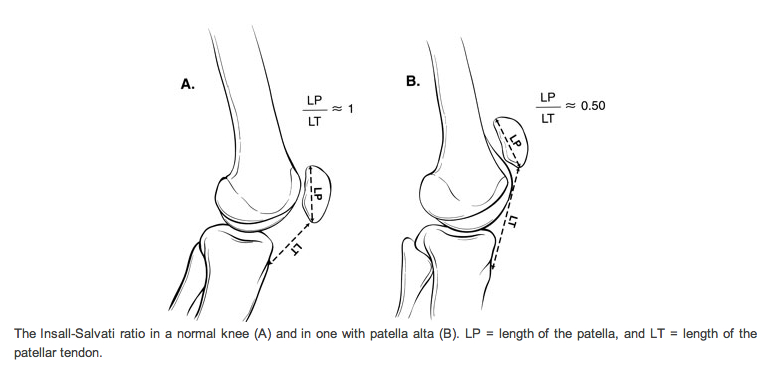
28 y.o. male felt his left knee "pop" after landing from a jump while playing basketball. Knee exam revealed limited knee extension. X-ray is shown. Diagnosis?

Show Answer


Title: Air or Gas Embolism (AGE), written by Dr. Kinjal Sethuraman

Category: Critical Care

Posted: 1/31/2012 by Haney Mallemat, MD

AGE occurs when gas bubbles enter arteries or veins; AGE may cause clinical symptoms even with very small volumes of air. 

Air enters the circulatory system via:

· Barotrauma – Alveolar injury allows air to enter systemic bloodstream; occurs in divers following rapid ascent after breath holding, during mechanical ventilation, chest tube placement, or bronchoscopy

· Decompression sickness – Dissolved gas precipitates out of bloodstream as bubbles; typically following scuba diving without appropriate time to ascend or prolonged flying in unpressurized aircrafts

· Direct injection of air into arterial or venous circulation – Examples include accidental IV injection of air, needle biopsy of lung, or aspiration of air during central line placement

Serious clinical manifestations include:

· Neurologic changes - loss of consciousness, confusion, or focal neurological deficits

· Hemodynamic changes – hypotension, arrhythmias, cardiac ischemia, or cardiac arrest.

· Respiratory changes – obstruction of pulmonary circulation, pulmonary edema, or hypoxemia

Treatment:

· Strict attention to ABC’s using high-flow O2.

· Keep head of bed elevated to minimize/reduce cerebral edema.

· Hyperbaric Oxygen (HBO) therapy is recommended for neurological manifestations or cardiovascular instability. Good outcomes associated with shorter intervals from air embolism to HBO. Typically only 1 to 2 treatments are needed; occasionally additional treatments are necessary.

Show References


Title: What's the diagnosis? Case submitted by Emilie Calvello

Category: Visual Diagnosis

Posted: 1/23/2012 by Haney Mallemat, MD (Updated: 1/23/2012)

Question

20 year old female complains of “itchy” rash to her foot x 1 week and recently the rash has spread to her other other foot and both hands (shown below). No past medical history, no fever or chills, no mucus membranes involvement, no new medications, no tick bites, no travel. She is also 16 weeks pregnant. What’s the diagnosis?

Show Answer

Show References


Title: Fungal Endopthalmitis

Category: Critical Care

Keywords: fungal, endopthalmitis, ocular, critically ill, systemic infection, immunosupression, IVDA (PubMed Search)

Posted: 1/17/2012 by Haney Mallemat, MD

Fungal endopthalmitis is an intraocular infection of the aqueous and/or vitreous humor secondary to fungal pathogens; Candida and Aspergillus species are the most common pathogens.

Risk factors: intravenous drug abuse (#1 risk factor), critical illness, systemic fungal infection, immunosuppression (from cancer or medications), diabetes, and alcoholism.

Have a high-index of suspicion for endopthalmitis when patients with systemic fungal disease have visual symptoms; endopthalmitis is present in up to 33% of patients with systemic fungal disease.

Symptoms include:

Inspection of both the anterior and posterior chamber is essential to during evaluation; several small yellow-white circular or “fluffy” lesions with surrounding hemorrhage are demonstrated.

Definitive diagnosis made by vitreous biopsy, culture, or PCR; presumptive treatment is acceptable if systemic fungal disease has been demonstrated.

Treatment with Amphotericin B or Voriconazole may be used for broad-spectrum fungal coverage until specific culture and sensitivities return.

Show References


Title: What's the diagnosis? Image submitted by Dr. Michael Abraham

Category: Visual Diagnosis

Posted: 1/9/2012 by Haney Mallemat, MD (Updated: 8/28/2014)

Question

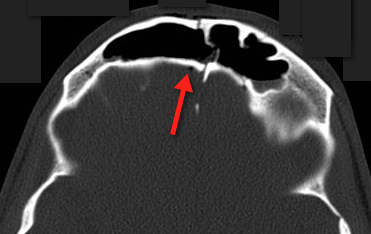
23 year-old male fell off porch while intoxicated. The head CT is shown below. Diagnosis?

Show Answer

Show References


Previous  |  1 |  ... |  8 |  9 |  10 |  11 |  12 |  13 |  14 |  15 |  16 |  17 |  Next