Transfer of chemical from their original container to an unlabeled or different container (e.g. Gatorade bottle) is one of the common causes of unintentional poisoning.
A retrospective study of National Poison Data System from 2007 – 2017 identified 45,512 cases of unintentional exposure/ingestion of chemicals contained in unlabeled/incorrectly labeled containers.
Result
Annual reported cases increased from 3,223 in 2007 to 5,417 in 2017.
Most commonly involved products included
These exposures led to
The majority of these exposures were non-toxic in nature (72%) but serious outcomes were noted in 4.4% of the cases, including 23 deaths.
Highest morbidity was associated with:
Deaths
Conclusion
Dihydropyridine (calcium channel blocker) overdose is one of the leading causes of death from cardiovascular drug poisoning. In contrast, angiotensin-II receptors blockers (ARBs) and angiotensin converting enzyme inhibitor (ACEIs) causes minimal toxicity in overdose. Frequently, these medications are co-ingested with dihydropridines.
Recently, a retrospective study was conducted to evaluate the hemodynamic impact of dihydropyridines with ARBs/ACEIs co-ingestion.
Results
Cohort
Mixed overdose group had:
Higher proportion of the mixed overdose group received:
Conclusion
Combined overdose of dihydropyridines with ARBs/ACEIs can result in more significant hypotension.
Extracorporeal membrane oxygenation use is increasing in the US for acute poisoning.
A retrospective study of the National Poison Data System from 2000 to 2018 identified 407 ECMO cases (332 adults – age > 12 years, 75 pediatric – age < 12 years). Increase in ECMO use were more notable in adult population.
Characteristics
Intentional exposure
Most common class of drug/poison exposure in adults
Most common class of drug/poison exposure in children
Most common states that used ECMO for poisoning
Conclusion
Baclofen is a presynaptic GABA-B receptor agonist in the spinal cord that is primarily used for muscle spasms/spasticity. In large overdose, baclofen can produce CNS depression, respiratory depression, bradycardia/hypotension, hypothermia, seizure and coma.
Baclofen is primarily eliminated by the kidney. In patients with end-stage kidney disease/acute kidney failure, hemodialysis (HD) has been used to enhance baclofen clearance. However, it is unclear if there is a benefit of using HD in patients with normal kidney function.
In a recently published case report, HD was implemented in an attempt to shorten the anticipated prolonged ICU course.
Case: 14 year old (51 kg) woman ingested 60 tablets of baclofen (20 mg tablets)
Her symptoms were:
Baclofen level: 882 ng/mL (therapeutic range: 80 – 400 ng/mL)
Baclofen clearance from hemodialysis vs. urine
Patient’s mental status improved on hospital day 6 and was extubated. She was discharged to psychiatry on hospital day 14.
Conclusion:
What physical exam findings are associated with nitrous oxide abuse?
Nitrous oxide (NO) inhalation abuse, also called “whip-its” or “whippets”, inactivates vitamin B12 and create a vitamin B12 deficiency state. Chronic abuse of nitrous oxide can result in neurologic deficits/findings affecting the posterior/dorsal column of the spinal cord.
Physical exam findings:
Tianeptine is an antidepressant with mu-opioid receptor agonism. It is available in several European countries for therapeutic use, but not available in the US.
There has been an increase in tianeptine exposure in the US since August 2019. Recently a retrospective observation study was done to characterize the clinical features associated with tianeptine exposure.
Result
| Intoxication (n=11) | Withdrawal (n=27) |
| Symptoms · Lethargy: 7 (63%) · Agitation: 3 (27%) · Tachycardia: 3 (27%) · GI distress: 2 (18%) · Myoclonic/hallucination: 2 (18) | Symptoms · Anxiety: 12 (44%) · GI distress: 3 (33%) · Hypertension: 8 (30%) · Agitation: 8 (30%) · Tachycardia: 7 (26%) |
| Treatment · Naloxone: 3 (27%) · Benzodiazepines: 2 (18%) · Antipsychotics: 2 (18%) · Antimuscarinic: 1 (9%)
| Treatment · Benzodiazepine: 10 (37%) · Opioids: 6 (22%) · Alpha-2-agonist: 5 (19%) · Antipsychotics: 5 (19%) · Antimuscarinic: 5 (19%) |
| Disposition · ICU: 6 (55%) · Non-ICU: 2 (18%) · Discharged home: 2 (18%)
| Disposition · ICU: 4 (15%) · Non-ICU: 7 (26%) · Psych: 1 (4%) · Discharged home: 10 (37%) |
Conclusion
What is the name of the toxin found in this seed/bean and its mechanism of toxicity?
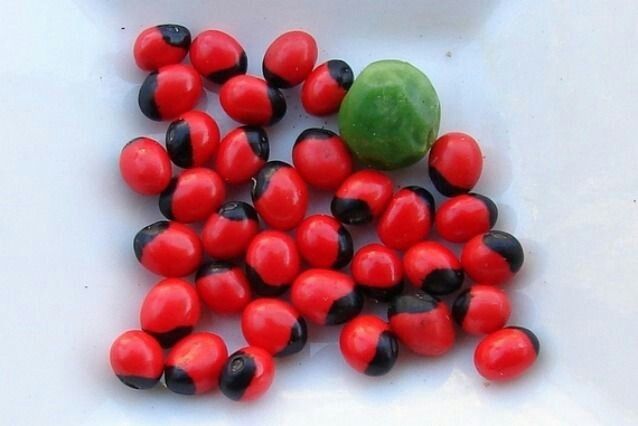
Carbon monoxide is an odorless gas that can cause neurologic and cardiovascular toxicity. It is produce by combustion of organic materials/fuel such as natural gas (furnace, gas stove, water heater, space heater) or gasoline. DVT/PE has been reported among victims of CO poisoning.
A recently published article investigated the risk of DVT/PE after CO poisoning.
Results
22,699 patients with CO poisoning were identified between 2004 and 2015
30 days after CO poisoning
90 days after CO poisoning
No significant increase in risk > 90 days.
Conclusion
A 27 year-old man with history of rheumatoid arthritis presents to the emergency department after ingestion of hydroxychloroquine (20 tablets of 200 mg/tablet). He complains of nausea/vomiting. He appears lethargic. What is the anticipated hydroxychloroquine toxicity and management?
VS: Temp: afebrile, BP: 95/55 mmHg, RR: 23 breaths/min, O2 saturation: 99%
ECG:
Over the past several days, riot control agents have been used against the protest participants (related to Mr. George Floyd’s death). There are 3 widely used riot control “lacrimating” agents:
These agents (irritants) primarily affect the eye, skin, and respiratory tract.
| Organ | Effect | Management |
| Eyes | · Lacrimination · Blepharospasm · Conjunctiva irritation/conjunctivitis · Periorbital edema · Corneal abrasions | · Copious H20/saline irrigation with Morgan Lensor Nasal Cannula jury-rig · Slit lamp exam for corneal abrasions |
| Skin | · Burning sensation · Blister · Contact dermatitis · 2nd degree burns (mace) | · Wash with soap and water · Wound care |
| Airway/respiratory tract | · Respiratory tract irritation · Rhinorrhea · Laryngospasm · Bronchospasm · Chemical pneumonitis | · B2-agonists for bronchospasm · Steroids if worsening underlying reactive airway disease · CXR to evaluate for possible pneumonitis · Supplementary oxygen as needed |
Mangement:
ILE is considered as one of the “last resort” therapy in cases of life-threatening drug-induced cardiogenic shock or cardiac arrest. Although there are numerous case reports and case series that showed “successful” or “positive” outcome with ILE, here is no clear evidence that lipid emulsion therapy is effective.
A group of researcher reviewed the National Poison Data System (NPDS) to investigate the failure of ILE therapy by reviewing the overdose fatalities reported to NPDS between 2010 and 2015.
Result:
Response to therapy (study cohort)
Adverse effect (n=49)
Conclusion
A 19 year old man presents with a scalp lesions/burns after an exposure to incendiary agent. His wounds were smoking and they flouresce under UV light.
What is the causative agent?
Recently, “disinfectants,” or germicides, has gain public attention during COVID-19 pandemic. So, what types of agents are considered as “disinfectants?”
Germicides as classified into three broad categories
1. Antiseptics – chemicals applied to living tissue to kill or inhibit microorganisms
a. Iodine & iodophors (e.g. Povidone-iodine; aka Betadine)
b. Chlorine, bleach (sodium hypochlorite)
c. Chlorhexidine
d. Hydrogen peroxide
e. Alcohols (ethanol and isopropanol)
2. Disinfectants – chemicals applied to inanimate objects to kill or inhibit microorganisms
a. Formaldehyde
b. Phenol (aka carbolic acid)
c. Substituted phenols (e.g. hexachlorophene; aka pHisoHex)
d. Quaternary ammonium compounds (benzalkonium chloride; aka Zephiran)
3. Sterilants – chemicals applied to inanimate objects to kill all microorganisms including spores
a. Ethylene oxide
b. Glutaraldehyde
Although ethanol is frequently found in alcoholic beverage and consumable, no other chemicals should be ingested or injected.
Buprenorphine (BUP) is increasingly prescribed/used to treat opioid use disorder (OUD) in the United State. BUP is mainly metabolized by CYP3A4 where its enzymatic activity can be either induced or inhibited by many agents.
For example, a study showed that Rifampin administration for 15 days, a potent 3A4 inducer, resulted in (1):
On the contrary, exposure to voriconazole – strong 3A4 inhibitor - resulted in (n=12 health volunteers) (2):
Cannabis use – (CBD is a CYP 3A4 inhibitor) also increased the BUP concentration by 2.7 fold. (3)
Bottom line:
A 7 year-old Spanish speaking female presents to the emergency room after ingestion of 2 – 3 tablets of her sister’s medication. She complains of nausea/vomiting with diarrhea, periorbital/facial swelling, and flushing of her skin. Her urine is reddish but there is no blood is shown in urinalysis/urine microscopic analysis. The patient's sister is taking the medication for a respiratory condition.
Which medication did she take?
Cyclopeptides (Amatoxin)-containing mushroom poisoning results in delayed development of gastrointestinal symptoms that may progress to liver failure. There is no established antidotal treatment for cyclopeptide-induced hepatic failure; silibinin is currently under investigation.
There is a wide range of case fatality reported from cyclopeptides-containing mushroom poisoning: 4.8% to 47%.
National Poison Data System was reviewed from 1/1/2008 to 12/31/2018 for all suspected cyclopeptides containing mushroom poisoning. Out of 8953 suspected cases, 148 cases were included in the study.
Results:
Therapy:
Case fatality
Conclusion:
COVID-19 pandemic has brought two old medications – chloroquine and Hydroxychloroquine – back from the past.
A couple in Arizona self-medicated with chloroquine this week and experienced chloroquine toxicity; the man died and his wife was admitted to the ICU.
https://www.cnn.com/2020/03/23/health/arizona-coronavirus-chloroquine-death/index.html
Chloroquine and hydroxychloroquine overdose result in cardiotoxicity by Na and K channel blockade (similar to other membrane stabilizing agents such as TCAs, loperamide, etc.). Onset of toxicity is usually within 1 – 3 hours after ingestion.
Other symptoms of toxicity include: nausea/vomiting, respiratory depression/apnea, altered mental status and seizure. Hypokalemia is often encountered.
Use of sodium bicarbonate is controversial due to worsening of hypokalemia. Instead, administration of high dose diazepam and epinephrine (EPI) infusion has shown to decrease mortality (see below).
Riou B et al. NEJM 1988 DOI: 10.1056/NEJM198801073180101
Survival:
Clemessy JL et al. Crit Care Med 1996. DOI:10.1097/00003246-199607000-00021
Treatment: 87% received at least one of the interventions below.
Mortality
Bottom line
Methemoglobinemia occurs when iron in the hemoglobin is converted from ferrous (2+) to ferric (3+) state, frequently by substance exposure. There are many medications and chemicals that can induce methemoglobinemia.
Common agents that induce methemoglobinemia include:
Acetaminophen has not been associated with methemoglobinemia. However, two cases of methemoglobinemia in massive acetaminophen overdose were recently reported. Both patients were not on any medication known to cause methemoglobinemia.
Case 1: 54 year-old man with DM, HTN, cognitive impairment and no hx of G6PD deficiency hospitalized for altered mental status
Case 2: 64 year-old man with dementia, polysubstance abuse, depression and hypertension hospitalized from nursing home for altered mental status.
Conclusion
Metformin associated lactic acidosis (MALA) has a high rate of mortality, ranging from 25% to 50%. Lactate level and acidemia are frequently associated with poor clinical outcome in many disease/medical conditions (e.g. sepsis).
A study investigated, via meta-analysis, if lactate level and pH were predictive of mortality in MALA.
Results
44 studies were identified from PubMed, EMBASE and Web of Science.
170 cases of MALA were included
pH and lactate were poor predictors of mortality based upon ROC curve
Conclusion